Shop on Lazada
Scott products
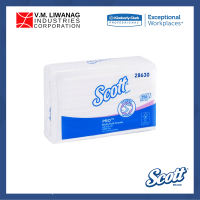
Scott Multi-Fold Paper Towel 1-ply Regular
₱150.00
Buy on Lazada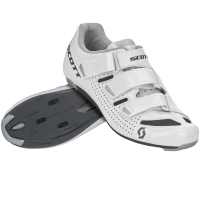
SCOTT - CYCLING SHOES ROAD COMP LADY
₱3,250.00₱6,500.00
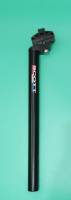
SCOTT Bike Seat Post Alloy Seatpost with Pillar for MTB Mountain Bike
₱280.00₱300.00
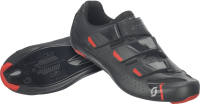
SCOTT - CYCLING SHOES ROAD COMP
₱3,000.00₱6,000.00

Scott Toilet Paper 36 Rolls 1000 Sheets per Roll
₱3,799.00₱5,499.00
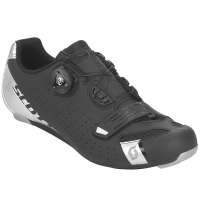
SCOTT - CYCLING SHOES ROAD COMP BOA LADY
₱3,750.00₱7,500.00
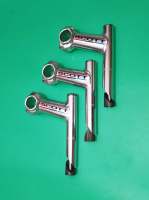
SCOTT Handle Post Alloy for MTB Mountain Bike Standard Size 22.2mm
₱280.00₱350.00
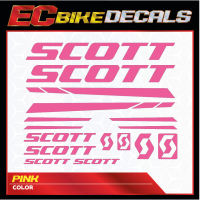
EC BIKE DECALS SCOTT Bike Frame Vinyl Sticker for Mountain Bike/Road Bike and Fixie
₱150.00
Buy on LazadaAbout Scott
SCOTT Sports, commonly referred to simply as SCOTT, is a Swiss-American sporting goods manufacturer recognised for high-performance bicycles, cycling equipment, winter sports gear, motocross and motorsports apparel, and running products. The company was established in 1958 by engineer and skier Ed Scott in Sun Valley, Idaho, following his invention of the first tapered aluminium ski pole. Today, SCOTT Sports SA maintains its global headquarters in Givisiez, Switzerland, while its United States operations are based in Ogden, Utah.1
Overview
| Information | |
|---|---|
| Brand | SCOTT / SCOTT Sports |
| Company | SCOTT Sports SA |
| Founded | 1958 |
| Founder | Ed Scott |
| Origin | Sun Valley, Idaho, United States |
| Global headquarters | Givisiez, Fribourg, Switzerland |
| U.S. headquarters | Ogden, Utah, United States |
| Industry | Sporting goods |
| Major fields | Cycling, winter sports, motorsports, running |
| Notable products | Bicycles, ski equipment, goggles, helmets, apparel, footwear, protective equipment |
| Current ownership | Youngone Corporation holds 50.01% of SCOTT Corporation |
| Current representatives | Juwon Kim and Pascal Ducrot |
| Brand philosophy | Innovation, technology and design |
SCOTT defines its corporate evolution through the guiding principle of “INNOVATION – TECHNOLOGY – DESIGN.”1
Origins
The history of SCOTT began in 1958 in Sun Valley, Idaho, when engineer and competitive skier Ed Scott developed the first tapered aluminium ski pole. At that time, ski poles were typically constructed from bamboo or steel. Scott’s aluminium alternative was lighter, stronger and more technically advanced, establishing the company as a specialist in performance-oriented winter sports equipment. This invention effectively created the SCOTT brand.1
This origin is significant because SCOTT was not originally a bicycle company; cycling did not become a major business division until decades later.
Expansion into Motocross
In 1970, SCOTT expanded beyond skiing by entering the motocross market with what it describes as the first goggle designed specifically for motocross. The company subsequently developed a comprehensive range of motorsports gear including boots, grips, protective equipment, apparel, gloves and motorcycle accessories.1
Motorsports remains one of SCOTT’s four primary business pillars alongside cycling, winter sports and running. The current motorsports portfolio covers motocross, enduro, off-road, adventure motorcycles and snowmobiles.1
Becoming an International Company
In 1978, SCOTT established its European headquarters in Givisiez near Fribourg, Switzerland. This move marked a pivotal transition from an American sporting goods manufacturer to an international brand.1 Although the brand originated in the United States, Switzerland subsequently became the centre of SCOTT’s global corporate structure. Consequently, SCOTT is frequently described today as a Swiss sporting goods company with American origins.
Entry into Bicycles
A major milestone occurred in 1986 when SCOTT introduced its first mountain bike. Concurrently, the company expanded its ski pole manufacturing capabilities in Italy.1 Cycling eventually grew to become one of SCOTT’s most recognisable business segments.
The company went on to develop a diverse range of cycling products including mountain bikes, road bikes, gravel bikes, triathlon and time-trial bikes, electric bikes, urban and trekking bikes, children’s bikes, helmets, shoes, components and accessories. SCOTT’s current bicycle portfolio spans mountain, road, gravel, electric, urban and children’s categories.1
The Aero Bar Breakthrough
A defining moment in SCOTT’s cycling history arrived in 1989 with the introduction of its aerodynamic Aero Bar. The design gained international prominence after American cyclist Greg LeMond used aerodynamic handlebars during the final time trial of the 1989 Tour de France. LeMond ultimately won the Tour by only 8 seconds, making aerodynamic equipment a crucial element of his victory narrative. SCOTT identifies the Aero Bar as one of the most significant innovations in cycling history.1
This achievement helped establish SCOTT’s reputation not merely as a bicycle manufacturer but as an engineering-driven performance brand.
Mountain Bike Technology
SCOTT has consistently invested in bicycle technology development.
1991 — Unishock
SCOTT entered the mountain bike suspension market with its Unishock system.1
1992 — Full Suspension
The company shipped its first full-suspension mountain bikes in 1992 and subsequently expanded its product line to include cycling helmets and shoes.1
1998 — G-Zero
SCOTT introduced the G-Zero, which the company describes as the world’s lightest full-suspension mountain bike at the time of its release. The G-Zero represented a significant milestone in SCOTT’s development of lightweight bicycle frames and suspension technology.1
From Ski Equipment to a Multi-Sport Brand
Throughout the 1990s and 2000s, SCOTT expanded substantially. Its product portfolio eventually encompassed four major sporting disciplines:
🚲 Cycling
- Mountain bikes
- Road bikes
- Gravel bikes
- E-bikes
- Urban/trekking bikes
- Helmets
- Shoes
- Accessories
🎿 Winter Sports
- Skis
- Ski poles
- Ski boots
- Goggles
- Gloves
- Technical apparel
🏍️ Motorsports
- Motocross goggles
- Helmets
- Protection
- Boots
- Gloves
- Apparel
- Enduro equipment
- Adventure-motorcycle equipment
- Snowmobile equipment
🏃 Running
- Running shoes
- Apparel
- Accessories
SCOTT describes itself as having developed into a global powerhouse in Bike, Wintersport, Motorsport and Running.1
Ownership and Corporate Structure
SCOTT exemplifies a brand that has evolved significantly from its American roots. In 2015, South Korean outdoor and sporting goods company Youngone Corporation increased its ownership stake in SCOTT Sports to 50.01%, securing controlling interest. Youngone had previously acquired a 20.1% stake in SCOTT in 2013.2
Youngone’s corporate filings continue to list SCOTT Corporation and its related entities as a major business segment with 50.01% ownership. In simplified terms, the company’s trajectory has moved from American origin to Swiss international headquarters to majority control by South Korea’s Youngone Corporation.2
Headquarters
The global legal headquarters of SCOTT Sports SA is located at:
Route du Crochet 11
1762 Givisiez, Switzerland
The company also maintains SCOTT USA Inc. in Ogden, Utah. Current legal information lists Juwon Kim and Pascal Ducrot as authorised representatives.1
SCOTT’s Bicycle Business Today
Cycling is arguably the area in which SCOTT maintains the strongest visibility among modern consumers. Its current range includes several major categories.
Mountain Bikes
SCOTT produces bikes for cross-country, trail, all-mountain and other mountain biking disciplines.
Road Bikes
The road portfolio focuses on distinct philosophies including lightweight climbing bikes, aerodynamic bikes, endurance bikes and triathlon/time-trial bikes.
Gravel
SCOTT has developed a substantial gravel bike range aimed at riding that bridges traditional road cycling and off-road cycling.
E-Bikes
The company produces electric bicycles including electric mountain bikes as well as electric road, gravel, urban and trekking models.1
Urban and Trekking
SCOTT serves everyday riders with city, hybrid and trekking bicycles.
Important SCOTT Bicycle Families
Key model families associated with modern SCOTT cycling include:
- Spark — A major full-suspension mountain bike platform.
- Genius — Trail and all-mountain oriented mountain bike platform.
- Scale — Lightweight cross-country mountain bike family.
- Addict RC — Lightweight performance road bike family.
- Foil — Aerodynamic road bike family.
- Speedster — Road and endurance oriented family.
- Grail — Gravel platform.
- Plasma — Triathlon and time-trial platform.
Model lineups and specifications change across generations; these names are best understood as SCOTT product families rather than permanently fixed specifications.
Technology and Design Philosophy
Technology is central to SCOTT’s identity. Rather than positioning itself primarily as a lifestyle or fashion brand, SCOTT has historically emphasised engineering, weight reduction, aerodynamics, materials science and sports performance.
Its history repeatedly highlights innovations involving aluminium, carbon fibre, aerodynamics, suspension systems, lightweight construction, lens technology, ventilation and protective equipment. This focus explains why SCOTT’s branding resonates particularly strongly among athletes and technically minded outdoor consumers. The company’s stated historical philosophy is essentially Innovation + Technology + Design rather than simply selling sporting equipment.1
SCOTT in Winter Sports
Winter sports remain integral to the brand’s DNA. With historical roots in skiing, SCOTT continues to produce equipment for skiing and other winter activities. Early products included the aluminium ski pole and ski boots; later developments encompassed ski goggles, gloves, apparel and skis.1
This heritage gives SCOTT an unusual position in the sporting goods market: it can trace its modern product portfolio directly back to a 1958 ski innovation.
SCOTT in Motorsports
SCOTT has a particularly long history in motocross. Having entered the sector in 1970, goggles remain one of its most recognisable motorsport products. The modern motorsport division encompasses motocross, enduro, off-road, adventure motorcycle and snowmobile categories, offering helmets, protection, apparel, gloves, bags and other accessories.1
This distinguishes SCOTT from bicycle-focused brands such as Specialized, Trek or Giant: SCOTT has historically operated across several technically demanding sports rather than concentrating exclusively on cycling.
Brand Positioning
SCOTT generally occupies the premium/performance segment of the sporting goods market. Its typical brand characteristics include:
- Performance-oriented: Products are designed primarily around sporting performance rather than fashion.
- Technology-driven: Engineering and material innovation serve as major selling points.
- Lightweight: Weight reduction is a recurring theme, particularly in cycling and skiing.
- Competition-oriented: The company has a long history of products developed around racing and elite-level sports.
- Multisport: Unlike many competitors, SCOTT maintains substantial businesses in cycling, winter sports, motorsports and running.
SCOTT vs. a Typical Bicycle Brand
Comparing SCOTT’s identity with a conventional bicycle company highlights its broader scope:
| SCOTT Characteristic | Typical Bicycle-Only Brand |
|---|---|
| Cycling | Major focus |
| Skiing | Major historical/current business |
| Motocross | Major business |
| Running | Business area |
| Engineering emphasis | Very high |
| Racing heritage | Strong |
| Original business | Ski equipment |
| Global headquarters | Switzerland |
| Brand origin | United States |
While cycling is one of its most visible businesses today, the company has roots extending across several outdoor and action sports, making SCOTT broader than a bicycle brand.
Major Historical Timeline
- 1958 — Ed Scott invents the tapered aluminium ski pole; SCOTT is born.1
- 1970 — SCOTT enters motocross with a dedicated motocross goggle.1
- 1971 — SCOTT introduces a lightweight ski boot and an early foam-ventilated ski goggle.1
- 1978 — European headquarters established in Givisiez, Switzerland.1
- 1986 — First SCOTT mountain bike.1
- 1989 — Aero Bar introduced; subsequently associated with Greg LeMond’s Tour de France victory.1
- 1991 — Unishock mountain bike suspension introduced.1
- 1992 — First SCOTT full-suspension mountain bikes.1
- 1998 — G-Zero becomes a major lightweight full-suspension bike milestone.1
- 2000s — Expansion of cycling, winter sports, motorsports and running technologies.
- 2015 — Youngone Corporation increases its stake to 50.01%, becoming controlling shareholder.2
- 2026 — SCOTT continues operating as a global premium sporting goods brand headquartered in Givisiez, Switzerland, with businesses spanning cycling, winter sports, motorsports and running.1
What SCOTT Is Best Known For
The brand’s defining areas can be ranked as follows:
🥇 Cycling
Arguably the most important modern consumer association, particularly regarding high-end mountain and road bikes.
🥈 Skiing / Winter Sports
The historical foundation of the company and still an important business.
🥉 Motocross
SCOTT has an unusually long and credible history in motocross goggles and protective equipment.
4. Lightweight Engineering
A recurring theme throughout its bicycle and winter sports products.
5. Racing Technology
SCOTT has repeatedly used professional competition as a testing ground for its products.
Distinctive Evolution
The most notable aspect of SCOTT is its evolution. Starting with a single engineering innovation—a better ski pole—the company gradually expanded into an international sporting goods enterprise. The progression followed this trajectory:
Ski poles → ski equipment → motocross → mountain bikes → aerodynamic cycling → suspension → carbon bikes → e-bikes → multi-sport performance equipment
This history explains why SCOTT’s identity today is so strongly associated with technical innovation rather than with any single sport.
Summary
SCOTT Sports is a premium sporting goods brand founded in 1958 by American engineer and skier Ed Scott in Sun Valley, Idaho. Originally established through the invention of the tapered aluminium ski pole, SCOTT expanded into motocross in 1970, established its European headquarters in Switzerland in 1978, and entered mountain biking in 1986. Its 1989 Aero Bar and subsequent innovations in suspension, lightweight construction and bicycle design helped establish SCOTT as a major cycling brand. Today, SCOTT Sports SA is headquartered in Givisiez, Switzerland, and operates across cycling, winter sports, motorsports and running. The company is controlled by South Korea’s Youngone Corporation, which holds a 50.01% stake.2 Its modern identity is built around performance, engineering, innovation and design.1