Shop on Lazada
Shark products
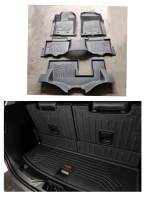
Shark Floor Liners or Matting 5D Deep-dish for Ford Everest 2023-2026
₱10,200.00
Buy on Lazada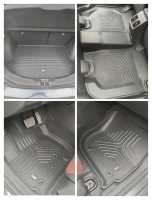
Shark Floor Liners or Matting 5D Deep-dish for Honda City Hatchback 2021 - 2025
₱6,800.00
Buy on Lazada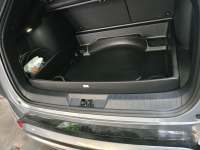
Shark BYD Sealion 6 Spare tire TUB
₱10,200.00
Buy on Lazada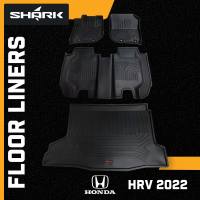
Shark Floor Liners or Matting 5D Deep-dish for Honda HRV 2022 - 2025
₱6,800.00
Buy on Lazada
Shark Spare Tire cover for Jimny JB74 - Textured Black (15-17 inch rims)
₱5,400.00
Buy on Lazada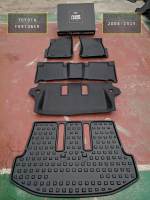
Shark Floor Liners or Matting 5D Deep-dish for Toyota Fortuner 2006 - 2025
₱7,500.00
Buy on Lazada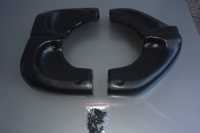
Shark DX-END CAP for Innova Crosswind and Adventure stepboard
₱2,160.00
Buy on Lazada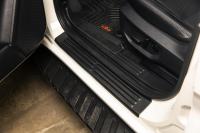
Shark Scuff Plate/side step sill for Ford Everest 2023-2025
₱2,500.00
Buy on LazadaAbout Shark
Overview
Shark is a global consumer appliance brand owned by SharkNinja, Inc., best known for its vacuum cleaners and floor care solutions. It serves as one of the company’s two principal brands alongside Ninja and has expanded its portfolio to include wet/dry floor cleaners, carpet cleaners, air treatment devices, beauty tools, and outdoor products 1. SharkNinja operates in 38 markets with over 4,000 employees, holding more than 5,500 patents across six innovation centers 1.
| Category | Information |
|---|---|
| Brand | Shark |
| Parent company | SharkNinja, Inc. |
| Industry | Consumer electronics / household appliances |
| Best known for | Vacuum cleaners and floor care |
| Origin | Canada |
| Parent company’s origins | Montreal, Canada |
| Founder | Mark Rosenzweig |
| Shark brand introduced | 2000 |
| Major vacuum innovation | No-Loss-of-Suction technology, 2007 |
| Headquarters of SharkNinja | Needham, Massachusetts, USA |
| Main markets | North America, Europe, Asia-Pacific and other international markets |
| Corporate sibling | Ninja |
| Public parent | SharkNinja, Inc. (NYSE: SN) |
History
Origins: Euro-Pro
The origins of Shark trace back to Mark Rosenzweig, who founded Euro-Pro Operating LLC in Montreal, Canada, in 1994 3. The company initially focused on home cleaning products, specifically steam cleaners and vacuum cleaners 2. Rosenzweig came from a family with ties to the small appliance industry, and the business originally operated as an appliance innovator before establishing the globally recognized Shark brand. The company later established roots in the Boston area of the United States, relocating its base toward the region in 2003 to support its eventual American-centred global operations 4.
Birth of the Shark brand
The Shark trademark was established for vacuum cleaners in Canada in 2000 4. Brand development accelerated significantly during the 2000s, marked notably by the introduction of No-Loss-of-Suction vacuum technology in 2007 4. This innovation helped define a new era for the company’s home cleaning business. Rather than competing solely as a low-cost manufacturer, Shark positioned itself around strong cleaning performance, practical engineering, multi-functionality, consumer-friendly design, accessible pricing, and rapid product innovation.
The rise of SharkNinja
A significant turning point occurred when Mark Barrocas joined as president in 2008, helping to establish a consumer-focused approach centred on disruptive innovation 4. In 2009, the company launched Ninja, initially with products such as the Ninja Master Prep blender, which subsequently became a major kitchen appliance brand 1. This created a dual-brand structure where Shark focused on home cleaning, floor care, and personal appliances, while Ninja addressed cooking, food preparation, and beverages. In 2015, Euro-Pro officially changed its corporate name to SharkNinja to reflect the success and consumer recognition of both brands 1. Shark and Ninja remain distinct consumer brands under the SharkNinja corporate umbrella.
Product portfolio
Although strongly associated with vacuum cleaners, the modern Shark portfolio spans multiple categories. According to the 2025 annual report, the overall portfolio had expanded to 38 household sub-categories covering cleaning, cooking, beverage, food preparation, beauty, and home environment 6.
Floor care
- Cordless stick vacuums
- Upright vacuums
- Canister-style vacuums
- Handheld vacuums
- Robot vacuums
- Wet/dry floor cleaners
- Carpet cleaners
- Steam cleaners
Home environment
- Air purifiers
- Fans
- Heating/cooling products
- Other home-environment appliances
Beauty
- Hair dryers
- Hair stylers
- Multi-stylers
- Other hair-care technology
Outdoor and newer categories
- Outdoor cooking
- Grills
- Fire pits
- Coolers
- Other emerging household/lifestyle products
Core identity and design philosophy
SharkNinja describes Shark as a brand associated with “power and versatility,” noting that its credibility has expanded from vacuuming into other small household appliance categories 6. The company emphasizes four consumer-value principles: speed in bringing innovative products to market; performance that solves real household problems; quality aimed at a five-star consumer experience; and value providing advanced features at compelling prices 6. This positioning places Shark between budget options and premium competitors, often offering premium-like performance without premium pricing.
Product design focuses heavily on consumer pain points rather than starting with technology. Development historically addresses issues such as hair tangling around brush rolls, stair cleaning difficulties, surface-specific configurations, storage of large machines, furniture manoeuvrability, above-floor cleaning, and suction maintenance 7. This philosophy drives features like lift-away systems, interchangeable tools, flexible configurations, anti-hair-wrap systems, and multi-surface cleaning capabilities 7.
Vacuum cleaners
Vacuum cleaners remain central to the Shark brand. According to Circana data for the period ending January 3, 2026, Shark was the number one vacuum brand in the United States by dollar sales and the leading floor-care brand 6.
Upright vacuums
These traditional full-size models feature vertical bodies and frequently incorporate Lift-Away designs, allowing part of the main unit to detach for portable canister or above-floor cleaning use 7.
Cordless stick vacuums
Among Shark’s most recognizable modern products, these emphasize lightweight operation, cordless convenience, easy storage, multiple attachments, handheld conversion, and increasingly sophisticated sensors 7.
Robot vacuums
Shark competes in robotic floor cleaning against brands such as iRobot, extending beyond conventional manually operated cleaning methods 8.
Signature technologies
Shark differentiates its products through proprietary systems rather than single technologies:
- No-Loss-of-Suction: Introduced in 2007, this technology marked a key milestone in the brand’s development 4.
- Lift-Away: A detachable configuration allowing users to remove the main cleaning unit from an upright chassis 7.
- Anti Hair Wrap: Designed to reduce hair wrapping around brush rolls, particularly appealing to households with pets or long-haired individuals 8.
- DuoClean: A multi-brush-roll system designed for various floor types 7.
- Detect / sensing technologies: Sensors and software that adjust performance based on dirt levels, floor type, or cleaning conditions 7.
- HEPA filtration: High-efficiency filtration available on many models, though specific technology varies by product 8.
Expansion beyond vacuum cleaners
Shark has leveraged its cleaning reputation to enter adjacent categories including carpet extraction, wet/dry floor cleaning, fans, air treatment, hair styling, and outdoor products 9. During the three years preceding its 2025 annual report, SharkNinja entered categories such as wet/dry cleaning, carpet extraction, fans, coolers, skincare, propane grills, and fire pits 6. This reflects a strategy of using established brand credibility to expand into related markets.
Shark vs. Ninja
| Brand | Main identity |
|---|---|
| Shark | Cleaning, floor care, home environment, beauty and increasingly outdoor/lifestyle appliances |
| Ninja | Cooking, food preparation, beverages and kitchen appliances |
While both brands share a corporate philosophy of consumer-focused innovation, Shark addresses home maintenance and cleaning challenges, whereas Ninja focuses on cooking and food preparation 6.
Business model and manufacturing
SharkNinja operates as an innovation-driven consumer appliance company with in-house engineering capabilities spanning mechanical engineering, electronics, mechatronics, robotics, firmware, apps, cloud systems, deep learning, algorithms, and industrial design 6. As of 2025, the company employed more than 700 cross-functional engineering and design associates 6. Manufacturing relies on a diversified global supply chain with engineering and design operations in the United States, United Kingdom, and China, combining Western consumer research with global engineering and mass retail distribution 6.
Marketing and competitive positioning
Marketing employs an “always-on” media approach using storytelling to educate consumers about technologies and performance, often demonstrating cleaning efficacy through visual formats 10. Competitors vary by category and include Dyson, Bissell, Hoover, iRobot, Tineco, and Miele. Unlike Dyson’s premium technology focus, Shark emphasizes performance and functionality at a more accessible price point, competing against products priced both above and below its own offerings 6.
Relationship with consumers
SharkNinja aims for a “5-star” consumer experience encompassing product quality, performance, packaging, first use, customer service, and post-purchase support 6. Success depends on maintaining strong perceived value after purchase, as consumers extensively compare suction performance, battery life, noise, weight, manoeuvrability, filtration, reliability, replacement parts, accessories, maintenance ease, and price.
Public listing and financial growth
Presence in Indonesia
Shark maintains an official presence in Indonesia, where PT Mitra Adi Perkasa Tbk (MAP) serves as the exclusive distributor 1. The Indonesian operation markets Shark as a brand centred on innovative, functional household appliances, particularly cleaning technology, as part of SharkNinja’s broader internationalization strategy across 38 markets 1.
Corporate structure
SharkNinja, Inc. serves as the corporate parent, with Shark functioning as the consumer-facing brand for cleaning, floor care, carpet cleaners, wet/dry cleaning, air treatment, beauty, and lifestyle appliances, while Ninja covers blenders, air fryers, cookers, coffee/beverage, food preparation, and kitchen appliances 1.
Distinguishing characteristics
Shark differs from diversified appliance companies through five key traits: it built its reputation primarily through floor care and vacuuming; it emphasizes practical innovation solving specific consumer problems; it targets the middle market with premium-associated technology at accessible prices; it moves quickly between adjacent categories; and it benefits from SharkNinja’s broader engineering, supply-chain, marketing, and international infrastructure 1.
Strengths and weaknesses
Strengths
- Strong brand recognition in floor care and household cleaning
- Broad product portfolio across multiple categories
- Significant investment in engineering and product development 6
- Value proposition bridging inexpensive and premium segments
- Rapid product development cycles
- Increasingly global presence beyond North America
Weaknesses and challenges
- Large product lineup with similar names and overlapping specifications can cause confusion
- Substantial differences between visually similar models regarding batteries, filtration, accessories, and capabilities
- Intense competition from premium, mainstream, and specialist brands
- Difficulty generalizing long-term reliability across diverse models
- Rapid product cycles potentially making capable older models appear obsolete
Reputation
Shark is recognized as a technologically ambitious, mainstream-to-premium household appliance brand emphasizing practical innovation and value. It has evolved beyond being merely a cheaper alternative to premium vacuum brands into a major appliance innovator with proprietary engineering, intellectual property, global distribution, and a broadening portfolio 6. As of 2026, SharkNinja describes Shark as the number one vacuum brand in U.S. dollar sales according to Circana data, while the overall business has grown into a multi-billion-dollar global appliance company 6.