Shop on Lazada
Smirnoff products
![[FREE SMIRNOFF BUCKET] Smirnoff Mule 330ml x 24 (Case)](https://ph-live.slatic.net/p/600b34463d3dc8eae66ec3ca2382cc0a.png_200x200q80.jpg)
[FREE SMIRNOFF BUCKET] Smirnoff Mule 330ml x 24 (Case)
₱1,174.50₱1,305.00
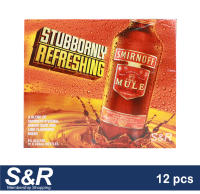
Smirnoff Vodka Mule 12 bottles
₱674.00
Buy on Lazada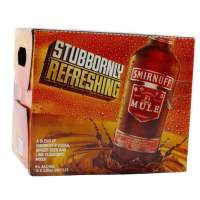
Smirnoff Mule Bottle 330ml x 12
₱575.52₱654.00
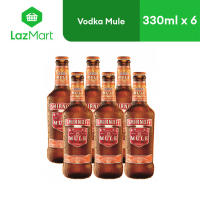
Smirnoff Mule Bottle 330ml - Pack of 6
₱291.03₱327.00
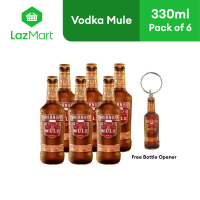
Smirnoff Mule Bottle 330ml - Pack of 6 with Free Keychain Bottle Opener
₱284.49₱327.00
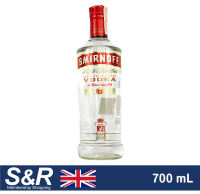
Smirnoff No. 21 Classic Vodka 700 mL
₱686.00
Buy on Lazada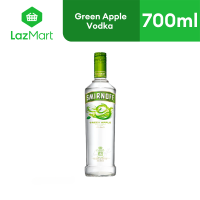
Smirnoff Green Apple Vodka 700ml
₱620.00
Buy on Lazada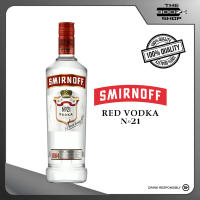
Smirnoff Red 700ml
₱929.00
Buy on LazadaAbout Smirnoff
Overview
Smirnoff is a globally recognised vodka and alcoholic beverage brand with origins in 19th-century Russia. Founded by Pyotr Arsenievich Smirnov in Moscow in 1864, the label evolved from a local distillery into an international business now owned by the British multinational beverage company Diageo 1. The brand states that its products are sold in more than 130 countries and describes Smirnoff No. 21 as the world’s number one vodka 1.
| Category | Information |
|---|---|
| Brand | Smirnoff |
| Industry | Alcoholic beverages / spirits |
| Primary product | Vodka |
| Founded | 1864 |
| Founder | Pyotr Arsenievich Smirnov |
| Original location | Moscow, Russian Empire |
| Current owner | Diageo |
| Best-known product | Smirnoff No. 21 |
| Major products | Vodka, flavoured vodka, ready-to-drink beverages |
| Major RTD product | Smirnoff Ice |
| Global presence | 130+ countries for Smirnoff vodka; Smirnoff Ice has a footprint of 140+ countries |
| Brand identity | Red arch logo, vodka, cocktails, nightlife and social occasions |
| Founded by | P.A. Smirnov |
History
Origins in Russia
The history of Smirnoff traces back to Pyotr Arsenievich Smirnov (1831–1898), a Russian entrepreneur who established the P.A. Smirnov vodka distillery in Moscow in 1864 2. Smirnov gained recognition for experimenting with production methods, particularly the use of charcoal filtration 2. By the late 19th century, the company had become one of Russia’s major vodka producers and was historically noted as a supplier to the Russian imperial court 2. Diageo identifies 1864 as the founding year and highlights Pyotr Smirnov’s pioneering filtration process as central to the brand’s heritage.
The Russian Revolution and exile
Following the death of Pyotr Smirnov, his son Vladimir Smirnov became involved in the family business. However, the company’s fortunes shifted dramatically in the early 20th century when the Russian government nationalised the vodka industry, causing the family to lose control of the original operation 2. After the Russian Revolution of 1917, Vladimir Smirnov left Russia to rebuild the business abroad 2. The company was subsequently re-established outside Russia, with operations in Constantinople (modern Istanbul) and later across Europe, a relocation that proved essential to the development of the modern Smirnoff brand 2.
From Smirnov to Smirnoff
The spelling “Smirnoff” emerged during the family’s international relaunch. According to the brand, Vladimir relaunched the label in Europe after the Russian Revolution using an Anglicised version of the family name 1. While the brand’s historical roots are Russian, modern Smirnoff developed as an international entity rather than remaining solely a Russian vodka company.
Expansion into the United States
Smirnoff eventually entered the American market, where it played a significant role in establishing vodka as a mainstream spirit. Historical accounts from Diageo describe Smirnoff as instrumental in shaping American cocktail culture and contributing to the broader growth of vodka consumption 3. During the mid-20th century, marketing efforts emphasised the spirit’s versatility as a mixer rather than positioning it solely as a drink to be consumed straight, helping to establish vodka as a standard base for cocktails 3.
Smirnoff No. 21
The brand’s flagship expression is Smirnoff No. 21, often referred to as Smirnoff Red or simply Smirnoff Vodka depending on the market. The number 21 references the brand’s historic recipe. Smirnoff and Diageo describe No. 21 as being triple distilled and filtered ten times 1. The resulting spirit is characterised as clean, crisp, and smooth, intended to function both as a standalone drink and as a cocktail ingredient.
Smirnoff Ice
Beyond traditional vodka, Smirnoff Ice represents one of the brand’s most significant product lines. Introduced as a convenient, chilled, flavoured alcoholic beverage, its success helped expand the Smirnoff name beyond the conventional spirits category. Diageo notes that Smirnoff Ice has been available for more than 25 years and is sold in over 140 countries, giving it one of the widest international footprints among ready-to-drink products. It is important to note that Smirnoff Ice is distinct from Smirnoff vodka; its formulation, alcohol content, and ingredients vary by market.
Products
The modern Smirnoff portfolio extends well beyond its original unflavoured vodka.
Vodka
Vodka remains the core of the brand, with key offerings including:
- Smirnoff No. 21
- Higher-proof expressions such as Smirnoff 100
- Market-specific variants
- Various bottle sizes and alcohol strengths
Diageo specifies that No. 21 undergoes triple distillation and ten filtration stages.
Flavoured vodka
Smirnoff is also a prominent player in the flavoured vodka category. Depending on the market, available flavours have included:
- Raspberry
- Vanilla
- Green Apple
- Strawberry
- Watermelon
- Orange
- Cherry
- Blueberry
- Peach
- Pineapple
- Grape
- Lime
- Passionfruit
- Lemon
- Seasonal and specialty varieties
The specific portfolio varies considerably between countries; a flavour available in the Philippines, United States, or United Kingdom may not be available elsewhere. For instance, the U.S. site currently lists more than 20 flavoured spirit variants 1.
Ready-to-drink beverages
The portfolio includes several ready-to-drink (RTD) products, most notably:
- Smirnoff Ice
- Smirnoff Ice Original
- Smirnoff Ice flavoured variants
- Other market-specific RTD products
Diageo describes Smirnoff Ice Original as a lemon-flavoured beverage and notes that the wider Smirnoff Ice range differs across markets.
Production
Production methods for Smirnoff vary by country and product line. For Smirnoff No. 21, the brand emphasises a process involving three distillations and ten filtration stages 1. Base ingredients also differ by region; for example, Smirnoff states that its U.S. vodka is produced from corn 1. Due to this international manufacturing model, Smirnoff is best understood as a global brand with region-specific production and portfolios rather than a product made in a single location.
Ownership
Smirnoff is currently owned by Diageo, one of the world’s largest alcoholic beverage companies. Diageo’s portfolio includes other major brands such as Johnnie Walker, Guinness, Baileys, Tanqueray, and Captain Morgan. The company was formed in 1997 through the merger of Grand Metropolitan and Guinness, after which Smirnoff became part of its global spirits division.
The ownership lineage can be summarised as: P.A. Smirnov → Smirnov family business → internationally relaunched Smirnoff → various corporate owners → Diageo.
Brand identity
Smirnoff is visually distinguished by its red arch logo and distinctive bottle design. Historically, the brand has positioned itself around concepts of accessibility, cocktail culture, social occasions, experimentation, youth-oriented popular culture, internationalism, and a clean, versatile vodka style. Advertising campaigns have frequently utilised humour, music, nightlife, and contemporary culture, adopting a less formal tone than that traditionally associated with luxury spirits. Diageo credits Smirnoff with influencing drinking trends, including the cocktail boom, the flavoured vodka movement, and the ready-to-drink category 3.
Cocktails associated with Smirnoff
Due to its relatively neutral flavour profile, Smirnoff vodka is widely used in mixed drinks. Cocktails commonly associated with the brand include:
- Moscow Mule / Smirnoff Mule
- Cosmopolitan
- Bloody Mary
- Vodka Martini
- Vodka-based highballs
- Fruit-flavoured vodka cocktails
Smirnoff actively promotes the Smirnoff Mule, Cosmopolitan, and Bloody Mary as part of its cocktail heritage 1.
Global presence
Smirnoff is among the most widely distributed vodka brands internationally. The company states that its products are sold in more than 130 countries, with Diageo noting similar recognition for Smirnoff No. 21 1. This extensive reach means that while Smirnoff is Russian in historical origin, it is currently British-owned and globally produced and marketed. Modern bottles are not necessarily manufactured in Russia but are produced across multiple markets under the Diageo umbrella.
Market position
Smirnoff occupies a distinct position in the spirits industry, balancing heritage and tradition with mass-market accessibility. Its strategy combines historical provenance with mainstream pricing, cocktail versatility, flavoured options, and ready-to-drink products. Diageo refers to Smirnoff as the world’s number one vodka, while the brand’s own website describes No. 21 as the world’s best-selling premium vodka 1.
Name and pronunciation
The brand name derives from the Smirnov family surname. The original Russian name is Smirnov (Смирнов), while “Smirnoff” is the Anglicised spelling adopted for international use following the Russian Revolution 1. The name is generally pronounced approximately as SMEER-nof.
Timeline
| Year | Event |
|---|---|
| 1864 | Pyotr Arsenievich Smirnov establishes his vodka distillery in Moscow. |
| 1870s | Smirnov develops pioneering charcoal-filtration techniques. |
| Late 19th century | The company becomes a major Russian vodka producer. |
| 1898 | Pyotr Smirnov dies; his son Vladimir succeeds him. |
| Early 1900s | The Russian vodka industry is nationalised. |
| 1917 | Russian Revolution forces the Smirnov family to leave Russia. |
| 1920s | Vladimir Smirnov rebuilds the business in Europe. |
| 20th century | Smirnoff expands internationally, particularly in Europe and the United States. |
| Mid-20th century | Smirnoff becomes strongly associated with American cocktail culture. |
| 1997 | Diageo is formed through the merger of Grand Metropolitan and Guinness. |
| Late 20th–21st century | Smirnoff expands into flavoured vodka and ready-to-drink products. |
| 2000s onward | Smirnoff Ice and other RTD products become major parts of the global portfolio. |
| Today | Smirnoff is a major global Diageo brand sold across 130+ countries. |