Shop on Lazada
Sunsweet products

Sunsweet Amaz!n Prune Juice 1.89L
₱499.00
Buy on Lazada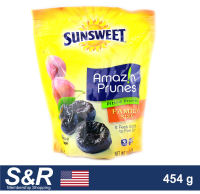
Sunsweet Pitted Prunes Family Size 454g
₱509.00
Buy on Lazada
340g Sunsweet Amazin Pitted Prunes
₱358.00₱359.00
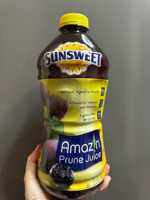
32oz/946ml/64oz /1.89L Sunsweet Amazin Prune Juice Constipation Good Source FiberBVits Potassium
₱648.00₱688.00

340g Sunsweet Amazin Pitted Prunes No Added Sweetener
₱385.00₱388.00
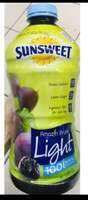
😊1.89L Sunsweet Amazin Prune Juice 64oz
₱798.00
Buy on Lazada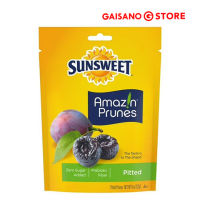
Sunsweet Amazin Prunes Pitted 227g
₱350.00
Buy on Lazada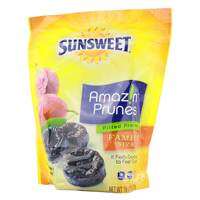
Sunsweet Pitted Prunes Family Size 454g
₱699.00
Buy on LazadaAbout Sunsweet
Overview
Sunsweet is an American dried-fruit brand best known for its prunes (dried plums), prune juice, and other dried fruits. The brand is operated by Sunsweet Growers Inc., a grower-owned agricultural cooperative based in Yuba City, California. Its history dates to 1917, when California prune and apricot growers organized themselves into the California Prune and Apricot Growers Association 1.
Today, Sunsweet is particularly associated with California-grown prunes and has developed from a farmer cooperative into an internationally distributed dried-fruit business. The company states that its products reach more than 40 countries and that it represents roughly one-quarter of global prune production/market supply, although figures may vary slightly depending on the market and date 1.
| Category | Information |
|---|---|
| Brand | Sunsweet |
| Company | Sunsweet Growers Inc. |
| Founded | 1917 |
| Origin | California, United States |
| Headquarters | Yuba City, California |
| Business type | Grower-owned cooperative |
| Main category | Dried fruit |
| Signature product | Prunes / dried plums |
| Other major products | Prune juice, dried apricots, mangoes, dates, and specialty dried-fruit products |
| Major market | United States and international markets |
| Known for | Prunes, prune juice, and pitting/processing technology |
History
Origins: 1850–1917
The story of Sunsweet predates the brand itself. In 1850, French horticulturist Louis Pellier brought prune-plum orchard stock from France to California. His work helped establish the foundation of California’s prune industry 1.
As California’s prune industry developed, individual growers faced challenges in marketing and distributing their crops. In 1917, a group of farmers created the California Prune and Apricot Growers Association. This cooperative model allowed growers to combine their production and marketing capabilities and sell their fruit under a common brand. That organization became the foundation of what is now Sunsweet 1.
Consequently, Sunsweet has an unusual corporate history: it originated as a farmer cooperative rather than as a conventional food company created by a single entrepreneur.
Expansion into prune juice
In 1932, Sunsweet added prune juice to its product family. This expansion moved the brand beyond dried fruit and established another category that remains closely associated with Sunsweet today 1.
The pitted-prune breakthrough
A significant development in Sunsweet’s history occurred in 1965, when the company patented its pitting process and introduced pitted prunes. This technology became a key part of Sunsweet’s product differentiation because it allowed consumers to enjoy prunes without manually removing the pits 1.
International development
In 1975, Sunsweet opened its international headquarters in Yuba City, California. Over subsequent decades, the company expanded its distribution outside the United States, developing an increasingly international presence 1.
Sunsweet celebrated its 100th anniversary in 2017. By 2022, the company reported shipping to more than 40 countries and supplying about 25% of the global prune market 1.
Product Portfolio
Although Sunsweet is strongly identified with prunes, its portfolio extends beyond this single fruit.
1. Prunes
Prunes are the core of Sunsweet’s business and brand identity. Prunes are simply dried plums, though Sunsweet uses specific prune-plum varieties selected for characteristics such as flavor, texture, and suitability for drying 1.
The current Sunsweet range includes products such as:
- Amaz!n Prunes
- Pitted Prunes
- Sunsweet Ones
- D’Noir Prunes
- Probiotic+ Prunes
The company also offers various package sizes and formats aimed at snacking, cooking, and everyday consumption 1.
2. Prune Juice
Prune juice is another major component of Sunsweet’s identity. Its principal juice line is marketed as Amaz!n Prune Juice, alongside variants such as Prune Juice Light and Amaz!n Prune Juice with Elderberry 1.
Prune juice has traditionally been associated with digestive health because prunes naturally contain sorbitol and dietary fiber. Sunsweet markets prune juice as part of a digestive-wellness and everyday nutrition proposition 1.
3. Other Dried Fruits
Sunsweet has expanded beyond its traditional prune business into other dried-fruit categories. Its current portfolio includes products such as:
- Dried mango
- Mediterranean apricots
- Pitted dates
- Dried cherries
- Chocolate-covered fruit
- Plum-based specialty products
This evolution represents a strategic shift from being primarily a prune specialist toward becoming a broader dried-fruit and healthy-snacking brand 1.
Business Model
One of Sunsweet’s defining characteristics is its cooperative ownership structure.
Rather than purchasing fruit from independent farmers, Sunsweet Growers is owned by its grower members. The cooperative represents growers operating orchards in California and manages the processing and marketing of their crops 1.
This structure gives Sunsweet a relatively integrated relationship with the agricultural side of its business. Operations cover the journey from orchard → harvesting → drying/processing → packaging → marketing → distribution.
The company describes itself as a family of growers and emphasizes the connection between its farmers and the finished product 1.
Production and Processing
Sunsweet’s principal operations are based in Yuba City, California, in the heart of California’s agricultural region. The company describes its Yuba City facility as the world’s largest dried-tree-fruit processing plant 1.
The processing of Sunsweet prunes involves several important stages:
- Growing — Prune plums are cultivated in California orchards.
- Harvesting — Fruit is harvested when it reaches the appropriate stage of ripeness.
- Drying — The plums are dehydrated to produce prunes.
- Pitting — Pits are mechanically removed.
- Quality Control — Moisture, texture, size, and other characteristics are monitored.
- Packaging — Finished prunes are packaged for retail or food-service use.
- Distribution — Products are shipped to domestic and international markets.
Sunsweet has invested heavily in pitting and processing technology. Its history highlights its patented pitting process and later Smart-Pitter technology designed to minimize the presence of pits in finished products 1.
Brand Positioning
Historically, prunes suffered from an image problem, often being associated primarily with older consumers and digestive issues.
Sunsweet has spent decades attempting to reposition prunes as a modern, convenient, and nutritious snack rather than simply a traditional remedy.
This strategy is evident in products such as Sunsweet Ones, individually wrapped prunes introduced in 2007, and newer items like Probiotic+ Prunes 1.
The company’s current marketing frequently uses the concept of “Feel Good” to associate prunes with wellness, convenience, nutrition, and everyday snacking.
Thus, the brand’s positioning has evolved approximately as follows:
Traditional dried fruit → digestive-health product → healthy snack → functional wellness food
This evolution is a central element of Sunsweet’s modern brand strategy.
Nutrition and Health Claims
Sunsweet strongly emphasizes the nutritional characteristics of prunes.
Prunes naturally contain dietary fiber, potassium, vitamin K, and other nutrients, while compounds such as sorbitol contribute to their well-known digestive effects. Sunsweet markets these characteristics around themes including digestive wellness, bone health, and heart health 1.
It is worth distinguishing between nutrition facts and marketing claims. While Sunsweet’s website describes potential health benefits, individual health outcomes depend on overall diet and personal circumstances.
The brand’s prune juice products are similarly positioned around nutrition and digestive wellness. Sunsweet states that its regular prune juice is made from prunes and provides nutrients including potassium, riboflavin, vitamin B6, copper, and niacin 1.
Innovation
Innovation has been particularly important to Sunsweet because prunes are a relatively simple agricultural product.
Rather than competing purely on the fruit itself, Sunsweet has developed technologies and formats designed to improve:
- Pitting efficiency
- Texture
- Moisture consistency
- Shelf stability
- Convenience
- Portion control
- Flavor
- Functional nutrition
Recent examples include Probiotic+ Prunes and Amaz!n Prune Juice with Elderberry, both introduced in 2024 1.
Sustainability
Sunsweet promotes environmental initiatives within its agricultural and processing operations.
Its sustainability efforts include improvements in energy efficiency, water management, and waste utilization. For example, the company reports that prune pits are used for livestock feed or composting, while materials such as cardboard, plastic, and glass are recycled. It also highlights water-recycling efforts at its Yuba City facility 2.
This focus is particularly relevant to Sunsweet because the cooperative model connects the brand directly to agricultural production: sustainability involves not just packaging but also orchard management, water usage, energy consumption, and processing waste.
International Presence
Although Sunsweet is fundamentally a California agricultural brand, its products are sold internationally.
The company distributes its products to more than 40 countries, giving Sunsweet a global position within the prune and dried-fruit industry 1.
Sunsweet maintains international websites and regional operations, reflecting the fact that prunes and prune juice have become global food products rather than exclusively American ones.
Competitive Identity
Sunsweet occupies a distinctive position in the food industry because it combines three identities:
1. Agricultural Cooperative
It is fundamentally owned by growers.
2. Food Manufacturer
It processes and packages dried fruit and juice.
3. Consumer Brand
It markets branded products directly to consumers.
This combination distinguishes Sunsweet from many packaged-food brands that primarily purchase agricultural commodities from external suppliers.
Corporate and Brand Significance
The most significant aspect of Sunsweet is that the brand is inseparable from the California prune industry.
Its century-long history means that Sunsweet is not simply a company that decided to sell prunes; it was created by prune growers specifically to organize, process, market, and distribute their agricultural production.
That history explains why the brand has such a strong association with California, prunes, agricultural expertise, and processing technology.
Today, Sunsweet has broadened its identity from traditional prunes into healthy snacking, functional foods, juice, and a wider dried-fruit portfolio, while maintaining prunes as its flagship category 1.
Timeline
- 1850 — Louis Pellier establishes French prune-plum orchard stock in California 1.
- 1917 — California prune and apricot growers establish the cooperative that becomes the foundation of Sunsweet 1.
- 1932 — Sunsweet introduces prune juice 1.
- 1965 — Sunsweet’s pitting process is patented 1.
- 1975 — International headquarters opens in Yuba City, California 1.
- 2007 — Sunsweet Ones individually wrapped prunes are introduced 1.
- 2017 — Sunsweet celebrates its 100th anniversary 1.
- 2022 — Sunsweet reports distribution to 40+ countries and approximately 25% of global prune supply 1.
- 2024 — Probiotic+ Prunes and Amaz!n Prune Juice with Elderberry are introduced 1.