Shop on Lazada
Tony Moly products
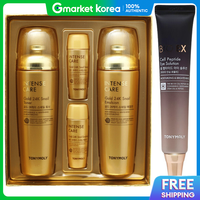
Tony Moly | Tonymoly Intense Care Gold 24K Snail Skincare 2-Piece Set + Bio Ex Cell Peptide Eye Solution
₱2,649.94₱3,959.68
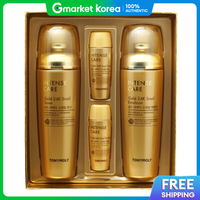
Tony Moly | Tonymoly Intense Care Gold 24K Snail Skincare 2-Piece Set
₱1,945.63₱2,907.27
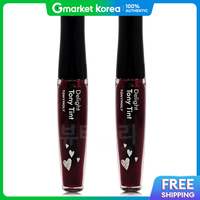
Tony Moly | Delight Tony Tint 02 Red x 2
₱499.37₱860.98
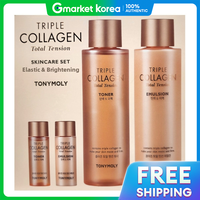
Tony Moly | TonyMoly Triple Collagen Total Tension 2pc Set Skincare
₱1,520.96₱2,297.25
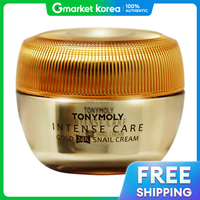
Tony Moly | Intense Care Gold 24K Snail Cream
₱1,226.59₱1,832.85
Tony Moly Delight Tony Tint 02 Red
₱357.90₱617.08
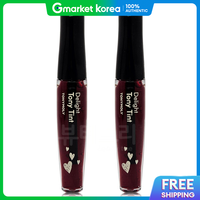
Tony Moly Delight Tony Tint 01 Cherry Pink X 2
₱499.37₱860.98
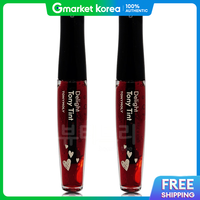
Tony Moly | Tonymoly Delight Tony Tint 03 Orange Chacha X 2
₱499.37₱860.98
About Tony Moly
Tony Moly (Korean: 토니모리) is a South Korean cosmetics and beauty brand established in Seoul in 2006. Closely associated with the global K-beauty movement, the brand is recognised for blending traditional Korean skincare formulations with colourful, playful, and distinctive packaging. Its extensive product range encompasses skincare, masks, cleansing, makeup, sun care, hair care, and body care.1
Overview
| Category | Information |
|---|---|
| Brand name | Tony Moly / 토니모리 |
| Industry | Cosmetics, skincare & personal care |
| Country of origin | South Korea |
| Founded | 2006 |
| Headquarters | Seoul, South Korea |
| Parent company | TONYMOLY Co., Ltd. |
| Core market | Beauty and cosmetics |
| Known for | K-beauty, skincare, masks, playful packaging |
| Main categories | Skincare, makeup, masks, cleansing, sun care, hair & body care |
| International presence | Global |
TONYMOLY Co., Ltd. was established on 26 July 2006, with its headquarters located in the Seocho District of Seoul. The company is a publicly listed Korean cosmetics corporation.2
History
Foundation (2006)
Tony Moly was founded in Seoul in 2006. According to corporate records, the first retail store opened in Seomyeon, Busan, and the company launched approximately 1,000 products during its early period, including a comprehensive range of basic skincare items.3
The brand entered the market with a distinct value proposition: creating effective and approachable beauty products with an immediately recognisable visual identity. Packaging became one of its primary differentiators. Rather than relying solely on conventional cosmetic aesthetics, Tony Moly frequently utilised designs inspired by fruit, animals, food, and other playful objects. This strategy made its products highly distinguishable, particularly among younger consumers.3
Early expansion (2008–2010)
The company expanded its domestic retail network rapidly. In 2008, Bae Haedong was appointed chairman, and Tony Moly continued to open branded stores across South Korea. By 2009, the company had entered international markets, including Japan, Hong Kong, and Thailand, followed by further expansion into other Asian territories.4
By 2010, Tony Moly had reached its 200th store in Korea and had begun expanding through duty-free shops and overseas retail channels.5
International growth (2011–2015)
During the early 2010s, the international footprint of Tony Moly expanded substantially. Corporate records indicate entry into markets including Vietnam, Malaysia, Japan, Indonesia, the United States, Canada, Australia, Taiwan, China, and Hong Kong.
In 2012, Tony Moly reported approximately 350 domestic stores and more than 80 overseas locations. In 2014, the brand entered Sephora in Manhattan, New York, marking a significant milestone in its international development.6
This period coincided with the rising global popularity of Korean cosmetics, helping to establish Tony Moly as one of the most recognisable names associated with K-beauty.
Brand identity
The identity of Tony Moly combines Korean skincare expertise, product innovation, accessible beauty, and playful design. The company describes itself as a brand focused on helping consumers express their individual beauty and identity, rather than adhering to a standardised definition of attractiveness.7
Playful packaging
One of the most recognisable characteristics of Tony Moly is its packaging. The brand has historically used designs resembling fruits, animals, food items, cartoon-inspired characters, small jars, and colourful cosmetic accessories. This approach integrates the product vessel into the overall brand experience.
Internationally, the brand became well known for cute, fruit-inspired packaging and character-oriented products. This aesthetic was relatively distinctive within the cosmetics industry and contributed significantly to the brand’s visibility on social media and within beauty communities.
Fun and functional positioning
Rather than positioning itself exclusively as a luxury skincare company, Tony Moly traditionally combines fun visual presentation with functional skincare efficacy. Its current international positioning continues to describe the brand as combining Korean skincare innovation with playful design and research-oriented formulations.8
Product portfolio
Tony Moly offers a broad portfolio that extends well beyond sheet masks, encompassing several major beauty categories.
Skincare
Skincare forms the core of the business. Products include toners, essences, serums, ampoules, emulsions, lotions, moisturisers, eye creams, face mists, cleansers, exfoliating products, and specialised treatments. The Korean product catalogue organises skincare into categories such as toner, lotion/emulsion, essence/serum/ampoule, cream, eye care, mist, and sets.9
Face masks
Tony Moly is particularly renowned for its mask offerings. The portfolio includes sheet masks, gel masks, eye masks, wash-off masks, sleeping masks, peel-off masks, and toner pads.10 Its sheet masks played a pivotal role in making the brand recognisable outside Korea, especially as sheet masking became a mainstream element of international K-beauty culture.
Cleansing
The company offers various cleansing products, including daily facial cleansers, makeup removers, cleansing oils, deep-cleansing products, and peeling products.11
Sun care
Tony Moly produces sunscreen and other UV-protection products designed for daily use.
Makeup
The makeup portfolio includes foundation, BB cream, primer, cushion foundation, concealer, powder, blush, highlighter, shading products, and lip products.12
Hair and body care
Beyond facial cosmetics, the brand offers hair and body care products. Its broader international portfolio has included hair treatments, body products, perfumes, and related personal-care items.
Notable product lines
Over the years, Tony Moly has developed numerous sub-lines and product families. Names appearing in its current international catalogue include:
- The Chok Chok Green Tea
- Wonder
- I’m Real
- Intense Care
- Snail
- 2X Vitamin
- Collagen
- Red Retinol
- Houttuynia Cordata Cica
- Green Tea Moisturizing
- Black Tea Intense
- Get It Lip
- Luminous Make-up
- UV Master
- THE BLACK HOMME
The exact product lineup varies by country and evolves over time.13
Ingredients and formulation philosophy
Product development at Tony Moly is rooted in the broader Korean skincare philosophy of combining multiple skincare stages with targeted ingredients. Depending on the product line, the brand has utilised ingredients and concepts such as green tea, snail-derived ingredients, vitamin C, collagen, retinol, cica (Houttuynia cordata), hyaluronic acid, botanical extracts, and fermented ingredients.
Current international brand positioning emphasises research, Korean R&D, ingredient selection, and formulations designed around specific skincare concerns.13 Importantly, Tony Moly is not a single-ingredient brand; its different product lines target diverse concerns including hydration, brightening, blemishes, pores, soothing, anti-ageing, and sensitive or dry skin.14
Tony Moly and K-beauty
The history of Tony Moly is closely connected with the international rise of K-beauty. Korean beauty gained global influence due to characteristics such as extensive skincare routines, an emphasis on hydration and skin health, innovative textures, ingredient-focused formulations, frequent product innovation, sheet masks, and attractive packaging.
Tony Moly incorporated many of these characteristics while adding a particularly strong playful, lifestyle-oriented visual identity. This made the brand accessible to consumers who might not have traditionally been interested in Korean skincare.
Global expansion
Tony Moly began international expansion relatively early in its history. Corporate timelines record overseas activity beginning in 2009 with entry into markets including Japan and Hong Kong.15
International distribution subsequently expanded through department stores, beauty retailers, duty-free shops, specialty stores, and other retail channels. More recent expansion has included major retailers in North America, Australia, Mexico, Japan, and other markets. According to corporate history:
- 2023: Entered 1,500 Target stores in the United States.
- 2024: Expanded into Walmart Mexico and all MINISO stores in the United States.
- 2024: Entered LOFT stores in Japan.
- 2025: Entered Ulta Beauty in Mexico and Priceline Australia.
- 2026: Reported that its Daiso BONSEP brand surpassed 10 million cumulative units sold.16
These developments illustrate a shift from relying primarily on dedicated Korean-style beauty stores towards broader mainstream retail distribution.
Corporate structure
The operating company is TONYMOLY Co., Ltd. (주식회사 토니모리), headquartered in Seoul. It is a specific corporation and consumer brand within the Korean cosmetics industry, distinct from the broader category of “K-beauty”.
According to Korean corporate filings, the company was incorporated on 26 July 2006, and its registered headquarters is at 2557 Nambusunhwan-ro, Seocho-gu, Seoul.17
Tony Moly is also a KOSPI-listed company; corporate history records its listing in 2021.18
Retail and distribution
Historically, Tony Moly operated a large network of dedicated brand stores. Over time, its distribution model has increasingly incorporated third-party retailers. Today, the brand is available through combinations of official Tony Moly stores, department stores, beauty retailers, drugstores, duty-free stores, e-commerce platforms, large-format retailers, and international distributors.
The company’s international site describes a network of hundreds of dedicated shops and thousands of additional distribution points, although the precise number varies by market and changes as distribution agreements evolve.19
Sustainability and clean beauty
Current international positioning places greater emphasis on sustainability and clean-beauty concepts than the brand historically did. Formulations are described as avoiding ingredients such as parabens and formaldehyde, with an emphasis on research, sustainability, and skin-friendly ingredients.19
However, it is important to distinguish the company’s current brand positioning from a blanket claim that every Tony Moly product ever made meets the same ingredient standards. Cosmetic formulations and regulations vary by product and market.
Factors contributing to brand recognition
The success of Tony Moly can be attributed to several key factors:
- Distinctive packaging: Instantly recognisable designs helped individual products stand out in crowded cosmetic retail environments.
- K-beauty timing: The brand emerged just as Korean beauty began gaining international attention.
- Affordable accessibility: Historically, the brand occupied a more accessible price position than many prestige skincare brands.
- Large product variety: Rather than concentrating on one hero product, Tony Moly developed an extensive portfolio spanning skincare, masks, makeup, hair, and body care.
- Ingredient-driven skincare: The brand incorporated ingredients strongly associated with K-beauty, including green tea, snail mucin, vitamins, collagen, and botanical extracts.
- Strong visual identity: The combination of cute packaging, Korean skincare efficacy, and relatively accessible pricing gave Tony Moly a recognisable position in the international beauty market.
Brand positioning
Tony Moly can be understood as a combination of Korean skincare expertise, playful design, and accessible beauty. It sits between a traditional skincare company and a lifestyle-oriented cosmetics brand.
Compared with highly clinical skincare brands, Tony Moly traditionally places more emphasis on experience, packaging, and enjoyment. Conversely, compared with purely fashion-oriented makeup brands, it has historically maintained a much stronger emphasis on skincare and treatment products.
Evolution of the brand
Tony Moly has changed considerably since its founding:
- 2006–2010: Korean retail expansion and establishment of brand identity.
- 2010–2015: Rapid internationalisation and growing association with the global K-beauty movement.
- 2015–2020: Expansion of product categories and international distribution.
- 2021–2023: Greater corporate and digital development, including KOSPI listing and expansion through international retail partnerships.20
- 2024–2026: Increased emphasis on mass-market international distribution, new sub-brands, retail partnerships, and broader global accessibility.21
Current status
As of 2026, Tony Moly remains an established Korean beauty company with a broad international presence. Its identity has evolved from the highly recognisable “cute Korean cosmetics” image of the 2010s toward a broader beauty company emphasising skincare innovation, individual expression, ingredient-focused products, sustainability, and global retail distribution.21
The current Korean website also marks the brand’s 20th anniversary, reflecting two decades of operation since 2006.
References
- TonyMoly | Korean Beauty Inspired by Nature
- ITOCHU Announces Acquisition of Exclusive Rights to Sell Korean Comprehensive Cosmetics Brand “TONYMOLY” | Press Releases | ITOCHU Corporation
- 연혁 | 토니모리
- 대표이사 인사말 | 토니모리
- TONYMOLY
- TONYMOLY
- TONYMOLY
- TONYMOLY
- TONYMOLY
- 토니모리 TONYMOLY | 스타일리시한 자기주도적 뷰티 라이프
- TONYMOLY
- TONYMOLY日本公式ショップ / TOPページ
- Our Story | tonymoly-singapore
- Our Story – TONYMOLY Canada
- Nosotros
- Tonymoly Co., Ltd. | LinkedIn
- Productos – TONYMOLY México
- All Products – TONYMOLY USA
- Products – TONYMOLY USA
- TONYMOLY
- About TONYMOLY | Shop Location | TONYMOLY HK