Shop on Lazada
Valentino products
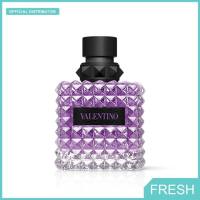
Born in Roma Donna Purple Melancholia EDP 100ml
₱10,500.00
Buy on Lazada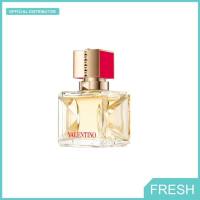
Valentino Voce Viva Eau De Toilette
₱7,500.00
Buy on Lazada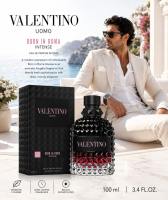
Valentino Uomo Born in Roma Eau de Parfum Intense for Men 100ml
₱6,500.00₱10,000.00
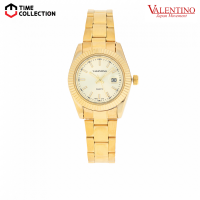
Valentino 20122467-Gold - Gold Dial Analog Stainless Steel Strap Watch For Women
₱1,495.00
Buy on Lazada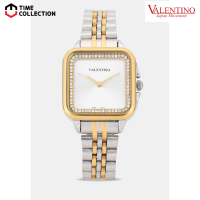
Valentino 20122573-TWO TONE-SILVER DIAL Analog Stainless Band Watch for Women
₱1,350.00
Buy on Lazada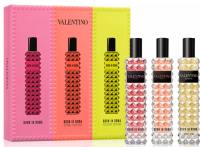
Valentino Donna Born in Roma Eau de ParfumDiscovery Gift Set For Women 3 x 15ml
₱5,000.00₱8,000.00
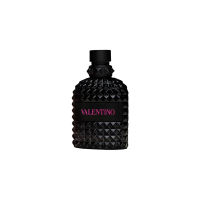
Official Valentino Uomo Born In Roma Ivory EDT PERFUME SPRAY 100ML
₱3,630.00₱7,000.00
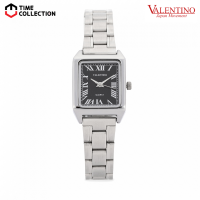
Valentino 20122257-BLK DIAL - ROMAN Analog Stainless Steel Band Watch for Women
₱1,095.00
Buy on LazadaAbout Valentino
Valentino, officially known as Maison Valentino, stands as one of Italy’s most globally recognised luxury fashion houses. Established in Rome in 1960 by Valentino Garavani and Giancarlo Giammetti, the maison is synonymous with haute couture, dramatic eveningwear, refined Italian craftsmanship, romantic femininity, and its signature shade of intense red, widely known as “Valentino Red.” 1
Today, Valentino’s operations span haute couture, women’s and men’s ready-to-wear, accessories, footwear, handbags, eyewear, and beauty and fragrance. Creative direction is led by Alessandro Michele, who was appointed in April 2024, while Riccardo Bellini has served as CEO since September 2025. 2
Basic profile
| Category | Information |
|---|---|
| Full name | Maison Valentino |
| Common name | Valentino |
| Founded | 1960 |
| Founders | Valentino Garavani & Giancarlo Giammetti |
| Founded in | Rome, Italy |
| Industry | Luxury fashion |
| Main fields | Haute couture, ready-to-wear, leather goods, footwear, accessories, eyewear, beauty |
| Creative Director | Alessandro Michele |
| CEO | Riccardo Bellini |
| Major shareholder | Mayhoola |
| Strategic shareholder | Kering |
| Signature aesthetic | Italian couture, romantic elegance, theatricality, craftsmanship |
| Iconic color | Valentino Red |
| Official website | valentino.com |
Valentino defines itself as an established Italian couture maison rooted in craftsmanship, creativity, uniqueness, and emotional beauty. 3
Founder: Valentino Garavani
The history of Valentino begins with Valentino Clemente Ludovico Garavani, universally known simply as Valentino. Born in 1932 in Voghera, Italy, he cultivated an interest in art and fashion from a young age. At 17, he relocated to Paris to study at the École de la Chambre Syndicale de la Couture, where he gained foundational experience within the French haute couture system. 4
Prior to establishing his own maison, he worked in Paris and learned from prominent couture figures before returning to Italy to open his first atelier on Via Condotti in Rome in 1959. That same year, he presented his debut haute couture collection, “Ibis.” 5
The following year, he formally established Maison Valentino alongside Giancarlo Giammetti, who became the business and strategic counterpart to Valentino’s creative vision. This partnership between creative talent and business acumen proved to be one of the fundamental pillars of Valentino’s enduring success.
The founding of Valentino
1960 — Rome
Maison Valentino was officially founded in 1960. The division of responsibilities between the two founders was critical to the brand’s development:
- Valentino Garavani — creative vision, design, and couture
- Giancarlo Giammetti — business strategy, management, and international expansion
This combination enabled Valentino to evolve beyond a designer’s atelier into an internationally recognised luxury business. 6
Rome itself became integral to the brand’s identity. Unlike many major European fashion houses whose histories are centred in Paris, Valentino’s identity remains deeply connected to Roman culture, architecture, art, and Italian couture.
Early international breakthrough
1962 — Florence and Pitti
A pivotal moment in the maison’s early history occurred in 1962, when Valentino was invited to present a haute couture collection at the Sala Bianca of Palazzo Pitti in Florence. This presentation brought significant international attention to the young designer and helped establish Valentino as a serious name in Italian couture. 7
This period was crucial as Italy was developing a growing reputation as a centre of luxury fashion alongside Paris. Valentino emerged as one of the key designers who helped establish Italian fashion as a global luxury force.
The White Collection
One of Valentino’s most defining early moments took place in 1968 with the presentation of an all-white haute couture collection that became known as the “White Collection.” Its restrained palette and elegant silhouettes stood in contrast to the stronger colours and visual exuberance common in fashion at the time. 8
The collection achieved particular fame because Jacqueline Kennedy selected a Valentino design for her wedding to Aristotle Onassis. The resulting publicity dramatically increased Valentino’s international profile. According to the maison’s historical account, it subsequently received approximately 60 orders for identical dresses. 9
This episode illustrates a formula that would become fundamental to Valentino: couture combined with celebrity and cultural visibility. The clothes were not merely garments; they became part of the public identities of influential women.
Valentino and celebrity culture
Throughout his career, Valentino dressed many of the most famous women of the 20th century. His clients included figures such as:
- Jacqueline Kennedy
- Elizabeth Taylor
- Audrey Hepburn
- Grace Kelly
- Sophia Loren
- Jane Fonda
- Anjelica Huston
- Marisa Berenson
The maison’s historical archive emphasises Valentino’s long-standing relationship with actresses, royalty, social figures, and other prominent women. 10 This helped establish an enduring image characterised by glamour, elegance, femininity, and celebrity association. The red carpet would eventually become one of the most important stages for the brand.
Expansion beyond Rome
Valentino gradually transformed from a Roman couture house into an international luxury brand. Significant boutique openings included:
- Paris — 1968, 42 Avenue Montaigne
- Milan — 1969
- Rome and New York — 1970
- London — 1974
- Tokyo — 1976
These expansions allowed Valentino to develop a worldwide luxury retail presence while maintaining Rome as its creative heart. 11
Product categories
Valentino’s offerings extend considerably beyond haute couture.
Haute couture
At the apex of the hierarchy is Valentino Haute Couture. This represents the most artisanal and exclusive side of the maison, involving elaborate construction, handwork, embroidery, intricate fabrics, and highly specialised craftsmanship. Couture is important not only commercially but also culturally, as it communicates the highest expression of Valentino’s design identity.
Women’s ready-to-wear
Women’s ready-to-wear constitutes one of the maison’s major business segments. It translates couture concepts into collections that can be produced and distributed on a larger scale.
Men’s fashion
Valentino also produces men’s ready-to-wear and accessories. The men’s universe has increasingly become a vital component of the contemporary maison.
Valentino Garavani accessories
The Valentino Garavani line is particularly associated with the brand’s accessories, including:
- Handbags
- Shoes
- Small leather goods
- Belts
- Accessories
- Eyewear
Eyewear
Valentino maintains an eyewear business covering sunglasses and optical frames. In 2026, the maison announced a long-term global partnership with Kering Eyewear for the development and distribution of its eyewear collections.
Beauty
Valentino also operates in fragrances and cosmetics through its partnership with L’Oréal. The two companies announced a long-term global licensing agreement for Valentino beauty and fragrance in 2018. 12
Visual identity
Valentino’s visual language can be described as romantic, elegant, dramatic, feminine, Italian, and couture-driven. However, the maison’s aesthetic has evolved considerably throughout its history.
Valentino Red
Perhaps the most famous element is Valentino Red. The brand became strongly associated with an intense, saturated red that appears repeatedly in its collections and has become part of the maison’s cultural identity. The colour works particularly well with Valentino’s traditional eveningwear because it creates an immediately recognisable visual statement.
However, Valentino is not simply a “red dress brand.” Its broader visual vocabulary includes:
- Black
- White
- Ivory
- Pink
- Gold
- Florals
- Lace
- Embroidery
- Silk
- Velvet
- Elaborate prints
- Sculptural silhouettes
Design philosophy
The original Valentino aesthetic was heavily centred around beauty and elegance. His clothing often emphasised:
- Sophisticated silhouettes
- Controlled proportions
- Luxurious fabrics
- Evening dressing
- Elaborate surface decoration
- Femininity
- Refined tailoring
Unlike designers who deliberately pursued ugliness, shock, or extreme conceptualism, Valentino’s work historically embraced the idea that luxury clothing should be beautiful. The modern maison continues to describe its values using concepts such as modern elegance, emotional beauty, craftsmanship, uniqueness, and individuality. 13
The importance of craftsmanship
Craftsmanship is central to Valentino’s identity. The company maintains its haute couture tradition through specialised ateliers and artisans who work on highly complicated garments. This is particularly significant because luxury fashion is not defined solely by branding.
At the highest level, Valentino’s value derives from design, materials, craftsmanship, time, scarcity, and cultural prestige. The maison describes its savoir-faire as a continuation of time-honoured techniques and artisanal expertise. 14
Creative director history
Following Valentino Garavani’s era, the maison has undergone several creative phases.
Valentino Garavani (1960–2007)
Valentino himself established the core identity of the brand and remained its defining creative figure for decades before retiring from active fashion design in 2007.
Alessandra Facchinetti
Facchinetti briefly served as creative director following Valentino’s retirement.
Maria Grazia Chiuri & Pierpaolo Piccioli
The duo initially worked together on Valentino’s creative direction. Their tenure was significant in modernising the maison while retaining its couture heritage.
Pierpaolo Piccioli
In 2016, Piccioli became the maison’s sole creative director. His Valentino became renowned for combining traditional couture techniques with a more contemporary and sometimes minimalist approach, expanding the brand’s cultural relevance among younger luxury consumers.
Alessandro Michele
On April 2, 2024, Alessandro Michele was appointed Creative Director of Valentino. He oversees the women’s and men’s collections, accessories, and haute couture. His appointment was particularly significant given his previous role as the creative force behind Gucci, where he developed a highly recognisable maximalist, historical, and eclectic aesthetic. His leadership represents another major chapter in the maison’s evolution.
Valentino under Alessandro Michele
Michele’s Valentino represents a new interpretation of the house’s heritage. Rather than simply reproducing Valentino Garavani’s classic style, Michele approaches the archive through:
- Historical references
- Elaborate styling
- Eclectic combinations
- Ornamentation
- Cultural references
- Romanticism
- Maximalism
- Reinterpretation of archival Valentino codes
This approach addresses a critical balance for luxury houses: managing heritage alongside change. If a brand changes too much, it risks losing its identity; if it changes too little, it risks irrelevance. Valentino’s contemporary strategy aims to preserve its historical couture DNA while allowing for new creative interpretations.
Ownership
Valentino’s ownership structure has evolved over its history. A significant development occurred in 2023, when Kering acquired a 30% stake in Valentino from Mayhoola, the Qatar-backed investment group. This transaction was part of a broader strategic partnership between Kering and Mayhoola.
As of 2026, Mayhoola remains the majority shareholder, while Kering owns 30%. Reports indicate that Valentino is approximately 70% owned by Mayhoola and 30% by Kering, with Kering holding an option related to acquiring the remaining stake by 2029. Consequently, Valentino operates with a distinct ownership structure and is not simply a Kering brand in the same manner as Gucci, Saint Laurent, or Bottega Veneta.
Current business situation
Valentino remains a major global luxury house, though like much of the industry, it has faced a challenging market environment. In June 2026, it was reported that Valentino’s 2025 revenue fell 15% to €1.12 billion, while the company recorded an operating loss of €103 million, compared with an operating profit in 2024. The company has been pursuing cost control and efficiency measures while attempting to preserve the brand’s long-term value.
This context highlights that prestige does not automatically equate to financial growth. Luxury brands have faced changing consumer demand, particularly in parts of Asia, while high operating costs and the expense of maintaining stores, fashion shows, artisans, and global marketing can pressure profitability.
Relationship with Rome
Rome is not merely the location where Valentino was founded; it is intrinsic to the maison’s identity. The brand’s world is connected to:
- Roman architecture
- Italian art
- Historic palazzi
- Renaissance and Baroque culture
- Italian cinema
- Mediterranean elegance
- The tradition of Italian craftsmanship
The maison’s headquarters and key creative activities remain closely tied to Rome, distinguishing Valentino from many luxury houses whose identities are more strongly associated with Paris.
Comparison with other luxury houses
Valentino occupies a distinct position within the luxury fashion landscape.
| Brand | Strongest historical association |
|---|---|
| Chanel | Modern Parisian elegance, tweed, Chanel suit |
| Dior | New Look, couture femininity |
| Gucci | Italian luxury, leather goods, maximalism |
| Prada | Intellectual/minimalist fashion |
| Versace | Glamour, sensuality, boldness |
| Armani | Sophisticated tailoring and understated elegance |
| Dolce & Gabbana | Mediterranean sensuality |
| Valentino | Couture, romantic elegance, eveningwear, Italian glamour |
While these descriptions simplify complex brands, they illustrate Valentino’s specific historical niche.
Reasons for prominence
Valentino’s importance stems from several converging factors:
- The founder: Valentino Garavani became one of the defining couture designers of the 20th century.
- Celebrity association: The maison dressed some of the world’s most famous women.
- Couture: Valentino retained a strong relationship with haute couture even as it expanded into a global luxury business.
- Italian identity: It became one of the international symbols of Italian fashion.
- The colour red: “Valentino Red” became an exceptionally powerful brand code.
- Accessories: Handbags and shoes transformed the brand from an elite couture house into a broader luxury lifestyle business.
- Constant reinvention: Different creative directors have interpreted Valentino in diverse ways while retaining recognisable elements of the maison.
Important milestones
- 1932 — Valentino Garavani is born in Voghera, Italy.
- 1959 — He opens his first Roman atelier on Via Condotti and presents his first haute couture collection, Ibis.
- 1960 — Maison Valentino is officially founded with Giancarlo Giammetti.
- 1962 — Valentino gains international recognition at the Sala Bianca in Florence.
- 1968 — The famous White Collection is presented; Jacqueline Kennedy wears Valentino for her wedding.
- 1970s — Valentino expands internationally through boutiques in major cities.
- 1980s–1990s — Valentino becomes firmly established as one of the world’s major luxury fashion houses.
- 2007 — Valentino Garavani retires from fashion design.
- 2016 — Pierpaolo Piccioli becomes sole Creative Director.
- 2018 — Valentino and L’Oréal establish a long-term beauty licensing partnership. 12
- 2023 — Kering acquires a 30% stake in Valentino.
- 2024 — Alessandro Michele becomes Creative Director.
- 2025 — Riccardo Bellini becomes CEO.
- 2026 — The maison continues its development under Alessandro Michele while expanding its eyewear partnership with Kering Eyewear.
Valentino in popular culture
Valentino has historically maintained an unusually strong relationship with red carpets and celebrity dressing. Its garments are frequently worn for:
- Film premieres
- Award ceremonies
- Fashion events
- Weddings
- Major cultural events
- Editorial fashion photography
This is strategically important. A haute couture gown worn by a famous person can generate enormous cultural exposure for the maison, even if the garment itself is not sold commercially. In this sense, couture functions partly as brand communication.
Business model
Valentino’s business can be understood through several tiers:
- Top level: Haute couture — Extremely exclusive, highly labour-intensive creations.
- Luxury fashion — Ready-to-wear collections for women and men.
- Leather goods and accessories — Handbags, shoes, and small leather goods.
- Lifestyle categories — Eyewear, fragrances, and beauty.
This structure allows Valentino to maintain the prestige of couture while generating substantially larger revenues from products such as handbags, shoes, fragrances, and ready-to-wear.
Brand positioning
In marketing terms, Valentino is a high-prestige luxury brand. Its value is based on more than functional product quality. Customers purchase a combination of:
- Product: Materials and craftsmanship
- Design: Recognisable aesthetic
- Heritage: More than six decades of history
- Exclusivity: Scarcity and price
- Status: Association with couture and celebrities
- Emotion: Beauty, glamour, and aspiration
Consequently, a Valentino handbag cannot be evaluated purely by comparing its material cost with its retail price; the consumer is purchasing an entire cultural and symbolic universe.
Valentino Garavani vs. Valentino
A distinction exists between the brand names:
- Valentino / Maison Valentino refers to the overall fashion house.
- Valentino Garavani is the name prominently used for many of the brand’s accessories, particularly bags, shoes, and leather goods.
When a product is labelled Valentino Garavani, it belongs to the Valentino universe, with “Garavani” paying homage to the founder.
Distinctive characteristics
Valentino can be understood as a meeting point between:
- Italian craftsmanship
- French-influenced haute couture tradition
- Roman culture
- Hollywood/celebrity glamour
- Modern luxury business
Its historical achievement lies in turning the sophisticated world of couture into a globally recognisable luxury brand without completely abandoning its couture roots.
Valentino today
As of 2026, Valentino is in a transitional phase. The house is being shaped by Alessandro Michele’s creative direction, while Riccardo Bellini leads the business as CEO. It remains majority-owned by Mayhoola, with Kering holding 30%.
The challenge for contemporary Valentino is determining how a historic Roman couture house can remain culturally relevant, commercially strong, and unmistakably Valentino in the 21st century. The answer likely involves balancing its historical strengths—couture, craftsmanship, glamour, Roman identity, and recognisable codes—with new creative interpretations and a broader contemporary luxury business.
Summary
Valentino is a Rome-founded Italian luxury fashion house established in 1960 by Valentino Garavani and Giancarlo Giammetti. It grew from a couture atelier into a global luxury brand famous for haute couture, elegant eveningwear, celebrity dressing, Italian craftsmanship, and its iconic Valentino Red. After Valentino Garavani’s retirement, the maison passed through several creative eras, most notably those of Maria Grazia Chiuri and Pierpaolo Piccioli, before appointing Alessandro Michele as Creative Director in 2024. Today, Valentino encompasses haute couture, women’s and men’s ready-to-wear, accessories, leather goods, eyewear, and beauty, and remains one of the defining names in Italian luxury fashion.
References
- Our people | Valentino
- History
- Life at the Maison | Valentino
- Histoire
- Storia
- Valentino V-Universe: discover now | Valentino
- Maison
- For new Kering CEO, offloading Valentino would be tough but smart reset
- Valentino shareholders pledge fresh support for 2026 after losses, rising debt
- test prod smartling 1
- Historia
- Life at the Maison | Valentino
- Geschichte
- 歴史