Shop on Lazada
Unilever products
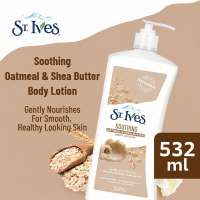
ST. IVES SOOTHING BODY LOTION OATMEAL & SHEA BUTTER 532ML
₱483.00₱643.00
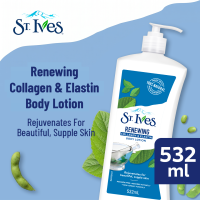
St. Ives Renewing Body Lotion Collagen and Elastin 532ML
₱483.00₱643.00
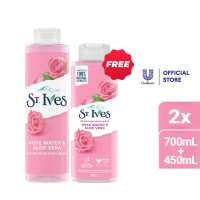
Buy St. Ives Refreshing Bodywash Rose Water & Aloe Vera 700Ml Get Free Body Wash 450Ml
₱499.00₱1,421.00
![[BUNDLE OF 2] ST. IVES SOOTHING BODY WASH OATMEAL & SHEA BUTTER 600ML](https://ph-live.slatic.net/p/cfa9bf85baf93b784bc0a93f71b3f106.jpg_200x200q80.jpg)
[BUNDLE OF 2] ST. IVES SOOTHING BODY WASH OATMEAL & SHEA BUTTER 600ML
₱545.00₱1,262.00
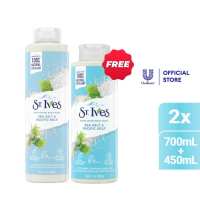
Buy St. Ives Exfoliating Body Wash Sea Salt & Pacific Kelp 700Ml Get Free Body Wash 450Ml
₱499.00₱1,421.00
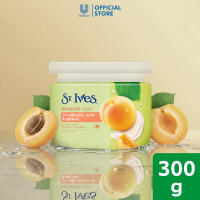
St. Ives Blemish Care 2% Salicylic Acid & Apricot Body Scrub 300G
₱410.00₱608.00
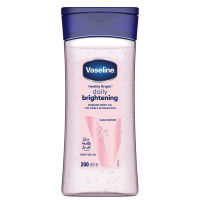
Vaseline Intensive Care Body Gel Oil Daily Brightening 200ML
₱490.00₱730.00
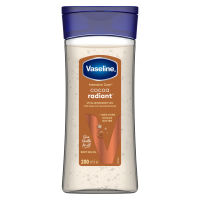
Vaseline Intensive Care Body Gel Oil Cocoa Radiant 200ML
₱490.00₱730.00
About Unilever
Overview
Unilever is a British multinational consumer-goods company with a diverse portfolio spanning beauty and wellbeing, personal care, home care, and foods. It ranks among the world’s largest fast-moving consumer goods (FMCG) businesses, with products sold in 190 countries and used by approximately 3.7 billion people daily. In 2025, Unilever reported €50.5 billion in turnover and employed about 96,000 people.1
The company is incorporated in England and Wales, though its modern corporate structure reflects a long history of British, Dutch, and international operations.
Quick facts
| Field | Information |
|---|---|
| Company name | Unilever PLC |
| Industry | Consumer packaged goods / FMCG |
| Founded | 1930 as Unilever; predecessor companies date back much further |
| Formation | Merger of Margarine Unie and Lever Brothers |
| Headquarters | London, United Kingdom |
| CEO | Fernando Fernandez |
| Chair | Ian Meakins |
| Employees | ~96,000 |
| Countries where products are sold | 190 |
| 2025 turnover | €50.5 billion |
| Main business areas | Beauty & Wellbeing, Personal Care, Home Care, Foods |
| Stock | Publicly traded; Unilever PLC |
| Official website | Unilever.com |
Business profile
Unilever manufactures and markets everyday consumer products across a vast portfolio rather than relying on a single category. Its offerings include soap and body wash, shampoo and hair-care products, deodorants, skincare, toothpaste, laundry detergent, household cleaning products, condiments and sauces, cooking products, and food-service items. These products are generally purchased frequently, consumed relatively quickly, and distributed through extensive retail networks, classifying Unilever as an FMCG company.
Prominent brands in the portfolio include Dove, Vaseline, Axe, Rexona, Lux, Lifebuoy, Sunsilk, TRESemmé, Cif, Domestos, Surf, Knorr, Hellmann’s, and Horlicks. The specific brand mix evolves over time as the company acquires, sells, and restructures businesses to align with strategic priorities.1
History
Early origins
Unilever’s history predates the formation of the entity itself. A key predecessor was Lever Brothers, founded in Britain by William Hesketh Lever and his brother James, which became renowned for soap manufacturing and industrial-scale marketing. Another significant predecessor was Margarine Unie, a Dutch enterprise associated with margarine producers such as Jurgens and Van den Bergh. Both groups operated internationally with substantial interests in fats and oils, leading to increasing competition for raw materials and markets.
Formation of Unilever
Negotiations between these two groups culminated in the creation of Unilever on 1 January 1930 through the merger of Margarine Unie and Lever Brothers.1 This combination was strategically logical as both entities shared similar raw-material requirements, international operations, large manufacturing capabilities, consumer-product markets, and distribution networks. The merger established one of the world’s largest consumer-goods organizations.
Global expansion
Throughout the 20th century, Unilever expanded well beyond its original soap and margarine focus into personal care, home care, foods, beauty, nutrition, and consumer health. International growth extended operations across Europe, Asia, Africa, Latin America, and North America, creating a distinctive model of a global corporation operating powerful local and international brands. While some brands achieved global recognition, others remained vital primarily within specific countries or regions.
Business categories
Following a recent portfolio restructuring, Unilever’s continuing operations are organized into four main Business Groups.1
Beauty & Wellbeing
This group encompasses hair care, prestige beauty, skin care, and wellbeing. Major brands include Dove, Vaseline, and TRESemmé. In 2025, Beauty & Wellbeing generated approximately €12.8 billion in turnover.1
Personal Care
Focusing on products used directly by consumers, this category includes deodorants, oral care, and skin cleansing. Key brands are Dove, Rexona, Axe, Lifebuoy, Closeup, and Pepsodent. Personal Care generated approximately €13.2 billion in 2025.1
Home Care
Home Care covers laundry, fabric care, household cleaning, and home hygiene. Brands in this segment include Cif, Domestos, Comfort, Surf, and Sunlight. The group generated approximately €11.6 billion in 2025.1
Foods
Unilever remains a significant player in foods, particularly in condiments, cooking aids, mini-meals, and food-service products. Important brands include Knorr, Hellmann’s, and Unilever Food Solutions. Foods generated approximately €12.9 billion in 2025.1
Ice Cream demerger
Ice Cream is no longer part of Unilever’s continuing business groups. In December 2025, Unilever completed the demerger of its Ice Cream business, creating a separate entity named The Magnum Ice Cream Company, which holds famous brands such as Magnum. Following the separation, Unilever retained a 19.85% minority stake in the new company.1 This marked a significant strategic shift, as ice cream had historically been one of Unilever’s most recognizable divisions.
Brand portfolio
Unilever’s competitive strength relies heavily on its brand portfolio, which is highly localized; consumers in different markets encounter distinct combinations of products.
Beauty & personal care
- Dove
- Vaseline
- Axe
- Rexona
- Lux
- Lifebuoy
- Sunsilk
- TRESemmé
- Pepsodent
- Closeup
Home care
- Cif
- Domestos
- Comfort
- Surf
- Sunlight
- Persil (in relevant markets)
Foods
- Knorr
- Hellmann’s
- Unilever Food Solutions
Business model and Power Brands
Unilever operates on a model that flows from research and development through brand building, manufacturing, distribution, and retail to the consumer. Unlike ordinary manufacturers, Unilever leverages significant brand power to drive active consumer preference for names like Dove or Knorr over generic alternatives.
The company places particular emphasis on “Power Brands,” which accounted for approximately 78% of turnover in 2025 and grew faster than the overall business.1 This strategy prioritizes investment behind brands with the greatest potential rather than maintaining an equally broad portfolio, explaining why Unilever selectively acquires certain businesses while divesting others.
Acquisitions and divestments
Acquisitions have been central to Unilever’s evolution, with recent activity focusing on premium beauty, personal care, and wellbeing. In 2025, Unilever acquired Wild, a UK natural and refillable personal-care company; the remaining stake in Nutrafol; Dr. Squatch, a US personal-care brand; and, through Hindustan Unilever, a majority stake in India’s Minimalist beauty brand.1 Concurrently, the company has sold or separated businesses deemed less strategically important, reflecting a modern strategy focused on fewer, bigger, and stronger businesses.
Presence in Indonesia
Unilever maintains a significant presence in Indonesia through PT Unilever Indonesia Tbk, commonly known as Unilever Indonesia. Operating for decades, it is one of the country’s most recognizable consumer-goods companies, offering products across personal care, beauty, home cleaning, laundry, oral care, and foods. Brands such as Lifebuoy, Dove, Sunsilk, Pepsodent, Rinso, Sunlight, Royco, and Cif are deeply embedded in the Indonesian market. Unilever Indonesia is separately listed on the Indonesia Stock Exchange (IDX).
Financial performance
According to its 2025 Annual Report, Unilever’s financial scale includes:1
- Turnover: €50.5 billion
- Operating profit: €9.0 billion
- Net profit: €6.2 billion
- Free cash flow: €5.9 billion
- R&D spending: €836 million
- Employees: ~96,000
- Countries where products are sold: 190
- Daily consumers: ~3.7 billion people
Underlying sales growth was 3.5% in 2025, providing a clearer picture of business performance than reported revenue, which was affected by currency movements and portfolio changes.1
Leadership and governance
As of 2026, Fernando Fernandez serves as Chief Executive Officer, having assumed the role on 1 March 2025 after succeeding Hein Schumacher. Fernandez is a veteran Unilever executive who previously served as CFO and held leadership positions in Beauty & Wellbeing and Latin America.1 Ian Meakins serves as Chair. The company is governed by a Board of Directors, while day-to-day strategy execution is managed by the Unilever Leadership Executive (ULE).1
Corporate structure
Unilever’s structure operates hierarchically from Unilever PLC down to global business groups, regional and country organizations, individual brands, and finally products. For instance, while Unilever PLC may own a brand globally, a local subsidiary typically handles manufacturing, marketing, and distribution within a specific country. This arrangement enables the company to combine global scale with local market expertise.
Sustainability
Sustainability is integral to Unilever’s corporate identity, with focus areas including climate, nature, plastics, and livelihoods. Initiatives address greenhouse-gas emissions, packaging, waste, responsible sourcing, agricultural supply chains, and worker welfare.1
However, these ambitions face scrutiny given the practical challenges of managing packaging waste, plastics, and emissions at a massive scale. Because Unilever sells billions of physical products, even minor adjustments to packaging or ingredients can have significant cumulative effects.
Factors driving success
Unilever’s global scale is attributed to several factors:
- Brand recognition: Consumers identify with specific brands without necessarily associating them with the parent company.
- Distribution: Sophisticated global supply and distribution networks ensure product availability.
- Economies of scale: High volumes allow costs to be spread efficiently.
- Local adaptation: Formulas, packaging, advertising, and brands are tailored to local markets rather than being identical globally.
- Marketing: Historical and continued heavy investment in advertising and brand building.
- Innovation: Annual R&D spending of hundreds of millions of euros drives new formulations, packaging, and formats.1
Criticism and controversies
Like many multinationals of its size, Unilever faces criticism regarding plastic and packaging waste, environmental impact, supply-chain practices, palm-oil sourcing, labor and human rights, marketing practices, sustainability claims, pricing, restructuring, and tax governance. Some issues pertain to specific subsidiaries or suppliers rather than the entire group and must be evaluated individually.
Current strategy
Modern Unilever is more focused than in previous decades, emphasizing three transformations: “Desire at Scale” to enhance cultural relevance; “Play to Win” to foster high-performance culture; and “Fit for the AI Age” to leverage technology for creativity and productivity.1 Strategic growth opportunities are targeted in beauty, wellbeing, personal care, premium products, digital commerce, and key markets including the United States and India.1
Industry comparison
Unilever belongs to a select group dominating global consumer packaged goods.
| Company | Particularly strong in |
|---|---|
| Unilever | Personal care, beauty, home care, foods |
| Procter & Gamble | Beauty, grooming, home/family care |
| Nestlé | Food, beverages, nutrition |
| PepsiCo | Beverages and snacks |
| Colgate-Palmolive | Oral care, personal care, home care |
| L’Oréal | Beauty and cosmetics |
| Reckitt | Hygiene, health and consumer products |
Unilever is distinguished by combining beauty and personal care, home care, and foods under a single corporate group.
Significance
Unilever’s importance lies in the deep integration of its products into daily life. A typical consumer may use multiple Unilever brands in a single day, from morning hygiene routines to evening household chores. This ubiquity exemplifies the global FMCG model, where consumers interact constantly with brands rather than the corporation itself.
Formed in 1930 through the merger of Margarine Unie and Lever Brothers, Unilever evolved from a soap and margarine producer into a multinational giant with a portfolio including Dove, Vaseline, Rexona, Lifebuoy, Knorr, and Hellmann’s. Today, it reaches billions of consumers in 190 countries with roughly €50 billion in annual turnover, pursuing a strategy focused on stronger brands, premium segments, and technological advancement while addressing the environmental and social challenges inherent in global consumer goods.1