Shop on Lazada
Vimoto products
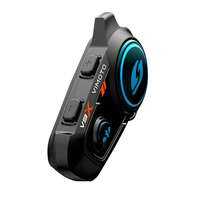
Vimoto | Bluetooth Helmet with JBL Wireless Communication
₱343.38
Buy on Lazada
Vimoto | Helmet Compatible Bluetooth Earphones Smart Noise Reduction
₱12,275.53
Buy on Lazada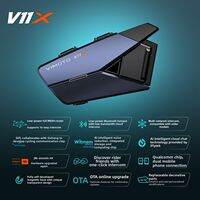
Vimoto | Full-face Intercom Music Intelligent Noise Reduction Bluetooth Headset for Motorcycle Helmet
₱11,374.70
Buy on Lazada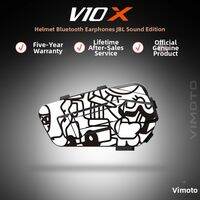
Vimoto | JBL-Component Bluetooth Headset with Wireless Intercom New Shell Sticker
₱227.90
Buy on Lazada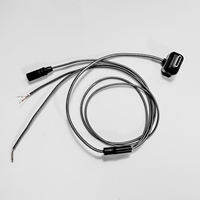
Vimoto | Soft & Hard DIY Mic Foam Covers
₱495.00
Buy on LazadaAbout Vimoto
Brand Overview
Vimoto (维迈通) is a Chinese technology brand that specialises in motorcycle communication equipment, particularly Bluetooth helmet intercoms and integrated communication systems for riders. The company positions itself as an innovative technology firm dedicated to the design, research, and production of equipment capable of functioning across diverse riding environments.1 It is important to distinguish Vimoto from Vmoto, an unrelated Australian electric-motorcycle manufacturer; despite the similar names, the two entities operate in entirely different sectors with no corporate affiliation.2
The Vimoto product ecosystem encompasses helmet-mounted Bluetooth communicators, multi-rider intercom systems, mobile applications, audio and noise-reduction technologies, and communication solutions tailored for both motorcycle groups and professional users. Its current product lineup includes models such as the V11X, V11S, V10X, V10S, XR, V9X, V9S, and V8S, alongside the DODO riding-communication platform.1
Brand Identity
The Chinese name 维迈通 is commonly romanised as Vimoto. According to the company, the name derives from a Chinese pronunciation associated with “为摩托” and the English phrase “WILL MOTORCYCLE,” signifying that the brand exists specifically for motorcycles, enthusiasts, and the riding community.1
Vimoto’s stated corporate vision is “让每一次摩托骑行都安全且不孤单” (“Make every motorcycle ride safe and never lonely”), while its mission is “行无疆,听无界” (“Ride without boundaries, listen without limits”).1 These statements reflect a strategic focus on communication between riders during travel, rather than functioning as a general-purpose Bluetooth audio manufacturer.
History
2010–2011: Establishment
Vimoto began designing and developing its first-generation motorcycle helmet Bluetooth headset in 2010. The company was formally established in 2011 and commenced sales of its inaugural product on 15 April 2011, utilising initial technology originating from Taiwan.1 This period defined the brand’s core category: Bluetooth communication equipment integrated with motorcycle helmets.
2015: V6 and V8 Generation
On 15 August 2015, Vimoto introduced the V6 and V8 generation products using a new technology platform from a Chinese supplier. The company states that this generation helped make Vimoto and the V8 model synonymous with motorcycle helmet headsets in its domestic market.1 This era marked the brand’s transition from a generic Bluetooth product maker to a recognisable motorcycle-communication specialist.
2017: Technical Expansion
In 2017, Vimoto significantly upgraded its technical capabilities and expanded its engineering team to include 23 software engineers and six hardware engineers.1 The development focus shifted towards proprietary communication, software, and hardware capabilities rather than the assembly of conventional Bluetooth products.
2018: Architectural Redesign
At the 2018 Chongqing Motorcycle Expo, Vimoto initially introduced a communication architecture centred on the T10 central control unit and DODO. However, feedback from a rider prompted the founder—himself an experienced motorcyclist—to reconsider the entire architecture. The company subsequently discarded the existing design to rebuild the system from scratch.1 This decision underscores a product philosophy that prioritises rider feedback and real-world usage over laboratory specifications.
2020: Network-Based Communication
Marking its 10th anniversary in 2020, Vimoto introduced a new generation of products and substantially developed the Vimoto DODO application. This included the launch of DODO UNC, a network-based communication system designed to allow motorcycle groups to communicate without the distance or participant limitations typical of traditional Bluetooth intercoms.1 This represented a strategic shift from Bluetooth-only communication towards a hybrid, network-connected ecosystem.
Product Evolution
Vimoto’s product development focuses on four primary areas: Bluetooth motorcycle intercoms, multi-rider group communication, audio and noise reduction, and mobile or network-based communication. The current official lineup comprises the V11X, V11S, V10X, V10S, XR, V9X, V9S, and V8S, supported by the DODO riding communication platform.1
Collaboration with Harman
In 2022, Vimoto collaborated with Harman on the development of the V9X. This model incorporated Harman system tuning and customised sound design, combining DSP, CVC, and microphone-based noise-reduction technologies with a Bluetooth 5.2 dual-chip architecture to enhance communication stability.1 This collaboration illustrates the brand’s effort to position its devices as dedicated motorcycle audio systems capable of handling complex acoustic environments involving wind, engine noise, and speech recognition.
V10X and AI Integration
In 2024, Vimoto introduced the V10X, featuring Zhiscun/ChipIntelli AI neural-network noise-reduction technology. This system uses AI-based processing to improve speech and audio clarity at high speeds. The release also included SCC 3.0, an upgraded multi-person intercom system designed for stable, long-distance group communication in complex environments.1 The V10X represents the convergence of motorcycle intercom functionality, AI noise reduction, advanced audio processing, and group communication.
DODO Platform
DODO distinguishes itself from traditional motorcycle intercoms by utilising mobile-network connectivity rather than relying solely on direct device-to-device radio transmission. Vimoto describes DODO UNC as a multi-mode communication system that removes conventional distance and participant limitations by connecting riders through the mobile network.1
While traditional Bluetooth intercoms operate on a Rider A ↔ Rider B ↔ Rider C topology limited by radio range and terrain, DODO employs a Rider A → Mobile Network → Rider B/C/D/E/... architecture. This allows for significantly larger groups and greater geographical separation, provided network coverage is available, making it particularly relevant for large touring communities and organised rides.
Technology
Bluetooth and Intercom Systems
Bluetooth technology forms the foundation of Vimoto helmet communicators, enabling connections to smartphones, other communicators, and audio sources for intercom use, phone calls, music, navigation, and voice assistants. The company has developed proprietary multi-rider communication systems, including the SCC platform, which emphasises stability and performance in challenging environments.1
Noise Reduction and Audio Engineering
Noise reduction is critical for motorcycle communication. Vimoto employs various technologies including DSP, CVC, microphone processing, and AI-based neural-network noise reduction. For example, the V9X utilised a combination of DSP, CVC, and microphone processing, while the V10X introduced AI neural-network technology.1 The brand increasingly emphasises audio quality, treating the communicator as a specialised audio system rather than a simple radio.
Design Philosophy
Vimoto describes its development approach as being influenced by an engineering-centric mindset. Products undergo extensive iteration, with functions evaluated by riders and tested in demanding conditions. Rider criticism and suggestions are reportedly incorporated into subsequent designs.1 Consequently, product design prioritises communication reliability, speech clarity, noise reduction, ease of operation, and integration with the riding environment, acknowledging that features performing well in laboratory settings may behave differently at highway speeds inside a helmet.
Target Customers
Vimoto primarily targets motorcycle users requiring hands-free communication. Key customer segments include individual riders, touring enthusiasts, motorcycle clubs, group ride participants, long-distance travellers, and professional users. The company also maintains a dedicated “police communication” product category on its official website, indicating applications beyond consumer accessories.1
After-Sales Service
The company places significant emphasis on after-sales support. Its official Chinese website states that Vimoto offers 10 years of free after-sales service experience, access to over 100 service centres, a seven-day free replacement policy for product failures, and five-year repair service via nearby centres or the factory.1 These policies address the specific durability challenges faced by motorcycle electronics, which are routinely exposed to vibration, rain, temperature fluctuations, dust, and physical handling.
Market Positioning
Vimoto occupies a distinct position within the motorcycle electronics sector, focusing specifically on the communication ecosystem rather than general consumer electronics.
| Category | Vimoto’s Position |
|---|---|
| Bluetooth Headset | Yes |
| Motorcycle Intercom | Core Category |
| Group Communication | Core Category |
| Motorcycle Audio | Major Focus |
| Smartphone Integration | Yes |
| Network-Based Communication | DODO |
| AI Noise Reduction | Newer-Generation Focus |
| Professional Communication | Yes |
| General Consumer Electronics | Not Primary Identity |
Major Timeline
| Year | Development |
|---|---|
| 2010 | Begins design and development of first-generation motorcycle Bluetooth headset |
| 2011 | Company established; first product sales begin 15 April |
| 2015 | V6 and V8 generations introduced |
| 2017 | Major technical upgrade and expansion of engineering team |
| 2018 | T10/DODO communication architecture introduced and subsequently redesigned |
| 2020 | 10th anniversary; new generation products and DODO platform launched |
| 2022 | V9X launched with Harman collaboration and enhanced audio/noise reduction |
| 2024 | V10X launched with AI neural-network noise reduction and SCC 3.0 |
| 2026 | Current ecosystem includes V11X/V11S, V10X/V10S, XR, V9X/V9S, V8S, and DODO |
Distinction from Vmoto
Readers should note that Vimoto (维迈通) and Vmoto are entirely separate businesses. Vimoto is a Chinese manufacturer of motorcycle communication equipment, helmet Bluetooth systems, and the DODO platform. In contrast, Vmoto is an Australian-founded company known for electric scooters and motorcycles, historically associated with Super Soco.2 Despite the phonetic similarity, there is no relationship between the two brands.