Shop on Lazada
Saba products

Original Saba Ginataang Tulingan / Mackerel in Natural Oil / Squid in Soy Sauce Can 425g
₱169.95₱179.00
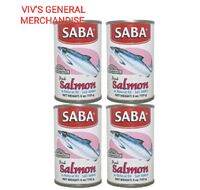
Saba Pink Salmon in Natural Oil ( 155g x 4 cans )
₱324.00
Buy on Lazada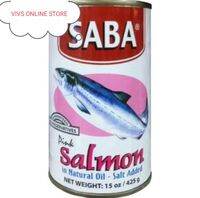
Saba Pink Salmon in Natural Oil ( 425g)
₱185.00
Buy on Lazada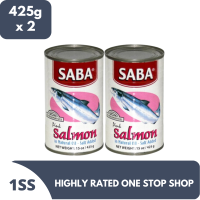
Saba Pink Salmon Natural Oil 425g x 2
₱375.00
Buy on Lazada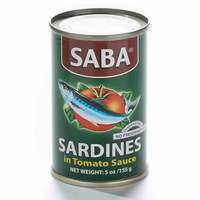
SABA SARDINES In Tomato Sauce with Chili & Non-Chili (115g) x 6pcs
₱234.00₱289.00
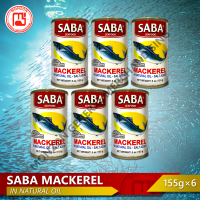
Saba Mackerel in Natural Oil Salt Added 155g (by 6)
₱329.00₱347.00
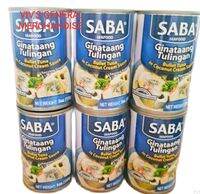
Saba Ginataang Tulingan ( 155grams x 6 cans )
₱372.00
Buy on Lazada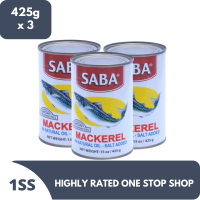
Saba Premium Mackerel in Natural Oil 425g x 3
₱359.00
Buy on LazadaAbout Saba
Saba is an Australian contemporary fashion brand recognised for its refined tailoring, minimalist aesthetic, modern workwear, and elevated wardrobe essentials. Founded by Australian fashion designer Joe Saba, the label has been a fixture in Australian fashion culture for six decades and is particularly associated with clean silhouettes, sophisticated suiting, knitwear, and understated design.1
As of 2026, Saba is celebrating its 60th anniversary, making it one of the longstanding Australian fashion labels still operating under its original name.1
Quick facts
| Category | Information |
|---|---|
| Brand | Saba |
| Industry | Fashion / apparel |
| Country of origin | Australia |
| Founder | Joe Saba |
| Founded | 1965 |
| First store | Flinders Lane, Melbourne |
| Current focus | Men’s and women’s contemporary fashion |
| Known for | Tailoring, workwear, knitwear, minimalist design |
| Parent company | APG & Co |
| Official website | saba.com.au |
History
Origins: 1965
The history of Saba began in 1965 when Joe Saba opened the Joseph Saba Shirt and Sweater Shop on Flinders Lane in Melbourne. The original business focused heavily on men’s shirting and knitwear.1
Within a few years, Saba expanded beyond traditional business clothing. In 1969, he introduced Staggers, a jeans label that became an important part of Australia’s emerging denim culture. The brand’s approach to denim helped connect Saba with the youth-oriented fashion movement of the late 1960s and 1970s.2
The Saba label
The Saba name became particularly prominent in the 1970s. Joe opened his first women’s Saba store in 1974 on Toorak Road in South Yarra, Melbourne. The store combined his own designs with imported international fashion, including influential Japanese and European designers.3
During this period, Saba developed a reputation not simply as a clothing retailer but as a fashion destination. The business became associated with designers such as Yohji Yamamoto, Rei Kawakubo, and Issey Miyake, helping expose Australian customers to avant-garde international fashion.3
Expansion during the 1980s and 1990s
Joe Saba gradually shifted the business toward his own designs and Australian manufacturing. By the 1980s, the company was producing a much larger proportion of its own garments rather than relying primarily on imported merchandise.3
The 1990s were an important expansion period. Saba opened stores in Sydney, Perth, and Brisbane, eventually building a network of 17 stores. A major Melbourne flagship was later established on Collins Street.4
Saba also developed a strong reputation for minimalist clothing, particularly the use of black, restrained silhouettes, and sophisticated tailoring. Joe Saba became known in Australian fashion for his modern interpretation of classic clothing.4
Change of ownership
Joe Saba eventually sold the business in 2002 and stepped back from day-to-day fashion operations.1
Saba subsequently became part of the Australian fashion group APG & Co, whose portfolio also includes brands such as Sportscraft and JAG.1
Although ownership and management have changed, the brand has retained the core ideas associated with its founder: modern tailoring, simplicity, quality construction, and clothing designed for everyday Australian life.
Design philosophy
The design identity of Saba can broadly be described as minimalist, sophisticated, and functional.
Rather than relying heavily on rapidly changing trends, the brand emphasises garments that can remain relevant for several seasons. Saba describes its approach as creating a modern wardrobe with pieces that transcend individual fashion trends.5
Several characteristics are particularly associated with the brand:
- Tailoring: Structured but relatively relaxed suits, jackets, and trousers.
- Minimalism: Clean lines, restrained detailing, and uncomplicated silhouettes.
- Workwear: Clothing designed to transition between professional and everyday settings.
- Elevated basics: Knitwear, shirts, tops, trousers, and other wardrobe foundations.
- Neutral colours: Black, white, navy, beige, grey, and other understated tones frequently feature in the brand’s aesthetic.
- Australian practicality: Designs intended to work with Australia’s relatively relaxed approach to professional dressing.
The brand’s philosophy is particularly visible in its contemporary workwear collections, which combine traditional tailoring with more comfortable and flexible silhouettes.1
Womenswear and menswear
Today, Saba operates as a men’s and women’s fashion brand.
Women’s fashion
The women’s collection includes:
- Dresses
- Tailored suits
- Blazers
- Trousers
- Skirts
- Shirts
- Knitwear
- Tops
- Jackets and coats
- Denim
- Accessories
The women’s range is particularly associated with polished workwear and modern tailoring.1
Men’s fashion
The men’s range includes:
- Suits
- Jackets
- Shirts
- Trousers and chinos
- Knitwear
- Polos
- T-shirts
- Jeans
- Shorts
- Accessories
The men’s collection continues the brand’s historical connection with tailoring and sophisticated everyday clothing.1
The Dharma range
One of Saba’s best-known contemporary developments is Dharma, a tailoring and suiting range designed around versatility and ease of wear.
Dharma has become particularly associated with Saba’s workwear identity. The fabric and construction are intended to offer a combination of structure, comfort, resistance to creasing, and suitability for travel.1
The range illustrates an important evolution in the brand’s design philosophy: traditional tailoring is retained, but the clothing is adapted to contemporary working lifestyles where people may move between offices, travel, and social settings during the same day.
Joe Saba
Joe Saba is the central figure in the brand’s history.
Born in 1940, he became one of Australia’s prominent fashion designers and retailers. His influence extended beyond the Saba label itself through his introduction of denim, international designers, and minimalist fashion to Australian consumers.6
His contribution to Australian fashion was formally recognised in 2005 when he was included in Australia Post’s Australian Legends of Fashion stamp series. His designs are also represented in collections including the Powerhouse Museum in Sydney and the National Gallery of Victoria in Melbourne.2
Brand identity
Saba is positioned between traditional tailoring and contemporary Australian lifestyle dressing.
It is not positioned as an extreme luxury fashion house, nor as a mass-market fast-fashion label. Instead, Saba occupies the territory of premium contemporary fashion: clothes with a relatively timeless appearance, higher emphasis on construction and fabric, and a strong focus on fit.
Its visual language can be summarised as Australian ease combined with modern tailoring and minimalist sophistication. This distinguishes Saba from brands that depend primarily on seasonal trends or conspicuous branding.
Place in Australian fashion
Saba holds a significant position in Australian fashion history because its story extends across several different eras.
It began with traditional men’s shirting in the 1960s, participated in the Australian denim revolution through Staggers, became a destination for international avant-garde fashion, expanded into women’s fashion, and eventually developed into a contemporary lifestyle and workwear brand.2
That continuity is one reason the brand’s 60th anniversary in 2026 is significant. Saba has recently been working with Joe Saba and his family to digitise and preserve six decades of archival material, including historic press coverage, photographs, and memorabilia. The project is being undertaken with the State Library of Victoria as part of preserving the brand’s contribution to Australian fashion history.2
Saba today
In 2026, Saba describes itself as a maker of a “modern wardrobe”, with an emphasis on outerwear, workwear, knitwear, tailoring, and elevated essentials. Its current collections cover both men’s and women’s clothing.1
The brand’s contemporary direction remains closely connected to its historical DNA: clean design, tailoring, practicality, and understated sophistication, while adapting those principles to modern lifestyles.