Shop on Lazada
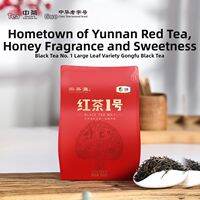
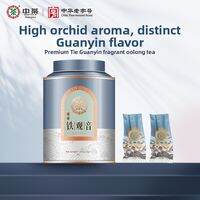
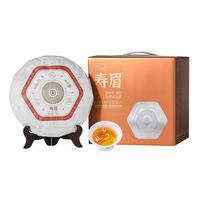
Chinatea products
About Chinatea
Overview
Chinatea (Chinese: 中茶) is a prominent Chinese tea brand and the core label of China Tea Co., Ltd., a state-owned enterprise under COFCO Corporation. Established in 1949, the company identifies as the first state-owned professional tea company founded after the establishment of the People’s Republic of China. Today, it operates as a comprehensive tea enterprise managing cultivation resources, procurement, research and development, processing, branding, distribution, and retail.1
The brand’s positioning integrates traditional Chinese tea culture with modern food manufacturing and national identity. In English-language corporate communications, Chinatea uses the proposition “National Drink Chinatea,” while its current Chinese positioning emphasizes “Good Tea is in China Tea.”2
| Field | Information |
|---|---|
| Brand | Chinatea / China Tea / 中茶 |
| Company | China Tea Co., Ltd. |
| Founded | 1949 |
| Ownership | State-owned; part of COFCO |
| Industry | Tea, beverages, food & agricultural products |
| Headquarters | Beijing, China |
| Parent group | COFCO Corporation |
| Brand proposition | “National Drink Chinatea” |
| Current positioning | Provider of tea-related healthy lifestyles |
| Product scope | Whole-category Chinese tea |
| Major categories | Green, yellow, white, oolong, black, dark/Pu’er and scented tea |
| Major associated brands | Chinatea, Seawall, Butterfly, Monkey King, Wooden Warehouse |
| Markets | China and international markets |
COFCO currently describes China Tea Co., Ltd. as the only central state-owned enterprise in China’s tea industry and as a full-category tea enterprise with an integrated industry chain.3
History
Foundation and early development
China Tea was established in 1949, linking its history directly to the development of China’s modern tea industry following the founding of the People’s Republic of China. The company states it was the first state-owned professional tea company of the new era, with early activities focused on production, processing, domestic distribution, and international trade.4
This historical foundation is central to the Chinatea brand identity. Rather than presenting itself solely as a modern packaged-tea company, it positions itself as an institutional representative of Chinese tea culture. Key figures in the modernization of Chinese tea production, including Wu Juenong, Feng Shaoqiu, and Zhang Tianfu, are associated with the company’s development of mechanized and standardized processing.5
Export industry development
For much of its history, China Tea played a pivotal role in China’s tea export system. Subsidiaries developed specialized expertise in specific regions; for instance, the Xiamen operation became known for oolong and black tea, while Fujian operations focused on export-oriented production of oolong, jasmine, white, black, green, and dark teas.6 This heritage has given Chinatea a distinct international identity among traditional Chinese tea companies, with affiliated brands reaching markets across Asia, Europe, Africa, the Middle East, and North America.7
Relationship with COFCO
Chinatea operates within COFCO Corporation, one of China’s largest state-owned food and agricultural groups. COFCO classifies China Tea among its specialized companies and food-industry chains, providing access to a broader agricultural ecosystem beyond independent tea merchandising.8 This relationship supports Chinatea’s strategy of controlling multiple stages of the value chain, from growing resources and procurement to processing, quality management, branding, and distribution. COFCO describes China Tea as maintaining an independent, integrated whole-industry-chain system covering procurement, R&D, production, and sales.9
Brand identity
The name Chinatea explicitly links the product category with the country most associated with its cultural origins. The registered trademark combines red and green visual elements: green represents nature and health, while red symbolizes China’s land and vitality.10 Consequently, the brand communicates Chinese origin, traditional culture, national identity, quality, natural consumption, and modernization simultaneously.
A primary historical proposition, “National Drink Chinatea,” connects everyday tea consumption with cultural identity, representing both product quality and cultural taste.11 The company positions itself as a provider of healthy lifestyles rather than merely a seller of tea products. In Chinese-language branding, the message “好茶在中茶” (“Good Tea is in China Tea”) is also prominently used.12
Product portfolio
Chinatea employs a whole-category strategy, operating across virtually the entire traditional Chinese tea spectrum rather than specializing in a single variety. Its portfolio includes:
- Green tea: Includes West Lake Longjing and other varieties.
- Yellow tea: A smaller but historically significant category.
- White tea: Sourced from major producing regions such as Fujian.
- Oolong tea: A key strength, particularly through Fujian and Xiamen operations.
- Black tea: Extensive experience in production and export.
- Dark tea: Includes Hunan dark teas and related products.
- Pu’er tea: Substantial business operations based in Yunnan.
- Scented/flower tea: Particularly jasmine tea, often associated with the Butterfly and Monkey King brands.
- Liu Bao tea: Operations in Guangxi associated with this specific dark tea.
- Tea beverages: Expansion into modern consumption formats and derivative products.13
According to COFCO, the portfolio covers the six traditional tea categories—green, yellow, white, oolong, black, and dark tea—plus scented tea.14
Associated brands
Beyond the master brand, the China Tea organization operates several recognizable subsidiary brands:
Chinatea
The flagship brand representing the broadest expression of Chinese tea culture across multiple categories.15
Seawall
Associated with the Xiamen tea business for over half a century, Seawall is strongly linked to oolong tea in southern Fujian and eastern Guangdong. Products have been exported to dozens of countries. The name references Xiamen’s historical seawall connecting the island to the mainland.16
Butterfly
Linked to Fujian operations, Butterfly has historically been a significant international export brand. Its portfolio includes jasmine tea and other Chinese teas, with sales reported in more than 60 overseas markets.17
Monkey King
Dating back to 1950 through the Hunan tea organization, Monkey King is a notable historical brand associated with flower/jasmine tea. It maintains a large domestic distribution network and is considered a key product brand within the group.18
Wooden Warehouse / 100-year Mucang
This brand encompasses dark-tea product lines associated with Anhua dark tea and Hunan tea culture.19
Manufacturing and supply chain
Chinatea emphasizes control over its supply chain through a procurement model involving cooperation between the company, suppliers, and tea farmers. This approach allows for quality standards to be established from the raw material stage through processing.20
COFCO reports that China Tea manages more than 220,000 mu of controllable tea-garden bases in major growing areas including Fujian, Yunnan, Guangxi, Hunan, Zhejiang, Anhui, Shaanxi, and Guizhou. Additionally, the company operates 18 processing bases across these regions.21 This integrated model enables management of critical quality factors such as cultivar, altitude, soil, climate, harvesting season, processing technique, storage, blending, and packaging.
Research and technology
Despite its traditional image, Chinatea emphasizes industrial research and standardized manufacturing. Official materials cite 6 standardized production systems, 1 integrated tea R&D center, 10 professional laboratories, and multiple technical patents.22 The company also claims historical involvement in standardizing Chinese tea-processing technology, including work on ripe Pu’er fermentation, white-tea processing, and dark-tea technologies.23
Quality and certification
Quality control is integral to the group’s export operations. For example, the Fujian operation holds certifications including ISO 9001, HACCP, ISO 14001, ISO 22000, FSSC 22000, and organic certifications for various international markets.24 Specific certifications vary by subsidiary, factory, and product line.
Distribution
Chinatea utilizes a mix of traditional and modern channels, including wholesale distributors, exclusive stores, supermarkets, group purchasing, e-commerce, international export channels, and direct sales. Scale varies by subsidiary; for instance, the Xiamen operation has reported over 13,000 outlets, while COFCO’s group-level profile cites more than 2,500 China Tea brick-and-mortar stores. These figures reflect different scopes of operation.
International presence
International trade has been foundational to China Tea since its inception. Associated companies and brands have exported to Southeast and East Asia, Europe, North America, Africa, the Middle East, Central Asia, and Russia. The Xiamen Seawall brand reports exports to 58 countries and regions, while Fujian’s Butterfly products have reached over 60 overseas markets. This demonstrates that overseas trade is a historical business pillar rather than a recent expansion.
Diplomatic and national role
Chinatea is frequently associated with official diplomatic events. Products have been selected as national gifts or protocol items for occasions such as the 2014 APEC meeting, the 2017 Belt and Road International Cooperation Summit Forum, and the 2017 BRICS leaders’ meeting. These selections reinforce the brand’s dual status as a consumer product and a national cultural symbol.
Recognition as a Time-honored Brand
Chinatea has been recognized as a China Time-honored Brand. The company states its trademark belongs to the first group of officially recognized time-honored brands and describes itself as the only whole-category tea enterprise in the relevant database. This designation underscores continuity, combining history, state-owned heritage, industrial scale, and modern quality control.
Current scale
According to COFCO, China Tea has over 76 years of industrial history. Current metrics include:
- More than 220,000 mu of controllable tea-garden bases
- 18 processing bases
- Production covering all major Chinese tea categories
- More than 2,500 physical stores
- An integrated procurement, R&D, production, and sales system
In 2023, China Tea ranked No. 1 among China’s Top 100 Tea Enterprises by Comprehensive Strength, receiving further brand honors in 2024.
Brand philosophy
Chinatea’s philosophy encompasses several core themes:
- Chinese identity: “China” serves as the central cultural component of the brand.
- Tea as culture: Tea is treated as part of history, diplomacy, and daily life.
- Whole-category coverage: The brand represents the diversity of Chinese tea rather than a single style.
- Health and nature: Emphasis on natural, ecological, and safe consumption.
- Industrial modernization: Integration of traditional culture with standardized factories and quality systems.
- Accessibility: Subsidiary brands like Seawall and Monkey King have historically emphasized affordability for ordinary consumers.
Industry significance
Chinatea holds a unique position in the tea industry due to its deep institutional roots dating to 1949 and its role in transitioning China’s tea trade toward modern standardization. Its portfolio spans the entire tea spectrum, supported by decades of export experience and the infrastructure of COFCO. Ultimately, Chinatea functions as a form of national branding, deliberately associating its products with Chinese culture, quality, and international representation.
Comparison with specialty tea brands
| Aspect | Chinatea |
|---|---|
| Heritage | High; founded in 1949 |
| Ownership | State-owned / COFCO |
| Product focus | Whole-category Chinese tea |
| Positioning | Mass + premium + cultural/national brand |
| Tea origins | Multiple major Chinese tea regions |
| Manufacturing | Large-scale industrial + specialized processing |
| Export history | Extensive |
| Brand architecture | Master brand plus historical category brands |
| Cultural positioning | Strong national/diplomatic association |
| Modernization | Supply-chain control, R&D, standardized production |
| International identity | Long-standing export heritage |
Assessment
Chinatea is best understood as a large tea institution with a consumer-facing master brand rather than merely a packaged tea label. Its competitive advantage lies in combining historical legitimacy with industrial breadth, leveraging knowledge accumulated since 1949 alongside COFCO’s modern infrastructure. By attempting to make “China Tea” itself a brand concept, it serves as a gateway to the wider world of Chinese tea, sitting at the intersection of producer, food company, cultural symbol, and international exporter.
References
- Company Profile_Chinese tea
- China Tea – COFCO Corporation
- Core Brand_Chinese tea
- 中茶公司
- Xiamen Tea Import and Export Co., Ltd_Chinese tea
- Fujian Tea Import & Export Co., Ltd._Chinese tea
- 〖China Tea Co., Ltd.〗
- China Tea (Hunan) Co., Ltd._Chinese tea
- 〖中茶茶叶〗品牌介绍→中茶茗茶_中茶茶业-买购APP
- Stimulating success with Chinese brews world over – Chinadaily.com.cn
- Fujian Tea Import & Export Co., Ltd.-Business Activity_Chinese tea
- History of Chinatea (Zhongcha/CNNP/COFCO) – Kunming Tea Factory | Hello Tea Cup
- Chinese tea
- Business Overview_Chinese tea
- Company Information_Chinese tea
- About Us – Your Trusted Source for Premium Chinese Tea
- TANING FruitTea-lemontea-Chinatea-mailktea – TANING FruitTea、lemontea、Chinatea、mailktea、Tea franchise、Bubble tea franchise、Beverage franchise opp
- TANING FruitTea-lemontea-Chinatea-mailktea
- CHINATEA是什么牌子_中茶品牌是什么档次?-百强排行网
- Home | TANING Fruit Tea – Chinatea | Online Order | Sunnyvale | CA
- TANING FruitTea-lemontea-Chinatea-mailktea – TANING FruitTea、lemontea、Chinatea、mailktea、Tea franchise、Bubble tea franchise、Beverage franchise opp
- 中茶(CHINATEA) – 最美标志
- 中茶CHINATEA品牌_中茶CHINATEA好不好?_中茶CHINATEA是哪家公司的?_中国茶叶股份有限公司 – 爱厂家
- 中茶CHINATEA简介-中茶茶业-十大品牌网CNPP