Shop on Lazada
Kokola products
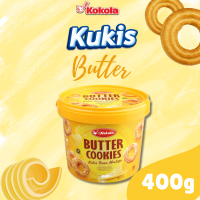
Kokola Kukis Butter 400g
₱234.00
Buy on Lazada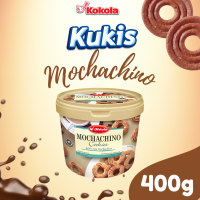
Kokola Kukis Mochachino 400g
₱234.00
Buy on Lazada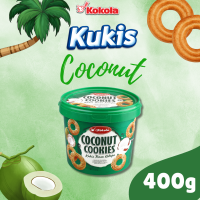
Kokola Kukis Coconut 400g
₱234.00
Buy on Lazada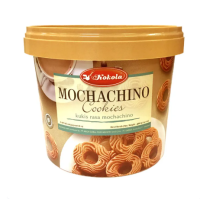
Kokola Cookies ( Butter Mochachino Milky Vanilla ) 400g
₱228.00
Buy on Lazada![[BIG] KOKOLA Cookies 400g Butter | Mochachino | Milky Vanilla | Coconut Cookies Shareable Sealed GZESTORE](https://ph-live.slatic.net/p/faaae1d53149b881abfc8015c539b9d5.jpg_200x200q80.jpg)
[BIG] KOKOLA Cookies 400g Butter | Mochachino | Milky Vanilla | Coconut Cookies Shareable Sealed GZESTORE
₱269.00₱500.00
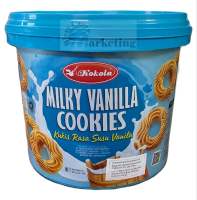
Kokola Classic Butter/Milky Vanilla Cookies Multipack 400g - Crispy Biscuit Delight
₱329.00₱379.00
Kokola Kukis Tubs 400g
₱280.00
Buy on Lazada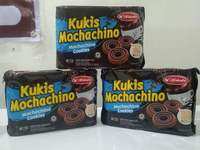
kokola kukis butter cookies 218g sold per 3 packs
₱249.00₱265.00
About Kokola
Overview
Kokola Group, commonly referred to as Kokola, is an Indonesian food manufacturing group best known for producing biscuits, cookies, wafers, crackers, and other baked snacks. Headquartered in Gresik, East Java, Indonesia, the company has evolved from a domestic biscuit producer into an international FMCG manufacturer with products exported to more than 50 countries.1
The brand’s stated philosophy is “Sharing Happylicious,” which reflects its positioning around sharing enjoyable, affordable snacks with families and consumers worldwide.1
Quick facts
| Category | Information |
|---|---|
| Brand | Kokola |
| Company / Group | Kokola Group |
| Industry | Food & beverage / FMCG |
| Main products | Biscuits, cookies, wafers, crackers, wafer rolls, sandwich biscuits |
| Founded | 1973 |
| Headquarters | Gresik, East Java, Indonesia |
| Main manufacturing companies | PT Mega Global Food Industry (MGFI) and PT Unggul Indo Modern Sejahtera (UNIMOS) |
| Business model | Branded products, manufacturing, OEM and private label |
| International reach | 50+ countries |
| Brand positioning | Family-oriented, halal, quality-focused biscuits and snacks |
| Tagline / philosophy | “Sharing Happylicious” |
The 1973 founding date is reported by Kokola Group through its corporate profile, while the company’s international site describes the business as having more than four decades of biscuit-manufacturing experience.2
History
Kokola traces its origins to 1973, giving it more than five decades of operating history as of 2026. The business is based in the Gresik industrial area of East Java, a key manufacturing region near Surabaya.2
The company initially focused on biscuit production before expanding its product portfolio and manufacturing capabilities. Rather than diversifying into a broad food conglomerate, Kokola has historically maintained a strong specialization in biscuits and wafers.
A significant milestone in its development was the entry into international markets. According to a 2015 profile, Kokola began exporting in approximately 2006, with Australia among its earliest export markets.3 It subsequently expanded across Asia, the Middle East, Europe, Africa, and North America. The company’s international website now states that its products reach more than 50 countries worldwide.1
Corporate structure
The Kokola name represents a group of related manufacturing and business entities rather than a single factory. Two primary Indonesian manufacturing companies are associated with the group:
- PT Mega Global Food Industry (MGFI) — one of Kokola’s principal biscuit and wafer manufacturing operations.
- PT Unggul Indo Modern Sejahtera (UNIMOS) — another manufacturing company linked to Kokola’s production operations.
Both facilities are located in the Driyorejo/Gresik area of East Java. Recruitment profiles identify these two companies as the group’s Indonesian headquarters and manufacturing entities.2
The group has also established international offices and distribution operations. Its international website lists offices in countries including Vietnam and the Philippines, while corporate history notes that international offices were established in Singapore, Vietnam, Nigeria, China, and the Philippines as part of its global expansion strategy.1
Products
Kokola’s core business is the production of baked snack foods. Its product portfolio includes several major categories:
- Cookies
- Cream and sandwich biscuits
- Crackers
- Wafer biscuits
- Wafer rolls
- Chocolate-chip cookies
- Milk and other flavored biscuits
- Other specialty biscuit and snack products
The company’s international product presentation specifically identifies cookies, chocolate-chip products, cream wafers, wafer rolls, crackers, and sandwich products among its offerings.1
While many items are marketed under the Kokola brand, the company also operates as a manufacturer for other businesses through OEM and private-label production. Kokola explicitly states that it offers OEM and private-label manufacturing services to external customers.1 This capability positions the group not only as a consumer-facing brand but also as a large-scale manufacturing partner.
Manufacturing
Kokola’s principal manufacturing base is located in Gresik, East Java. Its international website describes the factory as an ISO-certified facility utilizing modern baking technology, selected ingredients, and rigorous food-safety procedures.1
Food safety is a central component of the company’s value proposition. Kokola states that its operations have been certified or recognized under several food-safety and quality systems, including:
- FSSC 22000
- BRC
- Halal certification
- FDA-related food-safety requirements
- ISO
- GMP (Good Manufacturing Practices)
Certification status may vary by facility, product line, and period; individual certificates should be verified against current company documentation.1
Halal positioning
Halal certification is integral to Kokola’s brand identity and international strategy. The company emphasizes halal production as part of its broader food-safety and quality assurance system. This focus has enabled Kokola to compete effectively in Muslim-majority markets while appealing to international importers seeking halal-certified food products.1
International expansion has reinforced the importance of this certification. In an interview, Managing Director Richard Cahadi explained that overseas importers sometimes specifically required halal labeling, demonstrating that the credential had become commercially relevant beyond Indonesia.3
International expansion
International trade is a defining characteristic of Kokola’s business. The company reports that its products are currently distributed in more than 50 countries.1 Key markets include:
- Southeast and broader Asia
- Australia
- China
- The Middle East
- Europe
- Africa
- North America
Historically, exports became a vital revenue stream. A 2015 account described Kokola as exporting to markets including Australia, the United States, Europe, China, Saudi Arabia, and various Asian and African nations.3 Consequently, Kokola distinguishes itself from typical Indonesian biscuit brands by positioning itself as both a domestic consumer brand and an international biscuit manufacturer.
Distribution
Kokola utilizes a combination of domestic distribution and international export channels. Within Indonesia, products are available through supermarkets, hypermarkets, and local retailers. Internationally, the company collaborates with distributors and importers in various territories and maintains international offices to support overseas operations.1
The company describes this distribution network as essential to its strategy of making Kokola products accessible globally.1
Kokola in the Philippines
Kokola maintains an established presence in the Philippines, which is listed among its key international markets. Reflecting a strategy of maintaining local representation rather than relying solely on exports from Indonesia, the company’s international contact page lists a dedicated office:
Kokola Philippines
Somerset Alabang / Filinvest, Muntinlupa City, Philippines.1
OEM and private label
Contract manufacturing is a significant, though less visible, aspect of Kokola’s business. The company confirms its capacity to produce OEM and private-label products, allowing other businesses to sell biscuits or wafers manufactured by Kokola under their own brands or specifications.1
This dual capability means Kokola functions simultaneously as:
- A consumer brand.
- A B2B food manufacturer.
This distinction is important when evaluating the company’s scale, as its consumer brand presence does not necessarily represent the full extent of its manufacturing output.
Relationship with other brands
Kokola’s manufacturing subsidiaries have produced goods for international food companies. Industry profiles report that PT Mega Global Food Industry and PT Unggul Indo Modern Sejahtera have manufactured products associated with Mondelēz brands, including Biskuat, Chips Ahoy!, and Oreo Dutch Cocoa Wafer.2 This illustrates the capacity of Kokola’s factories to operate as manufacturing partners alongside their own branded production.
Brand identity
Kokola’s central brand concept is “Sharing Happylicious.” This philosophy combines three themes:
- Sharing — viewing food as a communal experience enjoyed with family and friends.
- Happy — positioning biscuits as an everyday source of simple enjoyment.
- Delicious — emphasizing taste and product variety.
The company’s international website describes this philosophy as an ambition to make the world “happy and delicious” through its snacks.1 This approach establishes a strongly family-oriented FMCG identity rather than a premium gourmet positioning.
Market positioning
Kokola occupies a distinct position in the biscuit industry. It competes as a mass-market family biscuit brand while possessing manufacturing capabilities suitable for international export and private-label production. Its competitive identity can be summarized as: Indonesian origin, halal positioning, large-scale manufacturing, affordable family snacks, and international distribution.
The company describes Kokola as one of Indonesia’s leading biscuit brands, emphasizing its nationwide distribution network and global export footprint.2
Competitive strengths
Kokola’s primary competitive advantages include:
- Long operating history: Established in 1973.
- Manufacturing specialization: Strong focus on biscuits and wafers rather than a diversified food portfolio.
- International reach: Exports to over 50 countries.
- Halal credentials: Valuable in Indonesia and Muslim-majority international markets.
- Food-safety certifications: Compliance with FSSC 22000, BRC, and other quality systems.
- OEM/private-label capability: Ability to serve other food businesses.
- International manufacturing experience: Track record serving export markets and multinational customers.
- Broad product portfolio: Extensive range of cookies, wafers, crackers, and sandwich biscuits.1