Shop on Lazada
La Costeña products
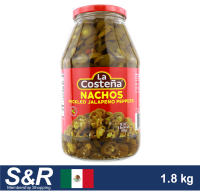
La Costena Nachos Pickled Jalapeno Peppers 1.8 Kg
₱461.00
Buy on Lazada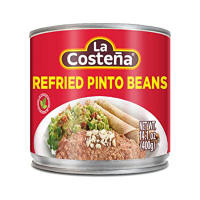
La Costena Refried Pinto Beans 400g
₱199.00₱349.00
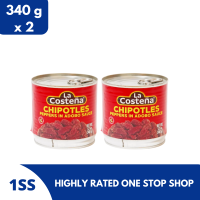
La Costena Chipotle Peppers In Adobo Sauce 340g set of 2
₱785.00₱799.00
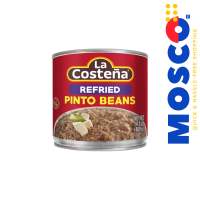
La Costena Refried Pinto Beans 400g - Authentic Mexican Frijoles Refritos
₱185.00
Buy on Lazada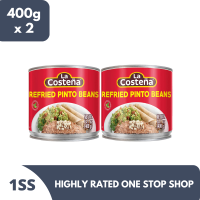
La Costeña Refried Pinto Beans 400g x 2
₱395.00
Buy on Lazada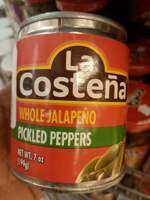
La Costeña Whole Jalapeño Pickled Peppers (199g) - Red label green and yellow accents image of peppers 7 oz net weight.
₱140.00₱200.00
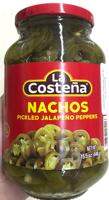
440g La Costeña Nachos Pickled Jalapeño Peppers 15.5oz
₱318.00
Buy on Lazada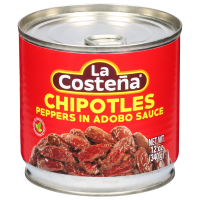
La Costena Chipotles Pepper in Adobo Sauce 340g
₱399.00₱499.00
About La Costeña
La Costeña is a Mexican food manufacturer and one of the country’s most prominent producers of packaged and preserved foods. Established in 1923, the company is widely recognised for its canned jalapeños, chipotle peppers, salsas, beans, vegetables, tomato products and other staples of Mexican cuisine. Over more than a century, La Costeña has grown from a small grocery business in Mexico City into an international food company with products sold across numerous global markets.1
Overview
| Category | Information |
|---|---|
| Company/brand | La Costeña |
| Industry | Food & beverages |
| Founded | 1923 |
| Founder | Vicente López Resines |
| Country of origin | Mexico 🇲🇽 |
| Headquarters / principal base | Ecatepec, State of Mexico |
| Original business | Grocery store / preserved foods |
| Best known for | Canned chiles, jalapeños, chipotles, beans and Mexican sauces |
| Major markets | Mexico, United States, Canada and international markets |
| International presence | More than 59 countries according to the company’s technology page; the company reported products reaching 77 countries in 2025 |
| Product range | 300+ products, according to the company |
| Official website | lacostena.com.mx |
Some figures vary between La Costeña’s publications as they refer to different dates or measurements. For instance, its 2025 corporate article states that the brand’s products reach 77 countries, while its technology page describes a presence in more than 59 countries.1
History
1923: The beginning
La Costeña traces its origins to 1923, when Vicente López Resines purchased a grocery store named La Costeña. The establishment became particularly popular for selling serrano and long peppers preserved in vinegar.1
Rather than beginning as a large industrial food manufacturer, La Costeña originated as a small retail food business whose popularity was closely connected to preserved Mexican chiles.
1937–1948: Manufacturing begins
Vicente López Resines eventually decided to manufacture La Costeña’s own cans. The company opened its first production plant in Mexico City, marking the transition from a grocery business into a food-manufacturing operation.1
This development allowed the company to control more of its production and packaging processes rather than simply selling products made by others.
1951–1971: National expansion
During this period, La Costeña’s products reached the entire Mexican market. The company also opened a new factory in Ecatepec, State of Mexico, which became its principal production location. According to the company, the Ecatepec facility occupies approximately 40 hectares.1
1986–1991: Modernization
La Costeña began modernizing its manufacturing and packaging technologies during this era. A notable change was the replacement of lead-welded containers with electrostatically sealed containers, which the company describes as an environmental improvement. It also opened a production plant in Guasave, Sinaloa, where it began producing tomato purée and vegetable products.1
1997–2003: New packaging technology
La Costeña introduced its easy-open can system during this period. The Guasave facility also adopted the Combibloc aseptic packaging system, which uses ultra-pasteurization and carton packaging. The company subsequently obtained ISO 9001:2000 certification.1
2000s: International growth
La Costeña increasingly expanded beyond Mexico during the 2000s. Its U.S. presence was strengthened through acquisitions, including Sun Vista in 2000 and Faribault Foods in 2014. The company states that these moves contributed to its growth in the American market.1
In 2007–2008, La Costeña inaugurated an automated distribution centre that it describes as one of the largest in Latin America in terms of capacity, scale and number of operations.
2010s: International brand
By 2013, La Costeña reported that its products had reached more than 50 countries. In 2014, it received the Mexican Institute of Industrial Property’s “Marca Famosa” (Famous Brand) designation.1
In Mexico, the brand developed a strong household presence. La Costeña says Kantar’s Brand Footprint study recognized it among the country’s top brands, with the company reporting that it was present in 93% of Mexican households in 2017.
2023: Centennial
La Costeña celebrated its 100th anniversary in 2023, marking a century since Vicente López Resines acquired the original grocery store. The company continues to describe itself as a business focused on preserving traditional Mexican flavors while using modern food-processing and packaging technology.1
Products
Although La Costeña is strongly associated with peppers, its portfolio is considerably broader. The company’s current product categories include:
- Chiles — jalapeños, chipotles and other peppers
- Frijoles — canned and prepared beans
- Salsas — Mexican-style sauces
- Puré y Cátsup — tomato purée and ketchup
- Mayonesa y aderezos — mayonnaise and dressings
- Vegetales — preserved vegetables
- Pozole
- Especialidades — specialty Mexican foods
- Vinagre
- Dulces
- Frutas
- Tamales
- Doña Chonita®
- Rancherita®1
Its specialty-food portfolio includes products such as moles, huitlacoche, esquites, olives, chilorio, cochinita pibil, pozole and other prepared foods.
According to the company’s technology information, its portfolio has grown to more than 300 products across 19 automated production lines.1
Signature products
Jalapeños and chiles
Chiles are arguably the product category most closely associated with La Costeña. The brand’s history began with the popularity of peppers preserved in vinegar. Today, La Costeña produces large quantities of jalapeños. The company states that its facilities can produce approximately 1,200 tonnes of jalapeños per day.1
Chipotle peppers
La Costeña’s chipotles adobados are another recognizable product. Chipotle is a smoked, dried jalapeño commonly used in Mexican cooking, and La Costeña packages it in an adobo sauce for convenient use.
Beans
Beans represent another major part of the portfolio, ranging from basic canned beans to prepared varieties and specialty products. The company has received industry recognition for its bean products. Its awards page lists several Goula Awards for its beans and, in 2023, recognition for Frijoles Raíces Mexicanas for preservation of Mexican gastronomic heritage.1
Salsas
La Costeña produces a variety of Mexican sauces, including products based on different chiles and flavor profiles. Salsas are an important part of the company’s effort to bring traditional Mexican flavors into convenient packaged-food formats.
Manufacturing and technology
A distinguishing characteristic of La Costeña is its emphasis on vertical integration and industrial food technology. The company says it continuously invests in technology, including automated cutting systems, packaging equipment, lithography ovens and electrostatic welding. It also developed its own easy-open lid production technology and environmentally oriented packaging initiatives.1
The company’s stated production capacity includes approximately:
- 1,200 tonnes of jalapeños per day
- 2,560 lids per minute
- 1.1 billion cans per year
It operates automated storage and distribution facilities, with two major distribution centres having capacities of approximately 43,000 and 63,000 pallets respectively.1
The company reports three production plants in Mexico, two in the United States and one in South America.
International presence
La Costeña began as a Mexican company but has progressively developed an international footprint. Its products are sold in markets including:
- United States
- Canada
- Latin America and the Caribbean
- Europe
- Asia
- Oceania
- Middle East
- Africa
In an August 2025 company publication, La Costeña stated that its products reached 77 countries worldwide.1
The United States is particularly important to the company. La Costeña says its American expansion was supported by acquisitions such as Sun Vista and Faribault Foods.
Business philosophy
La Costeña’s stated mission is to provide families with high-quality packaged foods that preserve the flavor of meals while making preparation easier and keeping products accessible. Its vision is to become a leading packaged-food company in Mexico while expanding its international presence.1
The company’s stated values include:
- Respect
- Integrity
- Honesty
- Equity and justice
- Loyalty
- Responsibility
This philosophy helps explain the company’s positioning: La Costeña markets its products not merely as canned ingredients, but as a way of preserving and making accessible the flavors of Mexican home cooking.
Brand identity
La Costeña’s brand identity is strongly connected with Mexican food culture, particularly the country’s appreciation for chile, sauces, beans and traditional dishes. Its marketing frequently emphasizes concepts such as:
Mexico → tradition → chile → flavor → family → convenience.
This allows the brand to occupy a distinct position in the food industry by combining traditional Mexican culinary identity with industrial-scale convenience. The company’s messaging describes its products as carrying the “sabor de México”—the flavor of Mexico—and emphasizes the preservation of culinary traditions.1
Reputation and recognition
La Costeña has received numerous awards and industry recognitions over the years. Among those listed by the company are:
- National Public Image Award, following its 90th anniversary and international expansion
- Marca Famosa recognition from the Mexican Institute of Industrial Property
- Reader’s Digest Trusted Brand recognition in the canned-food category
- Recognition in Kantar Brand Footprint
- Goula Awards for bean products
- CEMEFI ESR certification
- Internet Awards MX
- Effie Awards
- Recognition in studies of Mexican brand value and reputation1
More recently, La Costeña reported that the 2025 Brand Footprint study by Worldpanel by Numerator ranked it 8th among brands most chosen by Mexican households, with the brand present in 94% of Mexican households. The company also reported that it ranked third among food-sector brands in Mexico in that study.
Significance
La Costeña is significant because its history mirrors the development of Mexico’s packaged-food industry. It started with a relatively simple proposition: preserve Mexican chiles so people could enjoy them conveniently. Over the following century, that concept expanded into an extensive portfolio of preserved, prepared and packaged foods.
The company’s development can broadly be understood in four stages:
- 1923–1940s: Small grocery business to food manufacturer.
- 1950s–1970s: Expansion from Mexico City into a national Mexican brand.
- 1980s–2000s: Industrial modernization, automation and new packaging technologies.
- 2000s–present: International expansion and diversification into hundreds of products.
Today, La Costeña represents a recognizable example of how Mexican culinary traditions have been transformed into a modern packaged-food brand with an international market.