Shop on Lazada
La Roche-Posay products
La Roche Posay official store Pure Vitamin C10 Serum (30ml)
₱405.00₱3,669.00
La Roche Posay official store Niacinamide 10 Anti-Dark Spot Serum (30ml)
₱405.00₱999.00
La Roche Posay official store Effaclar Purifying Foaming Gel Cleanser Face Wash - Oily Acne-Prone Skin (200ml)
₱499.00₱1,288.00
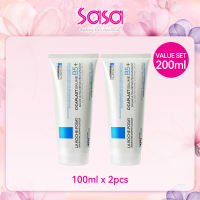
LA ROCHE-POSAY Cicaplast Balm B5+ Soothing Moisturizing Barrier Repairing for dry/irritated skin (100ml / 100ml x 2)
₱2,503.57₱5,677.00
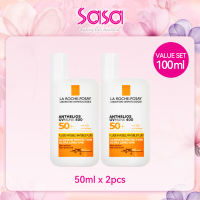
LA ROCHE‑POSAY Anthelios Uvmune 400 Invisible Fluid SPF50+ PA++++ Sunscreen Non‑Perfumed Water Sweat Resistant (50ml / 50ml x2)
₱2,133.03₱4,836.00
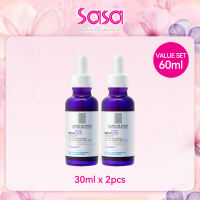
LA ROCHE‑POSAY Mela B3 Serum Antioxidant Brightening Fade Dark Spots (30ml / 30ml x 2)
₱5,294.00₱11,645.00
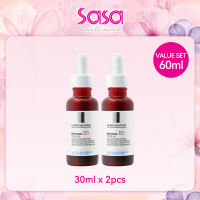
LA ROCHE-POSAY Retinol B3 Serum (30ml / 30ml x 2)
₱4,773.00₱10,500.00
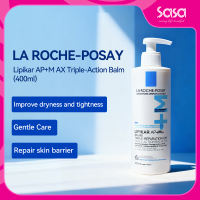
LA ROCHE‑POSAY Lipikar Balm AP+Max Deep Moisture Barrier Repair Soothe Dry Skin (400ml)
₱1,849.79₱4,195.00
About La Roche-Posay
Overview
La Roche-Posay is a French dermatological skincare brand best known for products formulated for sensitive, reactive, acne-prone, dry, and otherwise compromised skin. The brand positions itself at the intersection of dermatology, clinical research, and everyday skincare, and is part of the L’Oréal Groupe’s Dermatological Beauty Division. L’Oréal describes it as the world’s leading dermatological skincare brand, with more than 100,000 dermatologists recommending it worldwide. 1
Basic Information
| Attribute | Information |
|---|---|
| Brand | La Roche-Posay |
| Full historical name | La Roche-Posay Laboratoire Dermatologique |
| Origin | France |
| Founded | 1975 |
| Founder | René Levayer |
| Parent company | L’Oréal Groupe |
| Division | L’Oréal Dermatological Beauty |
| Core positioning | Dermatological skincare |
| Main focus | Sensitive and problem-prone skin |
| Signature ingredient | La Roche-Posay Thermal Spring Water |
| Major categories | Cleansers, moisturizers, acne care, sunscreens, barrier repair, anti-aging, pigmentation care |
| Major markets | Global; available in 60+ countries according to the brand |
| Dermatologist positioning | Strongly dermatologist-oriented |
The brand states it was founded in 1975 by French pharmacist René Levayer and has expanded to more than 60 countries.
Origin of the Name
La Roche-Posay is originally a place name rather than just a brand identifier. La Roche-Posay is a small town in western France famous for its thermal spring water and dermatological thermal center. The town’s springs have a history associated with skin treatment going back centuries. The brand’s modern identity grew out of this tradition. 2
The thermal water became the conceptual foundation of the brand: rather than presenting itself primarily as a conventional beauty or cosmetics company, La Roche-Posay developed around the idea of using dermatological science and carefully selected ingredients to care for sensitive skin.
Pre-Brand Era: Thermal Springs
The story of La Roche-Posay’s thermal water predates the company itself. According to the brand, the history of the spring can be traced to the 1400s, while the town’s reputation for dermatological thermal treatment developed over subsequent centuries. The water is naturally rich in minerals, trace elements, and selenium. 3
Local legend involves the French knight Bertrand du Guesclin and his horse, whose skin reportedly improved after contact with the spring water. This narrative forms part of the brand’s historical storytelling.
1905: Thermal Dermatology Center
The modern thermal center was established in 1905 and dedicated to treating dermatological conditions. La Roche-Posay reports that it has treated hundreds of thousands of patients since its establishment. 4
1913: Official Recognition
In 1913, the French Academy of Medicine officially recognized La Roche-Posay as a thermal spa town and acknowledged the dermatological benefits associated with its thermal water.
1975: Founding of the Brand
The modern La Roche-Posay Laboratoire Dermatologique was created in 1975 by pharmacist René Levayer. The objective was distinct for its time: to develop skincare products that could be used and recommended by dermatologists, moving beyond positioning skincare purely as beauty or cosmetics.
1989: Acquisition by L’Oréal
La Roche-Posay became part of L’Oréal in 1989. It subsequently developed within L’Oréal’s dermatological-skincare activities. L’Oréal’s corporate historical records list the acquisition of La Roche-Posay in 1989. 5
This acquisition provided the brand with significantly greater R&D resources, international distribution, manufacturing capabilities, and global marketing.
2000s–2010s: International Expansion
La Roche-Posay increasingly established itself internationally as a pharmacy and dermatologist-oriented skincare brand, particularly in Europe, North America, and Asia. Major product families such as Anthelios, Effaclar, Toleriane, and Cicaplast gained global recognition.
2009: Cancer-Support Focus
The La Roche-Posay Thermal Center began treating patients experiencing skin side effects associated with cancer treatments in 2009. This initiative expanded the brand’s concept of “sensitive skin” to include extremely fragile and treatment-compromised skin.
2010: Sun-Awareness Campaign
La Roche-Posay launched its Save Our Skin campaign in 2010, focusing on sun exposure and UV protection.
2018–2019: Thermal Spa Acquisition
L’Oréal moved closer to the physical origins of the brand by announcing a project to acquire the Société des Thermes de La Roche-Posay, the company operating the thermal center, in 2018. The acquisition was reflected in L’Oréal’s corporate records shortly thereafter. 6
Philosophy
The brand operates under the principle: Dermatology first, beauty second.
La Roche-Posay does not primarily sell the idea of luxury skincare or beauty transformation. Its core proposition follows this path:
Skin problem → dermatological research → carefully formulated product → clinical testing → everyday skin improvement.
Key emphases include:
- Dermatologist collaboration
- Sensitive-skin suitability
- Clinical testing
- Carefully selected ingredients
- Formulation safety
- Skin-barrier protection
- Scientific research
- High-performance sun protection
- Support for people with severely compromised skin
The brand states its products undergo stringent clinical testing for efficacy and safety, including testing on sensitive skin. Corporate materials report 800+ clinical studies and more than 100,000 dermatologists recommending the brand worldwide. 7
Thermal Spring Water
La Roche-Posay Thermal Spring Water is the defining ingredient of the brand’s history. Sourced from the spring in La Roche-Posay, France, the water is naturally characterized by its mineral and trace-element composition, including selenium. The brand incorporates it into many formulations. 3
La Roche-Posay attributes several properties to the thermal water:
- Soothing
- Softening
- Antioxidant activity
- Support for sensitive skin
- Effects related to the skin microbiome
The brand notes that the water is subject to extensive quality controls and incorporated into skincare products shortly after extraction.
Distinction
Thermal water is not the sole reason for product efficacy. Modern formulations utilize a broader combination of ingredients, including:
- Glycerin
- Niacinamide
- Ceramides
- Salicylic acid
- Hyaluronic acid
- Panthenol
- Retinol
- Antioxidants
- Proprietary UV filters
Thus, the thermal water serves as the brand’s historical and formulation signature.
Effaclar — Acne and Oily Skin
Effaclar is the primary range for oily, blemish-prone, and acne-prone skin. Products address excess sebum, clogged pores, blackheads, inflammatory blemishes, post-acne marks, and acne recurrence. In Vietnam, La Roche-Posay markets Effaclar specifically for oily, acne-prone skin, citing extensive clinical research. 6
Typical products include cleansers, exfoliating/active treatments, moisturizers, and acne-focused treatments. This range supports the brand’s “acne specialist” identity.
Toleriane — Sensitive and Reactive Skin
Toleriane focuses on very sensitive, reactive, and allergy-prone skin. The range emphasizes minimalist formulations intended to support hydration and the skin barrier. La Roche-Posay describes Toleriane as designed specifically for highly sensitive and reactive skin. 7
Target concerns include irritation, dryness, tightness, sensitivity, compromised barrier, and reactivity. This range represents gentle everyday skincare.
Cicaplast — Skin Repair and Barrier Support
Cicaplast is one of the most recognizable ranges, focusing on repairing, protecting, and soothing compromised skin. The flagship product, Cicaplast Baume B5/B5+, is a thick multi-purpose balm used for dry, irritated, or compromised areas. La Roche-Posay currently describes Cicaplast Baume B5+ as a repair product with more than 15 indications.
This range is closely associated with the concept of “skin barrier repair,” appealing to both traditional pharmacy consumers and those interested in minimalist skincare.
Anthelios — Sunscreen
Anthelios is the major sun-protection line, designed for sensitive skin and high UVA/UVB protection. The brand states Anthelios represents more than 25 years of research into sun protection and sensitive skin. 8
The range includes daily facial sunscreens, products for oily/acne-prone skin, sensitive skin, pigmentation concerns, children, and high UV exposure scenarios. Sun protection is considered a key intersection between dermatology and preventive skincare.
Mela B3 — Pigmentation
Mela B3 is a newer generation of products focused on dark spots, uneven pigmentation, and discoloration. Its positioning illustrates an expansion beyond historical focuses on irritation and sensitive skin into areas such as hyperpigmentation and skin tone.
Differentiators
La Roche-Posay distinguishes itself through several characteristics:
- Pharmaceutical/Dermatological Identity: Visual and marketing language resembles a pharmacy or dermatology laboratory rather than a traditional beauty brand.
- Sensitive-Skin Focus: Even products for acne, pigmentation, or sun protection are marketed around achieving efficacy without unnecessarily compromising sensitive skin.
- Dermatologist Relationship: The company emphasizes relationships with medical professionals. L’Oréal reports more than 100,000 dermatologists recommending the brand worldwide. 1
- Clinical Research: Heavy emphasis on studies. Current U.S. materials cite 700+ studies involving more than 200,000 people, while global brand pages cite 800+ clinical studies. 7
- Pharmacy Positioning: Associated with pharmacies, dermatologists, and medical skincare rather than department-store cosmetics.
Relationship with L’Oréal
Today, La Roche-Posay belongs to L’Oréal, one of the world’s largest beauty companies. Within L’Oréal, it sits in the Dermatological Beauty Division. While it presents as a clinical/pharmacy brand, it operates within a major beauty corporation, granting access to:
- L’Oréal’s R&D infrastructure
- Global manufacturing
- International distribution
- Clinical research
- Marketing resources
- Formulation technology
- Dermatological research
L’Oréal acquired La Roche-Posay in 1989 and has developed it into a major global dermatological brand. 5
Target Consumers
The brand targets a broad demographic:
- Teenagers: Dealing with acne, oily skin, blackheads, and post-acne marks.
- Young Adults: Interested in acne treatment, sunscreen, pigmentation, and skin-barrier care.
- Adults with Sensitive Skin: Experiencing redness, dryness, irritation, and reactivity.
- Children and Babies: Certain products are formulated for very young or sensitive skin.
- People with Compromised Skin: Individuals whose skin has become fragile due to medical treatments, including cancer therapy.
Brand Architecture
A simplified view of the portfolio:
La Roche-Posay
→ Acne/oily skin → Effaclar
→ Sensitive/reactive skin → Toleriane
→ Skin repair/barrier → Cicaplast
→ Sun protection → Anthelios
→ Pigmentation → Mela B3
→ Thermal skincare → Thermal Spring Water
→ Other concerns → Additional specialized ranges
This structure allows coverage of various skincare needs while maintaining a consistent dermatological identity.
Typical Skincare Routine
A simplified routine might include:
Morning
- Gentle cleanser
- Treatment/serum if needed
- Moisturizer
- Anthelios sunscreen
Evening
- Cleanser
- Targeted treatment (e.g., acne or pigmentation)
- Moisturizer/barrier-support product
- Cicaplast when additional barrier support is needed
Different ranges address different problems; users do not need to purchase an entire range at once.
Brand Strengths
- Scientific Credibility: Built on dermatologists, clinical testing, and research rather than celebrity marketing. 1
- Sensitive-Skin Expertise: Central to the brand’s identity.
- Strong Product Segmentation: Clear purposes for Effaclar, Toleriane, Cicaplast, and Anthelios.
- Pharmacy Positioning: Occupies a middle ground between medical and consumer skincare.
- Global Recognition: Sold in more than 60 countries. 2
Brand Image
La Roche-Posay’s visual identity communicates white + blue + clinical + minimalist + pharmaceutical aesthetics, contrasting with gold, glamour, and luxury imagery. The intent is for consumers to perceive the products as skincare backed by dermatology rather than expensive beauty items. This positioning aligns with the growing consumer interest in evidence-based skincare.
Social Mission
Activities extend beyond sales, notably in support for people affected by cancer treatment. La Roche-Posay states its cancer-support programs have assisted more than 1 million people since 2021. This reflects the philosophy that dermatological problems affect comfort, confidence, and quality of life, framing the mission around “life-changing skincare”.
Timeline
| Year | Event |
|---|---|
| 1400s | Historical origins of the La Roche-Posay thermal spring story |
| 1905 | Dermatological thermal center established |
| 1913 | French Academy of Medicine recognizes the town as a thermal spa |
| 1975 | René Levayer establishes La Roche-Posay Laboratoire Dermatologique |
| 1989 | L’Oréal acquires La Roche-Posay |
| 2009 | Thermal center begins focusing on skin side effects of cancer treatment |
| 2010 | “Save Our Skin” sun-awareness campaign launched |
| 2018 | L’Oréal announces acquisition project for La Roche-Posay’s thermal spa |
| 2019 | Thermal spa acquisition appears in L’Oréal’s acquisition records |
| 2020s | Brand expands further into barrier repair, pigmentation, microbiome research, and advanced sun protection |
| 2026 | La Roche-Posay operates as a major global brand within L’Oréal’s Dermatological Beauty Division |
Summary
La Roche-Posay combines French dermatology, sensitive skin expertise, pharmacy positioning, and clinical research. Key product families include:
EFFACLAR → acne/oily skin
TOLERIANE → sensitive/reactive skin
CICAPLAST → repair/barrier support
ANTHELIOS → UV protection
MELA B3 → pigmentation/dark spots
THERMAL SPRING WATER → historical signature of the brand
This combination contributes to its status as a widely recognized dermatological skincare brand globally. 2
References
- La Roche-Posay
- The History of La Roche-Posay | La Roche-Posay Australia
- Thermal Spring Water | La Roche-Posay
- Thermal Spring Water: Soothe and Hydrate Sensitive Skin | La Roche-Posay
- L’Oréal announces the project of acquisition of Société des Thermes de La Roche-Posay
- EFFACLAR : 18 chăm sóc và sản phẩm bởi La Roche-Posay
- La Roche-Posay’s skincare ranges explained | La Roche-Posay UK
- La Roche-Posay Skincare, Sunscreen, Body Lotion Official Site