Shop on Lazada
Narciso Rodriguez products
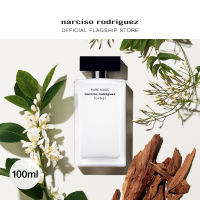
Narciso Rodriguez For Her PURE MUSC Eau de Parfum 100ml - Chypre Musky Long Lasting Perfume For Women
₱8,055.00₱8,950.00
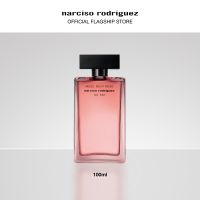
Narciso Rodriguez For Her MUSC NOIR ROSE Eau de Parfum 100ml - Floral Ambery Fragrance Perfume For Women
₱8,055.00₱8,950.00
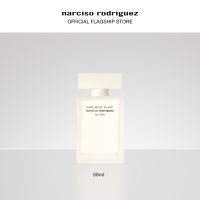
Narciso Rodriguez For Her Pure Musc Blanc Eau de Parfum Intense 50ml Long Lasting Perfume For Women
₱7,250.00
Buy on Lazada
Narciso Rodriguez For Her Eau de Toilette 100ml - Chypre Floral Perfume For Women
₱7,065.00₱7,850.00
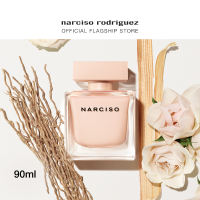
Narciso Rodriguez NARCISO Eau de Parfum Poudree 90ml - Powdery Floral Long Lasting Perfume For Women
₱7,650.00₱8,500.00
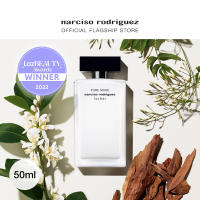
Narciso Rodriguez For Her PURE MUSC Eau de Parfum 50ml Chypre Musky Perfume For Women
₱6,030.00₱6,700.00

Narciso Rodriguez For Her MUSC NUDE Eau de Parfum 100ml - Floriental Musky Perfume For Women
₱8,055.00₱8,950.00
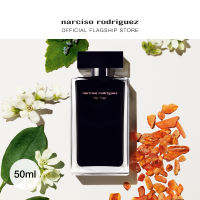
Narciso Rodriguez For Her Eau de Toilette 50ml - Floral Clean Long Lasting Perfume For Women
₱5,175.00₱5,750.00
About Narciso Rodriguez
Narciso Rodriguez is an American luxury fashion and fragrance house founded by Cuban-American designer Narciso Jesús Rodríguez III in 1997. The brand is particularly associated with minimalism, precise tailoring, body-conscious silhouettes, sensual femininity, and musk-centered perfumery. Although the fashion label established Rodriguez’s reputation, the brand’s global consumer presence today is especially strong in fragrance, led by the iconic for her collection.1
The name is often written in lowercase as “narciso rodriguez” in the fragrance brand’s current visual identity.
Brand profile
| Brand | Narciso Rodriguez |
| Founder / designer | Narciso Jesús Rodríguez III |
| Founded | 1997 |
| Origin | New York / United States |
| Founder nationality | American, of Cuban heritage |
| Industry | Luxury fashion & fragrance |
| Core aesthetic | Minimalist, architectural, sensual, refined |
| Best known today for | Perfumes, particularly for her and NARCISO |
| First fragrance | for her Eau de Toilette — 2003 |
| Fragrance group | Shiseido |
| Signature olfactory theme | Musk |
| Major fashion recognition | Carolyn Bessette-Kennedy wedding dress; Michelle Obama’s 2008 election-night dress |
| Major awards | CFDA Womenswear Designer of the Year, 2002 & 2003; CFDA Lifetime Achievement Award, 2018 |
Shiseido currently lists narciso rodriguez among its global fragrance brands, with the brand handled through Shiseido’s fragrance organization in regions including the Americas, EMEA and Asia-Pacific.2
The founder: Narciso Rodriguez
Narciso Rodriguez was born on January 27, 1961, in Newark, New Jersey, to Cuban immigrant parents. His upbringing was strongly Cuban-American, and Rodriguez has spoken about how his family’s culture, particularly the strong women around him, influenced his understanding of beauty and femininity.3
He studied at Parsons School of Design in New York before entering the fashion industry.
His early career included work at:
- Anne Klein, working during the Donna Karan era
- Calvin Klein
- TSE
- Cerruti
These experiences were important because they exposed him to the traditions of American sportswear, sophisticated tailoring and European luxury fashion.16
Rodriguez subsequently became design director of women’s ready-to-wear at Loewe, a position he held from 1997 to 2001.3
The breakthrough: Carolyn Bessette-Kennedy
The event that transformed Rodriguez from a respected industry designer into an internationally recognized name occurred in 1996.
He designed the wedding dress worn by Carolyn Bessette for her marriage to John F. Kennedy Jr.
The dress was radically understated compared with the elaborate wedding gowns popular at the time. It was essentially a minimalist, bias-cut silk slip dress with an exceptionally clean silhouette.
Its importance to Rodriguez’s career cannot be overstated.
The dress demonstrated several principles that would become central to his brand:
- Simplicity rather than ornament
- Emphasis on the female body
- Architectural construction
- Luxurious materials
- Sensuality without overt decoration
- Timeless rather than trend-driven design
Vogue describes the dress as a simple, slip-like, bias-cut design that effectively put Rodriguez “on the map.”4
It became one of the defining fashion images of the 1990s.
Founding of the Narciso Rodriguez label
Rodriguez established his own eponymous label in 1997.
The first ready-to-wear collection was presented in Milan in October 1997, immediately establishing the brand within the international fashion system.5
The timing was significant: Rodriguez represented a particular American approach to luxury that was very different from the maximalism of many European houses.
Instead of relying on conspicuous logos, elaborate decoration or theatricality, his designs concentrated on line, proportion, fabric and the body.
His clothes were often deceptively simple. A black dress might look almost ordinary at first glance, but the construction, seams, proportions and way it interacted with the body were carefully engineered.
That became one of the house’s defining characteristics.
Design philosophy
The easiest way to understand Narciso Rodriguez is to think of it as minimalism with sensuality.
The brand is minimalist, but it is not austere.
Rodriguez’s minimalism is fundamentally about the human body.
His designs frequently emphasize:
- The waist
- The shoulders
- The hips
- The back
- Curves
- Elongated proportions
- Controlled asymmetry
Vogue characterizes his aesthetic through sleek, angular lines combined with shape-enhancing silhouettes, solid colors and tailoring.6
The CFDA similarly describes his work as a continuing evolution of the minimalist tradition in American fashion.7
The “Narciso woman”
Rather than designing for a very specific social stereotype—such as “uptown,” “downtown,” young, old, conservative or avant-garde—Rodriguez has described his ideal customer more broadly.
The woman is confident, sophisticated, sensual, independent and comfortable with herself.
This explains why his clothing can look simultaneously modern, elegant, sexy, intellectual and understated.
It is sensuality achieved through shape, rather than exposure or decoration.
Signature visual language
Several characteristics repeatedly appear throughout Narciso Rodriguez’s fashion vocabulary.
Minimalism
Clean surfaces, limited decoration and an absence of unnecessary visual noise.
Architectural tailoring
Clothes are constructed almost like objects, with precise seams, panels and geometric relationships.
The female silhouette
Rather than hiding the body beneath excessive volume, Rodriguez frequently uses clothing to reveal its natural geometry.
Black and neutral colors
Black, white, ivory, grey, beige and other restrained colors are strongly associated with the house.
Menswear influence
Tailoring, suiting fabrics and masculine references frequently appear alongside feminine silhouettes.
Curves
Despite the minimalism, the clothes are often highly body-conscious. This contrast—hard structure versus soft body—is one of Rodriguez’s most recognizable design ideas.
Major celebrity associations
Narciso Rodriguez became a favorite among actresses and public figures who preferred sophisticated, relatively understated red-carpet fashion.
The designer has dressed figures including:
- Sarah Jessica Parker
- Claire Danes
- Julianna Margulies
- Jessica Alba
- Angelina Jolie
- Uma Thurman
- Jennifer Aniston
- Kerry Washington
The CFDA describes him as a favorite among celebrities and highlights numerous major women who have worn his designs.9
Michelle Obama and the 2008 election
Another landmark moment occurred on November 4, 2008.
Michelle Obama wore a red-and-black Narciso Rodriguez dress on election night as Barack Obama appeared as president-elect.
The dress immediately became an important piece of contemporary American fashion history.
It was particularly significant because it demonstrated that Rodriguez’s minimalist aesthetic could operate not only in fashion-editorial environments but also within one of the most highly scrutinized political moments in modern American history.10
Michelle Obama subsequently wore Narciso Rodriguez on other important occasions as well.
Awards and recognition
Rodriguez became one of the most decorated American designers of his generation.
Among his major recognitions:
- 1997 — CFDA Perry Ellis Award for Best New Designer
- 1997 — Vogue/VH1 Fashion Award, Best New Designer
- 2002 — CFDA Womenswear Designer of the Year
- 2003 — CFDA Womenswear Designer of the Year
- 2007 — Pratt Institute Fashion Icon Award
- 2018 — CFDA Geoffrey Beene Lifetime Achievement Award
His consecutive 2002 and 2003 CFDA Womenswear Designer of the Year wins were particularly notable: according to the brand’s biography, he became the first designer to receive the award in consecutive years.1
The transition from fashion to fragrance
This is perhaps the most important part of the brand’s commercial history.
Narciso Rodriguez entered fragrance in 2003 with Narciso Rodriguez for her.
The fragrance was inspired by a rare musk oil Rodriguez had received when he was younger.
Rather than treating perfume as a secondary licensing product, Rodriguez approached fragrance as an extension of his fashion philosophy.
The idea was essentially: what would Narciso Rodriguez minimalism smell like?
The answer became musk.
The official fragrance history says Rodriguez personally shared his musk oil with perfumers Christine Nagel and Francis Kurkdjian, which became the foundation for for her.7
Why musk became the brand’s signature
Musk is the conceptual bridge between Rodriguez’s fashion and perfume.
His fashion emphasizes the body.
Musk traditionally evokes the skin.
That makes the choice particularly appropriate.
Instead of building the brand’s identity around something obviously luxurious such as rose, oud or heavy amber, Rodriguez centered it around something much closer to the human body.
The result is a fragrance identity that is often perceived as clean, sensual, intimate, soft, elegant, warm, skin-like and sophisticated.
The official for her history describes its central accord as a modern white musk surrounded by floral, amber and woody facets.7
for her: the iconic fragrance
The original for her Eau de Toilette launched in 2003 and became the foundation of the fragrance business.19
Its visual identity was equally important.
The original campaign featured model Carmen Kass, photographed by Inez & Vinoodh.
The image—minimalist, sensual and visually restrained—helped establish the fragrance’s distinctive personality. The brand itself describes the campaign image as one of the defining images in its fragrance history.7
The perfume eventually developed into an entire family rather than remaining a single fragrance.
The fragrance architecture
Narciso Rodriguez’s perfume portfolio can broadly be understood through several major families.
for her
The original and perhaps most recognizable fragrance universe.18
Its identity revolves around the signature musk heart, with different variations exploring floral, woody, fruity and more intense interpretations.14
NARCISO
A separate fragrance universe introduced after for her, also built around musk but generally presented with a different visual and olfactory vocabulary.20
Narciso
The NARCISO line often emphasizes a more concentrated, sensual and sculptural interpretation of the brand.15
for him
The men’s fragrance line translates the brand’s musk aesthetic into masculine territory.14
All of Me
A newer fragrance chapter launched in 2023, marking the 20th anniversary of for her. The brand describes it as a new expression of its creative philosophy and an evolution of its signature.7
The importance of for her
for her is more than simply one successful designer perfume.
It effectively became the commercial signature of the Narciso Rodriguez name.
Shiseido’s own historical material identifies 2003 as the launch of the first for her fragrance and reports that the fragrance was distributed in approximately 100 countries/regions in its 2022 brand data.8
Shiseido has also described for her as a modern classic and reported that it reached the European feminine fragrance top five in April 2017.8
This is why someone who knows Narciso Rodriguez primarily through perfume may associate the brand almost exclusively with musk.
Relationship with Shiseido
An important distinction is necessary here.
Narciso Rodriguez is not simply a “Shiseido fashion brand.”
Shiseido’s involvement is particularly significant in fragrance and beauty.
Today, Shiseido identifies narciso rodriguez as one of its global fragrance brands. Shiseido EMEA says it is responsible for the global fragrance brand, while Shiseido Americas identifies itself as the regional headquarters for the Narciso Rodriguez fragrance business in the Americas.1213
This is why the fragrance business has a much larger international footprint than the fashion label itself.
Fashion vs. fragrance: two sides of the brand
One of the most interesting things about Narciso Rodriguez is that the brand has effectively developed two interconnected identities.
Fashion Narciso Rodriguez
Core ideas:
- Minimalism
- Tailoring
- Architecture
- Proportion
- Curves
- Sophisticated American fashion
Fragrance Narciso Rodriguez
Core ideas:
- Musk
- Skin
- Intimacy
- Femininity
- Sensuality
- Modern elegance
The connection is remarkably coherent.
Fashion explores the geometry of the body. Fragrance explores the sensuality of the body.
That is probably the best single explanation of the brand.
Brand positioning
Narciso Rodriguez occupies an interesting position within luxury.
It is designer luxury, but it is not traditionally “logo luxury.”
Compared with houses such as Gucci, Louis Vuitton or Versace, Narciso Rodriguez is much quieter.
Its luxury comes from construction, fabric, silhouette, perfume composition, image, craftsmanship and restraint.
The brand therefore appeals particularly strongly to consumers who appreciate understatement.
It is closer to the idea of “if you know, you know” rather than conspicuous branding.
Narciso Rodriguez compared with other minimalist designers
Within fashion history, Rodriguez is often discussed alongside minimalist designers such as:
- Calvin Klein
- Donna Karan
- Jil Sander
- Helmut Lang
But his interpretation is different.
Calvin Klein’s minimalism can feel stark and urban.
Jil Sander’s can feel intellectual and architectural.
Helmut Lang’s can feel experimental and utilitarian.
Narciso Rodriguez adds a particularly strong emphasis on the female body and sensuality.
That is what prevents his minimalism from becoming cold.
Cuban-American identity
Rodriguez’s Cuban heritage is an important but sometimes overlooked component of his story.
He was born in the United States to Cuban immigrant parents and has described himself as both very American and deeply Cuban. He has credited his upbringing, family and the women around him with shaping his understanding of beauty, perseverance and style.11
Importantly, his Cuban heritage does not manifest as a stereotypical “Latin fashion” aesthetic.
Instead, it appears more subtly through appreciation of strong femininity, sensuality, confidence, emotional warmth and attention to the individual woman.
This gives his otherwise highly controlled minimalist design a human quality.
Brand image
The Narciso Rodriguez image is remarkably consistent.
Think: black + white + skin + musk + clean geometry + sensuality.
The visual language tends to avoid excessive decoration.
Packaging, advertising and fashion imagery often emphasize monochromatic palettes, clean typography, sculptural bottles, close-up portraits, bare skin, shadows, geometric composition and understated sensuality.
This consistency has helped the fragrance business maintain a recognizable identity across different product generations.
The fragrance bottle
The bottles are an important part of the brand’s design philosophy.
Rather than using ornate, jewel-like perfume bottles, Narciso Rodriguez frequently employs simple geometric forms.
The bottle becomes almost an architectural object.
This is completely consistent with Rodriguez’s fashion.
In fact, Rodriguez was personally involved in the development of for her, including the bottle lacquer and cap, treating the fragrance bottle with the same attention he gave his clothing.7
The brand’s evolution
A simplified timeline looks like this:
1961
Narciso Rodriguez is born in Newark, New Jersey.
1980s–1990s
Works at major American and European fashion houses, including Anne Klein, Calvin Klein, TSE and Cerruti.
1996
Designs Carolyn Bessette-Kennedy’s famous wedding dress.
1997
Launches the Narciso Rodriguez fashion label.
1997–2001
Serves as women’s ready-to-wear design director at Loewe.
2002
Wins CFDA Womenswear Designer of the Year.
2003
Wins the CFDA award again and launches for her fragrance.
2000s
The fashion label continues while for her develops into a major international fragrance franchise.
2008
Michelle Obama wears Narciso Rodriguez on U.S. election night.
2018
Receives the CFDA Geoffrey Beene Lifetime Achievement Award.
2023
The fragrance house celebrates 20 years of for her and launches All of Me.7
2026
Narciso Rodriguez continues primarily as a luxury designer/fragrance name, with Shiseido managing its global fragrance business.17
What makes Narciso Rodriguez distinctive?
If you reduce the entire brand to a few ideas, its DNA can be described as:
1. Minimalism
Nothing unnecessary.
2. The body
Clothing and perfume are both built around the idea of physical presence.
3. Musk
The signature ingredient and emotional center of the fragrance universe.
4. Feminine strength
Women are presented as confident and powerful rather than merely decorative.
5. American modernism
The brand comes from New York’s fashion culture but incorporates European luxury experience.
6. Timelessness
The designs deliberately avoid being excessively tied to seasonal trends.
7. Quiet sensuality
The brand rarely screams “sexy.” It suggests sensuality through silhouette, skin, texture and scent.
Brand personality
If Narciso Rodriguez were a person, the personality would probably be intelligent, elegant, private, sensual, confident and sophisticated.
Not flashy.
Not loud.
Not overly romantic.
Not aggressively avant-garde.
Instead: quietly seductive.
That is arguably the central emotional idea connecting the fashion and perfume businesses.
Why the brand matters in fashion history
Narciso Rodriguez’s significance goes beyond simply having a successful perfume line.
He represents an important strand of late-20th- and early-21st-century American fashion: a belief that luxury can be expressed through cut, proportion and restraint rather than ornamentation.
His Carolyn Bessette-Kennedy dress became one of the most influential minimalist fashion images of the 1990s, while his subsequent collections helped establish a sophisticated, body-conscious form of American minimalism.4
His career also has cultural significance as that of a Cuban-American designer who became one of the leading figures in American fashion. The CFDA has specifically highlighted his Cuban-American heritage and his importance as a representative of the Latin community in fashion.11
References
- Narciso Rodriguez – CFDA
- Narciso Rodriguez Biography – Fashion Designer, Perfumer
- Latinx and Proud: Narciso Rodriguez – CFDA
- Narciso Rodriguez
- Narciso Rodriguez News, Collections, Fashion Shows, Fashion Week Reviews, and More | Vogue
- Narciso Rodriguez’s Exercise in Minimalism – CFDA
- 20-Year Anniversary of For Her | Narciso Rodriguez
- NARCISO RODRIGUEZ FOR HER FRAGRANCE ENTERS
- Narciso Rodriguez Honored by Couture Council for Artistry in Fashion – CFDA
- sec.gov
- Narciso Rodriguez – 25 Most Influential Hispanics in America – TIME
- Shiseido EMEA | Shiseido Company
- Fragrance Brands at Shiseido Americas Corporation
- the new intense fragrances by narciso rodriguez for her and for him | narciso rodriguez parfums
- narciso rodriguez – NARCISO eau de parfum radiante
- Rodriguez, Narciso | Encyclopedia.com
- Narciso Rodriguez
- for her EAU DE PARFUM | Narciso Rodriguez
- for her EAU DE TOILETTE | Narciso Rodriguez
- Narciso Rodriguez NARCISO — Narciso Rodriguez