Shop on Lazada
❤️No brand products

1600W 220V Industrial High Quality & Professional Angle Grinder/Power Tools angle grinder Industrial Angle Grinder - High Quality Professional Multi-Function Cutting & Grinding
₱714.00₱3,620.00
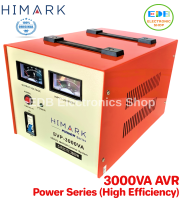
HIMARK SVP-3000VA AVR AUTOMATIC VOLTAGE REGULATOR 3000WATTS AVR POWER SERIES AVR
₱6,099.00
Buy on Lazada
Outdoor Basketball Ring Backboard with stand Movable Height-adjustable Basketball Hoop Set For Kids Adults and Teenagers
₱3,261.12₱9,999.00
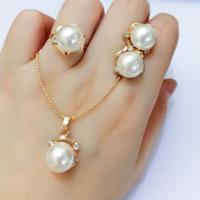
18k Bangkok Rosegold 3in1 ring size adjustable <>
₱69.00₱280.00

woman 3/4 yoga leggings woman sports quick drying leggings zumba pants fitness pants with pocket pants
₱259.00₱388.00
Premium power cell Lucchini per tray only
₱3,400.00
Buy on Lazada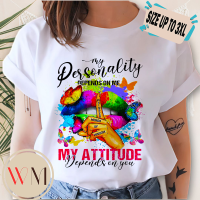
TRENDY STATEMENT QUOTES WHITE TSHIRT FOR WOMEN SMALL FREESIZE PLUS SIZE UP TO 3XL
₱149.00
Buy on Lazada
Hamburger Wrapper 6″ x 6″ pouch (100pcs)
₱119.00
Buy on LazadaAbout ❤️No brand
Overview
❤️No brand is a South Korean private-label consumer goods brand developed and operated by E-Mart, a subsidiary of the Shinsegae Group. Despite its name, ❤️No brand functions as a distinct brand identity; its core concept involves minimizing conventional branding, packaging, and marketing expenditures to prioritize product function, quality, and affordability.
Launched in South Korea in April 2015, the label initially appeared on a limited selection of inexpensive daily necessities. It has since expanded into a comprehensive private-label range encompassing food, beverages, household goods, personal care items, electronics, and other consumer products.
| Category | Information |
|---|---|
| Brand name | ❤️No brand |
| Korean name | 노브랜드 |
| Owner | E-Mart Inc. |
| Parent group | Shinsegae Group |
| Origin | South Korea 🇰🇷 |
| Launched | April 2015 |
| Type | Private-label / retail brand |
| Main proposition | Affordable products with emphasis on function and quality |
| Signature colors | Yellow and black |
| Main market | South Korea, with international presence |
| Core slogan/concept | “It’s not about the brand. It’s about the consumer.” |
History
❤️No brand originated from E-Mart’s initiative to develop products that compete primarily on value for money rather than traditional brand recognition. In 2015, E-Mart began testing the concept with items such as toilet seats, windshield wipers, and batteries. Following strong consumer interest, the assortment expanded rapidly from nine initial test products to approximately 150 items during its first major growth phase.
The foundational premise was that traditional consumer brands allocate significant resources to advertising, elaborate packaging, and brand development, costs which are ultimately passed on to consumers through higher retail prices. ❤️No brand sought to eliminate or reduce these expenses to concentrate on the essential function of the product. This approach established the philosophy: “Brand is not important; the consumer is.” Consequently, the absence of conventional branding serves as the brand’s own distinctive identity.
Brand Philosophy
The philosophy of ❤️No brand is summarized as “less branding, more product.” Rather than persuading consumers to pay a premium for a logo, the brand focuses on practical considerations:
- Essential product functions
- Materials and manufacturing methods that ensure sufficient quality
- Necessary packaging elements
- Elimination of unnecessary costs
- Pricing that represents genuine value
This approach aligns closely with the Korean concept of gaseongbi, which denotes good performance or quality relative to price. The result is a recognizable brand identity formed precisely by rejecting the need for conventional branding markers.
Visual Identity
A defining characteristic of ❤️No brand is its yellow-and-black packaging. Products typically feature a simple visual system with large black typography against a yellow background. Instead of elaborate photography or luxury-oriented design, the packaging communicates the product name and basic information directly.
This simplicity serves a commercial purpose: packaging is designed to communicate efficiently rather than function primarily as an advertising medium. E-Mart has registered ❤️No brand trademarks internationally, confirming that “NO BRAND” is legally utilized as a brand identity despite the concept being predicated on being “brandless” 1.
Products
❤️No brand has evolved into a multi-category private-label brand. Its assortment provides consumers with cost-effective alternatives for frequently purchased items across various categories:
- 🍪 Snacks and confectionery
- 🥫 Processed and packaged foods
- 🥤 Beverages
- 🍜 Instant and prepared foods
- 🧂 Sauces and seasonings
- 🥛 Dairy and frozen foods
- 🧻 Household products
- 🧴 Personal-care products
- 🔋 Batteries and everyday consumer goods
- 💻 Selected electronics and accessories
- 🐶 Pet-related products
- 🏠 Other everyday necessities
Retail Strategy
Unlike independent consumer brands, ❤️No brand’s distribution is integrated into E-Mart’s retail ecosystem. The parent company leverages its purchasing, manufacturing, logistics, and retail infrastructure to develop and distribute private-label products at scale. This integration allows the brand to utilize existing networks rather than building independent distribution channels from scratch. As the concept matured, it expanded beyond standard supermarket shelves to include dedicated ❤️No brand stores and specialized retail formats.
“No Brand” as a Brand
❤️No brand presents a conceptual paradox: it is a brand whose identity relies on not behaving like a traditional brand. It possesses all standard brand attributes, including a registered name, logo, distinctive color scheme, recognizable package design, defined target consumer, brand philosophy, product portfolio, retail presence, and intellectual property protection.
Technically, ❤️No brand is best understood as a private-label brand utilizing anti-branding as its positioning strategy, rather than literally indicating unbranded merchandise. This mirrors broader minimalist-branding movements where companies reduce the visual and commercial emphasis typically placed on brand imagery 2.
Relationship with No Brand Burger
❤️No brand is distinct from No Brand Burger (노브랜드 버거), a separate food service brand operated by Shinsegae Food within the Shinsegae ecosystem. Launched in August 2019 following the transformation of the earlier Burger Plant concept, No Brand Burger adopted the ❤️No brand name and value-for-money positioning but operates as a hamburger restaurant chain rather than a consumer goods label 3. The restaurant brand emphasizes affordable food and quality with the slogan “WHY PAY MORE?” 4.
Brand Positioning
❤️No brand occupies a middle ground between traditional retail concepts:
- Traditional branded products: Strong brand recognition, advertising, and premium positioning.
- Generic products: Minimal branding and low price.
- ❤️No brand: Recognizable identity, minimalistic branding, and value-oriented pricing.
This positioning demonstrates that a company does not need to eliminate branding entirely to market itself as “brandless.” Instead, the absence of conventional branding becomes the product’s distinguishing characteristic.
Target Consumers
The brand appeals to consumers who are price-conscious, interested in practical everyday products, and less concerned with prestigious brand names. Its target demographic values functionality and price over status and is comfortable comparing products based on utility. The proposition extends beyond mere cheapness to the question of whether additional branding provides sufficient additional value to justify a higher price.
Marketing Significance
❤️No brand serves as a notable case study in retail branding and private-label strategy. While companies typically create brands to differentiate products, ❤️No brand uses minimal branding itself as the differentiator. This strategy reduces dependence on traditional advertising while establishing strong shelf recognition through consistent packaging. The yellow color scheme, simple typography, and repeated identity make products visually distinct despite avoiding elaborate aesthetics.
Evolution
Originally focused on inexpensive daily goods, the brand’s identity has broadened. Rather than signifying simply “the cheapest product,” ❤️No brand now represents a combination of simplicity, practicality, acceptable quality, and competitive pricing. A product need not be the absolute lowest-priced item in a category to fit the philosophy; the broader proposition concerns achieving an optimal balance between quality, function, and price.
Corporate Structure
E-Mart Inc., South Korea’s major discount retailer and member of the Shinsegae Group, is the core entity behind ❤️No brand. The brand benefits from the infrastructure of this large retail organization, including sourcing, product development, manufacturing relationships, logistics, and physical distribution. The wider Shinsegae ecosystem has enabled related brands, such as No Brand Burger, to adopt similar value-oriented positioning in different market segments 3.
Legacy and Significance
❤️No brand exemplifies how private-label retailing can evolve from a low-cost alternative into a recognizable consumer brand. Its primary contribution to branding theory is the paradox at its center: the brand achieved recognition by asserting that the brand itself should not matter. This makes ❤️No brand a unique example of anti-brand branding, where consumers recognize the yellow packaging and name, yet the marketing message encourages focus on product value rather than prestige.