Shop on Lazada
Simba products
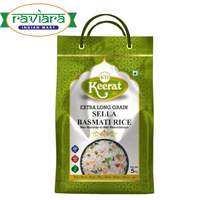
Keerat Extra Long Grain Basmati (Biryani) Rice & Keerat Sella Rice 1kg 5kg & 20kg From India
₱850.00₱1,300.00
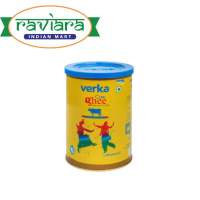
Verka Desi Ghee and Verka Cow Ghee for making tasty and rich parantha and chapatti better cooking oil from India. Groceries > Food Staples & Cooking Essentials > Oil > Blended Cooking Oil.
₱780.00₱900.00
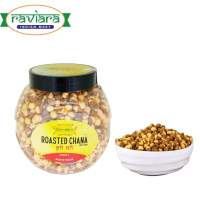
Simba Roasted Chana w skin 450g from India
₱240.00₱350.00

Red Chilli Powder (Lal Mirch) – Spicy Indian Spice Made from Dry Chilli Whole Product of India.
₱580.00₱875.00

Cumin Jeera Powder 100g – Warm & Earthy Indian Spices
₱70.00₱130.00

Coriander Powder (Dhania) Indian Spice
₱450.00₱600.00
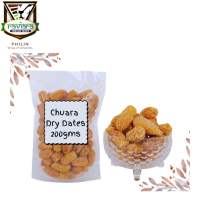
Dry Dates Chuara 200gms (khajoor) from India
₱180.00₱235.00
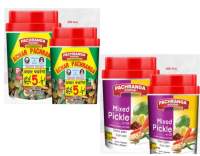
Pachranga Mix Pickle/ Achar Pickle 750ml From India
₱230.00₱300.00
About Simba
Simba is a German toy brand and the flagship label of the Simba Dickie Group, one of Europe’s leading toy manufacturers. Established in 1982 by father-and-son entrepreneurs Fritz Sieber and Michael Sieber, the brand originally focused on traditional toys such as dolls, wooden toys, board games, and plush products. It has since evolved into a comprehensive children’s toy brand with a portfolio spanning dolls, baby toys, role-play sets, musical toys, games, outdoor play equipment, and licensed entertainment merchandise.1
Note: The name “Simba” is used by several unrelated companies worldwide. This article refers specifically to Simba Toys / Simba Dickie Group, the German toy company.
Overview
| Field | Information |
|---|---|
| Brand name | Simba Toys |
| Parent company | Simba Dickie Group |
| Founded | 1 May 1982 |
| Founders | Fritz Sieber and Michael Sieber |
| Origin | Germany |
| Headquarters of group | Fürth, Bavaria, Germany |
| Industry | Toys and children’s entertainment |
| Main markets | International / worldwide |
| Brand type | Toy manufacturer and brand |
| Major product areas | Dolls, baby toys, plush, wooden toys, games, musical toys, role play and more |
| Notable brands in the wider group | Dickie Toys, BIG, Smoby, Eichhorn, Majorette, Schuco, Corolle, Jada Toys, Zoch and others |
The wider Simba Dickie Group states that its portfolio comprises more than 4,000 articles, ranging from traditional toys and classic brands to collector items and contemporary trend products.2
History
Origins
The history of Simba is rooted in the Sieber family, who were active in the toy industry prior to the establishment of Simba Toys. Fritz Sieber had worked within the German toy sector and gained experience with the British toy company Matchbox. The family eventually settled in Fürth, Bavaria, a significant hub for German toy manufacturing.3
On 1 May 1982, Fritz Sieber and his son Michael Sieber founded Simba Toys. Initially, the enterprise was small, employing only five staff members. Its early business focused particularly on wooden toys from Eastern Europe, while its broader product philosophy remained grounded in traditional children’s toys.4
Expansion into Asia
Simba expanded internationally just two years after its founding. In 1984, the company opened an office in Hong Kong and established Simba Toys HK Ltd. This move provided the company with closer access to the rapidly developing Asian toy manufacturing and supply market.5
Early growth was driven by successful product launches. In 1985, Simba’s Bear Family became its first major bestseller, selling over one million units; by 1987, sales had reportedly reached 4.8 million units. In 1987, the fashion doll Steffi Love also became an established part of the Simba portfolio.6
Creation of the Simba Dickie Group
A pivotal moment occurred in 1993 when Simba Toys acquired the Dickie Group following the death of its founder, Wolfgang Sauerborn. The combination of Simba Toys and Dickie Toys laid the foundation for what became the Simba Dickie Group.7
This acquisition significantly broadened Simba’s product portfolio, particularly in toys aimed at boys and vehicle-related products. Over the subsequent decades, the group continued to expand through acquisitions. Significant additions included:
- Eichhorn — wooden toys
- Schuco — detailed model vehicles
- Noris-Spiele — games
- BIG — known for products such as the Bobby Car
- Nicotoy — plush toys
- Smoby — outdoor and role-play toys
- Majorette — model vehicles
- Corolle — premium dolls
- Jada Toys — licensed figures, die-cast vehicles, and collectibles
These acquisitions transformed Simba Dickie from a relatively small toy company into a diversified international toy group.8
The Simba brand
Although Simba Dickie Group is now the corporate entity, Simba Toys remains one of its core brands. The Simba brand is particularly associated with traditional children’s toys rather than being limited to a single category. The company’s historical portfolio has included dolls, baby products, plush toys, wooden toys, board games, musical toys, and other children’s products.9
Key product lines associated with the Simba brand include:
Steffi Love
Steffi Love is one of Simba’s most recognised doll brands. Introduced in the 1980s, this fashion doll became integral to Simba’s identity and helped establish the company in the international doll market.10
The range subsequently expanded to include characters such as Evi Love, Steffi Love’s younger sister, who was introduced in 1996.11
Baby and preschool toys
Simba developed a substantial baby and preschool segment, launching baby products as early as 1983. Simba Baby subsequently became a distinct business segment.12
Products in this category are designed around early childhood play, encompassing sensory, developmental, role-play, and everyday-care themes.
Plush toys
Plush toys have long been an important component of Simba’s portfolio. The wider Simba Dickie Group expanded significantly in this category following the integration of Nicotoy in 2006.13
Musical toys
Simba produces children’s musical instruments and musical-play products, aligning with the company’s broader philosophy of combining entertainment with hands-on play.
Games and traditional toys
Both the Simba brand and the wider group maintain a strong connection to traditional forms of play. The group describes traditional toys as a vital part of its DNA, even as technology becomes increasingly prominent in the toy market.14
Simba and licensed properties
A significant aspect of Simba’s development has been its utilisation of entertainment licences and character properties.
A major example occurred in 2001, when Simba Toys obtained an exclusive European licence from Walt Disney for the manufacture and marketing of Disney Princess dress-up dolls.15
Licensing has allowed Simba and the wider Simba Dickie Group to connect traditional toys with popular films, television characters, and entertainment franchises. Other companies within the group have also developed extensive licensed-product businesses; for instance, Dickie Toys has worked with properties including Disney/Pixar’s Cars and Fireman Sam.16
Simba Dickie Group
It is important to distinguish Simba from Simba Dickie Group. Simba Toys is a brand and company within the larger corporate family, whereas Simba Dickie Group is the international group that owns and operates a large collection of toy companies and brands.
Today, the group encompasses a wide variety of categories, including:
- Dolls
- Baby and preschool toys
- Plush
- Wooden toys
- Model vehicles
- Radio-controlled vehicles
- Outdoor toys
- Games
- Collectibles
- Role-play toys
- Arts and crafts
- Licensed entertainment products
The group describes its portfolio as containing more than 4,000 products.17 Its major brands include Simba Toys, Dickie Toys, BIG, Smoby, Eichhorn, Majorette, Schuco, Corolle, Jada Toys, Zoch, and others.18
Family ownership
A distinctive characteristic of Simba Dickie is that it remains a family-owned business. Following Fritz Sieber’s death, his son Michael Sieber assumed management in 2004. In 2021, leadership passed to the third generation when Michael’s son Florian Sieber became CEO.19
The current management structure includes Florian Sieber as CEO, alongside other members of the management board. The company explicitly cites generational continuity as a key element of its family-business philosophy.20
Corporate philosophy
Simba Dickie presents itself as a company that combines traditional toy-making with innovation. Its stated corporate principles include consumer focus, simplicity, integrity, entrepreneurship, sustainability, diversity, teamwork, and a passion for toys.21
The company has emphasised that traditional toys remain important despite the growing role of technology in children’s entertainment. Consequently, its strategy is not to replace conventional toys with digital products, but to combine established forms of play with new trends and technologies.22
International presence
What began in Germany in 1982 has developed into an international operation. The early establishment of a Hong Kong office in 1984 was a critical step in Simba’s internationalisation.23
The wider Simba Dickie Group now operates through an international network of companies, production facilities, and sales organisations, with products distributed across numerous global markets. This international structure allows the company to combine German toy-industry heritage with international product development, Asian manufacturing and sourcing, and global distribution.24
Brand identity
From a branding perspective, Simba is defined by several key characteristics:
- Traditional play: The company maintains a strong connection to classic toys such as dolls, wooden toys, games, and plush.
- Broad product range: Rather than being identified with a single product, Simba operates across numerous children’s toy categories.
- Family heritage: The company has remained under the influence of the Sieber family since its founding.
- International orientation: Simba began expanding internationally very early, particularly through its Hong Kong operation.
- Character and licence-based products: The company utilises major entertainment properties to expand its appeal.
- Portfolio strategy: The wider Simba Dickie Group has grown by combining its own brands with acquired specialist toy companies.
Major milestones
| Year | Milestone |
|---|---|
| 1982 | Fritz and Michael Sieber establish Simba Toys |
| 1983 | First baby products launched |
| 1984 | Hong Kong office established |
| 1985 | Bear Family becomes a major bestseller |
| 1987 | Steffi Love becomes established |
| 1993 | Simba acquires Dickie Group |
| 1996 | Evi Love joins the doll portfolio |
| 1998 | Eichhorn joins the group |
| 1999 | Schuco acquired |
| 2001 | Disney Princess European licence obtained |
| 2003 | BIG joins the group |
| 2006 | Nicotoy expands the plush business |
| 2008 | Smoby joins the group |
| 2010 | Majorette joins the group |
| 2018 | Corolle becomes part of the group |
| 2019 | Jada Toys acquired |
| 2020 | Majority stake in EXIT Toys acquired |
| 2021 | Florian Sieber takes over as CEO |
| 2024 | Scout, DerDieDas and 4YOU acquired by the group |
Simba today
As of 2026, Simba is best understood not merely as a single toy product line, but as the core name within a large German family-owned toy group. Its history spans from a five-person company founded in 1982 to an international organisation with thousands of products and a diverse collection of specialist brands.26
The company’s strategy has remained relatively consistent: preserving the appeal of traditional children’s play while expanding into new categories, markets, licences, and product concepts.
Simba began as a small German toy company in 1982 and grew into the foundation of the Simba Dickie Group, an international toy business whose portfolio combines dolls, baby products, plush, games, wooden toys, vehicles, outdoor toys, collectibles and licensed products.
References
- Our history | SIMBA DICKIE GROUP
- Discover the variety of Simba Toys
- Companies & brands of the SIMBA DICKIE GROUP
- Discover the variety of Dickie Toys
- SIMBA DICKIE GROUP – We love to make toys
- Facts & figures on the group | SIMBA DICKIE GROUP
- SIMBA DICKIE GROUP – We love to make toys
- The Simba Story | Courage & Commitment
- The Simba story – Simba Global
- Publications – Simba Global
- About Us – Simba Group
- Discover the variety of Eichhorn
- Notre histoire | SIMBA DICKIE GROUP
- Our history | SIMBA DICKIE GROUP
- Simba Clothing – Homepage – Simba MY
- About Us – Simba Corp
- Toys & games for kids | Official Simba Toys Shop
- SIMBA | Your Dream Feeding Bottle・Moms’ Pick
- Products | SIMBA
- SIMBA GROUP
- Our Products | SIMBA EYEWEAR SDN. BHD.
- Beranda – Simba Cereal
- Tentang – Simba Cereal
- Beranda – Simba Cereal
- Tentang – Simba Cereal
- Produk – Simba Cereal