Shop on Lazada
Tombow products
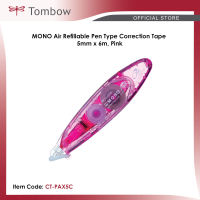
Tombow MONO Air Refillable Pen Type Correction Tape 5mm x 6m
₱99.00
Buy on Lazada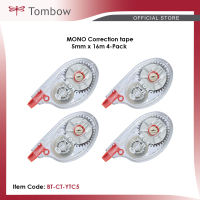
Tombow MONO Correction Tape 5mm x 16m
₱317.00
Buy on Lazada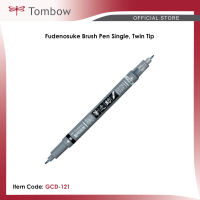
Tombow Fudenosuke Brush Pen Singles Available in Soft Tip Hard Tip and Twin Tips
₱210.00
Buy on Lazada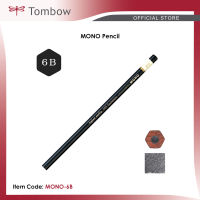
Tombow MONO Pencil Available in 14 Grades
₱48.00
Buy on Lazada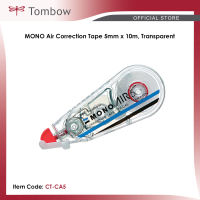
Tombow MONO Air Correction Tape 5mm x 10m
₱107.00
Buy on Lazada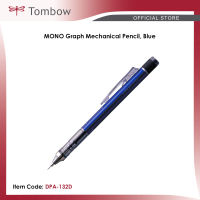
Tombow MONO Graph Mechanical Pencil
₱230.00
Buy on Lazada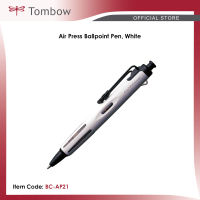
Tombow Air Press Ballpoint Pen
₱249.00
Buy on Lazada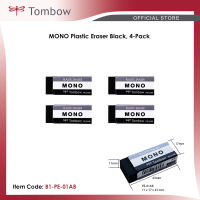
Tombow Mono Plastic Eraser (PE-01A/PE-01AB)
₱100.00
Buy on LazadaAbout Tombow
Tombow Pencil Co., Ltd. (株式会社トンボ鉛筆, Tombow Enpitsu) is a Japanese manufacturer of stationery and writing instruments with a history spanning more than a century. Established in 1913 and headquartered in Tokyo, the company is internationally recognised for product lines including MONO erasers and pencils, ABT Dual Brush Pens, Fudenosuke brush pens, ZOOM premium writing instruments, and PiT adhesives.1 Its catalogue encompasses a wide range of pencils, pens, markers, correction products, and art supplies sold in numerous markets worldwide.2
Corporate profile
| Item | Information |
|---|---|
| Company | Tombow Pencil Co., Ltd. |
| Japanese name | 株式会社トンボ鉛筆 |
| Founded | February 11, 1913 |
| Founder | Harunosuke Ogawa |
| Headquarters | Toshima, Kita-ku, Tokyo, Japan |
| Industry | Stationery, writing instruments, art supplies, adhesives |
| Best known for | MONO, ABT, Fudenosuke, ZOOM, PiT |
| Employees | 1,627 consolidated; 355 non-consolidated (as of Dec. 2025) |
| Capital | ¥90 million |
| Major overseas bases | United States, Germany, China, Vietnam |
| International presence | Products sold in numerous markets worldwide |
The business originated as Harunosuke Ogawa Shoten in Asakusa, Tokyo, before evolving into the modern Tombow Pencil corporation.2
Origin of the name
The name Tombow is derived from the Japanese word tonbo (とんぼ), meaning dragonfly. In Japanese culture, the dragonfly carries significant historical associations; the country was once referred to as Akitsu-shima, or “dragonfly island”. The insect was also known as kachi-mushi (“victorious insect”), symbolising good fortune.3
Founder Harunosuke Ogawa registered the dragonfly as the company’s trademark in 1927, establishing it as the defining corporate symbol. While the modern logo has evolved considerably from the original realistic illustration, it continues to incorporate the dragonfly concept.4
History
Early years and pencil manufacturing
Tombow traces its origins to 1913, when Harunosuke Ogawa opened a stationery and pencil shop named Harunosuke Ogawa Shoten in Asakusa. During its initial decade, the company produced various pencil types, including H.O. Pencil, MASON, STICK Pencil, SUBMARINE Pencil, CABINET, REPORTER, and assorted novelty items.
In 1920, the company adopted “H.O.P.” as a trademark. By 1927, it had replaced this with the dragonfly mark and released its first full-scale TOMBOW DRAWING PENCILS the following year.5 Throughout this period, the company operated fundamentally as a specialist pencil manufacturer rather than a diversified stationery brand.
Expansion into comprehensive stationery
Between the 1930s and 1950s, Tombow significantly expanded its manufacturing capabilities beyond pencils to include sharpeners, mechanical pencils, ballpoint pens, markers, and drafting products. A corporate reorganisation in 1939 separated manufacturing and sales functions, solidifying the Tombow identity.6 By the late 1950s, the company had transitioned towards the broader writing instrument business that would define its later growth.
Development of the MONO brand
The MONO brand launched in 1963 as a high-quality drawing pencil. The name derives from the Greek word monos, signifying “one”, “only”, or “unique”.7 Originally positioned as a premium writing and drawing tool, the brand subsequently expanded into a comprehensive family of stationery products.
In 1967, Tombow introduced MONO 100, its highest-grade pencil at the time. Notably, these pencils were packaged with a plastic eraser, which was then relatively uncommon in Japan. Consumer demand for the eraser as a standalone item led to the creation of one of the most significant products in Japanese stationery history.8
The MONO Eraser
Launched as an independent product in 1969, the MONO Eraser is distinguished by its blue-white-black striped sleeve.9 This design was originally intended to make the small eraser visually distinctive, but the stripes themselves became iconic, strongly associated with both Tombow and Japanese stationery culture. The product remains globally recognisable across school, office, drafting, illustration, manga, and graphic design contexts.
Crucially, MONO developed into a broad product family encompassing pencils, correction tapes, mechanical pencils, and other writing instruments, rather than remaining solely an eraser brand.10
Diversification into adhesives
During the 1970s, Tombow moved beyond writing instruments. In 1971, the company launched PiT, described as Japan’s first domestically manufactured glue stick.11 This established adhesives as a major category, completing a cycle of core stationery functions: writing, erasing, correcting, and sticking. This diversification transformed Tombow from a pencil manufacturer into a comprehensive stationery provider.
Key product lines
ABT Dual Brush Pen
Introduced in 1984, the Tombow ABT Dual Brush Pen is widely used by artists and lettering enthusiasts. Historical records indicate the line originally comprised 72 colours, later expanding to 144, with the current range consisting of 108 colours.12 Its defining feature is a dual-tip construction combining a flexible brush tip with a fine bullet tip. This versatility supports lettering, calligraphy, illustration, colouring, sketching, journaling, and watercolour-style techniques, establishing Tombow’s presence in the creative art market.13
ZOOM series
Launched in 1986, ZOOM represents Tombow’s design-focused writing instrument philosophy. Rather than adhering to conventional pen forms, the series explores unusual shapes, proportions, and mechanisms.14 An early notable release was the ZOOM 505, a thick ballpoint pen with a distinctive rubber grip. The series embodies a fusion of writing functionality, industrial design, and individuality, distinguishing it from the utilitarian nature of the MONO line.7
Fudenosuke
Fudenosuke combines fude (brush) with nosuke to denote a Japanese brush-writing character. These pens feature controlled brush-like tips suitable for handwriting, lettering, Japanese script, illustration, sketching, and bullet journaling. Unlike the high flexibility of ABT pens, Fudenosuke is positioned as a more controlled tool for precise writing and lettering tasks.14
Brand portfolio
Tombow maintains a diverse portfolio of branded and unbranded products:8
- MONO: Pencils, erasers, mechanical pencils, and correction products
- PiT: Glue sticks, glue tapes, and liquid adhesives
- ZOOM: Premium design-oriented writing instruments
- ABT: Dual Brush Pens and art/lettering products
- Playcolor: Creative colouring and children’s art products
- IROJITEN: Coloured pencil products
- Fudenosuke: Brush-style writing and lettering pens
- ippo!: Stationery designed for children and students
- Yo-i: Children’s and student stationery accessories
Beyond these named brands, the company manufactures pencils, coloured pencils, ballpoint pens, mechanical pencils, markers, correction tape, sharpeners, and adhesives.1516
Design philosophy and recognition
Tombow exemplifies the Japanese stationery tradition of applying meticulous attention to everyday objects. While pencils are simple tools, the company competes on details such as balance, grip, tip construction, lead quality, erasing performance, refill mechanisms, packaging, ergonomics, and industrial design. The company describes its stationery as facilitating thinking, creation, idea formation, and communication.17
Design is integral to Tombow’s identity rather than mere decoration. Products frequently utilise design to solve practical problems:
- AirPress: Uses a pressurised mechanism for writing in difficult conditions
- MONO zero: An ultra-fine eraser for precision work
- MONO graph: Combines a mechanical pencil with a dedicated eraser mechanism
This approach follows a consistent pattern: identifying a specific stationery inconvenience, engineering a solution, and ensuring ease of use. Products including MONO zero, AirPress, PFit, MONO air, MONO graph, and ZOOM series have received recognition from programmes such as Good Design, iF Design, and Red Dot.18
Logo evolution
The Tombow dragonfly logo has undergone several transformations:
- 1927: Dragonfly registered as trademark19
- 1928–1957: Realistic, downward-facing dragonfly used on products, particularly drawing pencils
- 1957–1995: Designer Takashi Kono created a modernised mark as the company expanded into pens
- 1995–2012: Global logo introduced featuring distinctive treatment of the letter W
- 2013–present: Current abstract corporate symbol introduced for the centenary, retaining the dragonfly motif20
Centenary and global expansion
In 2013, Tombow celebrated its 100th anniversary. To mark this milestone, the company unified its international corporate branding and introduced a new logo representing freedom and energy whilst preserving the dragonfly motif.21 This coincided with the company’s evolution from a domestic pencil manufacturer to a global stationery corporation.
Key milestones in international expansion include:
- 1980: Establishment of Tombow Pen & Pencil GmbH in Germany
- 1983: Establishment of American Tombow in the United States
- 1990: Commencement of overseas production in Thailand
- 2011: Establishment of Tombow Pencil (Dalian) in China
- 2000s onwards: Significant manufacturing expansion in Vietnam22
American Tombow proved particularly significant for North American market penetration, where art products gained popularity among artists, crafters, educators, and hand-lettering communities.23
Manufacturing operations
Although Tombow remains a Japanese company, production occurs across multiple countries. Current manufacturing and development facilities include:
- Manufacturing & Development Centre — Aichi, Japan
- Tombow Manufacturing Asia — Vietnam
- Tombow Vietnam
- Tombow Stationery Vietnam24
Production in Thailand began in the early 1990s, followed by capacity development in Vietnam. This expansion allows cost management whilst maintaining quality standards.25 Consequently, the Tombow brand identifies the manufacturer and quality origin, though individual products may be manufactured outside Japan.
Contemporary product categories
As of 2026, Tombow operates as a diversified manufacturer across multiple categories:26
Writing
* Pencils and coloured pencils
* Ballpoint pens and multifunction pens
* Mechanical pencils
* Marking pens and water brushes
* Crayons
Correction
* Erasers and replacement erasers
* Correction tapes
Adhesives
* Glue tapes and sticks
* Liquid glue
Accessories
* Pencil sharpeners and caps
* Pencil-training tools
The company continues to introduce new products; 2026 announcements included FUMI, new AirPress colours, updated MONOGRAPH items, and revised PiT products.27
Market positioning
Tombow occupies a distinct position within the Japanese stationery landscape compared to other major manufacturers:
| Company | Primary association |
|---|---|
| Tombow | MONO, erasers, pencils, art pens, design stationery |
| Pilot | Ballpoint pens, fountain pens, gel pens |
| Pentel | Mechanical pencils, gel pens, art supplies |
| Uni / Mitsubishi Pencil | Uni-ball, Kuru Toga, Jetstream, pencils |
| Zebra | Ballpoint pens, gel pens, mechanical pencils |
| Sakura | Art materials, markers, crayons, drawing products |
| Kokuyo | Notebooks, office stationery, organisational products |
While overlap exists between categories, Tombow is particularly associated with the intersection of traditional Japanese writing instruments, precision stationery, correction products, and creative art tools.
The MONO brand remains central to this identity. Since 1963, it has maintained a consistent reputation for high-quality, precise, and understated stationery. The MONO Eraser’s striped sleeve demonstrates effective branding, transforming a mundane object into a design icon recognisable even without the logo.28
Brand architecture
Tombow’s consumer-facing ecosystem comprises interconnected brands serving different segments. This structure reflects the company’s evolution from a single-category pencil maker to a multi-brand stationery manufacturer addressing writing, correction, adhesion, and creative expression needs.29
References
- Company Profile | TOMBOW PENCIL
- About Tombow | Mission + Diversity | Environmental Policy
- Company History | TOMBOW PENCIL
- Story of the Tombow Logo | TOMBOW PENCIL
- MONO | TOMBOW PENCIL
- MONO | TOMBOW PENCIL
- ZOOM | TOMBOW PENCIL
- Brands | TOMBOW PENCIL
- The world of Tombow | TOMBOW PENCIL
- The Tombow Pencil introduces a new corporate logo mark.The 100th anniversary of our founding in 2013 | TOMBOW PENCIL
- TOMBOW PENCIL
- tombowusa.com
- Dual Brush Pen History
- Everything You Need To Know About Tombow Pencils – Tombow USA Blog
- History of Mechanical Pencil | TOMBOW PENCIL
- History of water-based ballpoint pen | TOMBOW PENCIL
- 沿革 | 株式会社トンボ鉛筆
- MONO | 株式会社トンボ鉛筆
- Tombow Europe: About us
- Tombow Europe: Tombow Brand Overview | Tombow
- About Us | Tombow – Tombow UK
- Products – Tombow USA
- Tombow USA
- All Products – Tombow USA
- Catalogs – Tombow USA
- Art & Craft Supplies | Brush Pens, Pencils & Adhesives | Tombow
- Press Room – Tombow USA
- School & Office Supplies | Pencils, Erasers & More | Tombow – Tombow USA
- New Tombow Products | Tombow Dual Brush Pen | Tombow Markers – Tombow USA