Shop on Lazada
Snickers products
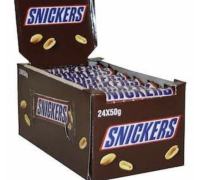
Snickers 50g bundle (24 pcs)
₱968.00₱998.00
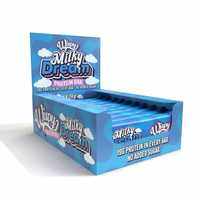
SNICKERS PROTEIN BAR LOW SUGAR 20G PROTEIN 1 BOX
₱2,090.00₱3,000.00
![SNICKERS Almond Dark Chocolate Bar - 40g [Bundle of 5] | Imported Chocolates | Chocolate Bundle](https://ph-live.slatic.net/p/d1be806a1dbcb3582b9b19b8ab0dd356.jpg_200x200q80.jpg)
SNICKERS Almond Dark Chocolate Bar - 40g [Bundle of 5] | Imported Chocolates | Chocolate Bundle
₱356.00₱359.00
![SNICKERS TWIX M&Ms Milk & Peanut Funsize [Bundle of 4] with Green M&Ms Retro Mug](https://ph-live.slatic.net/p/1bae7f3523840fb31e419965fa73d5ad.jpg_200x200q80.jpg)
SNICKERS TWIX M&Ms Milk & Peanut Funsize [Bundle of 4] with Green M&Ms Retro Mug
₱1,249.00₱1,399.00
![M&Ms SKITTLES SNICKERS Variety Pack 186g [Bundle of 2] | Gift Ideas | Gift Bundles](https://ph-live.slatic.net/p/b8ddc0948a153600147f0533821278b1.jpg_200x200q80.jpg)
M&Ms SKITTLES SNICKERS Variety Pack 186g [Bundle of 2] | Gift Ideas | Gift Bundles
₱574.00₱579.00
![SNICKERS Funsize Variety Pack 186g [Bundle of 4] with Orange M&Ms Retro Mug](https://ph-live.slatic.net/p/26f3c7a29233bce6bf86552e081926f6.jpg_200x200q80.jpg)
SNICKERS Funsize Variety Pack 186g [Bundle of 4] with Orange M&Ms Retro Mug
₱1,158.00₱1,308.00
![SNICKERS Almond Dark Chocolate Bar - 40g [Bundle of 10] | Imported Chocolates | Chocolate Bundle](https://ph-live.slatic.net/p/1b0a5a782cd8c414fc42dcc12af8d668.jpg_200x200q80.jpg)
SNICKERS Almond Dark Chocolate Bar - 40g [Bundle of 10] | Imported Chocolates | Chocolate Bundle
₱711.00₱718.00
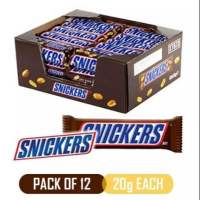
Snickers Chocolate 20g Each 12pcs
₱279.00
Buy on LazadaAbout Snickers
Snickers is a globally marketed chocolate bar brand owned by Mars, Incorporated, one of the world’s largest privately held food and confectionery companies. First introduced in 1930 in Chicago, United States, Snickers is best known for its combination of nougat, caramel, peanuts, and milk chocolate.1 The brand has become particularly recognizable for its humorous advertising built around the idea that hunger can temporarily change a person’s personality, expressed through the long-running slogan “You’re not you when you’re hungry.”## Basic information
| Attribute | Details |
|---|---|
| Brand | Snickers |
| Product category | Chocolate confectionery / candy bar |
| Owner | Mars, Incorporated |
| First introduced | 1930 |
| Place of origin | Chicago, Illinois, United States |
| Original price | 5 cents |
| Main ingredients | Nougat, caramel, peanuts, milk chocolate |
| Availability | Worldwide |
| Major slogan | “You’re not you when you’re hungry.” |
| Official website | SNICKERS Official Website |
History
Origins
Snickers was introduced by Mars in 1930. The original bar was manufactured in Chicago and sold for five cents. According to Mars’ own brand history, the name was derived from Snickers, a horse associated with the Mars family.3 The product was developed during the early growth of the American candy bar industry. Its combination of chocolate, peanuts, caramel, and nougat gave it a distinctive texture and flavour compared with simpler chocolate bars. The original Snickers consisted essentially of a nougat centre topped with caramel and peanuts and covered in milk chocolate, a basic structure that has remained central to the brand for decades.4
International expansion
Snickers eventually expanded beyond the United States. It reached the United Kingdom in 1968, although British consumers initially knew it under a different name: Marathon. The Marathon name was retained in the UK until 1990, when Mars changed the product to Snickers to create a more unified international brand identity. The brand subsequently became widely distributed across Europe, Asia, Australia, Latin America, the Middle East, and other regions.
The Snickers product
The classic Snickers bar is characterised by four principal components:
- Nougat — provides the soft, chewy base.
- Caramel — adds a sticky, sweet texture.
- Peanuts — provide crunch, saltiness, and a nutty flavour.
- Milk chocolate — surrounds the filling and provides the chocolate flavour.
This combination of sweet, salty, crunchy, and chewy characteristics is an important part of the Snickers product identity.5 The exact formulation and ingredient list can vary between countries and product variants because Mars produces and markets Snickers products for different markets.
Product variations
Snickers has developed considerably beyond its original bar. Depending on the country, consumers can find products such as:
- Snickers Original
- Snickers Almond
- Snickers Peanut Butter
- Snickers White
- Snickers Minis
- Snickers Ice Cream
- Snickers Creamy Peanut Butter
- Snickers Crisp
- Various limited-edition and region-specific flavours
The availability of individual varieties differs considerably by market. For example, the current official U.S. website highlights Original, Almond, and Ice Cream products, while other regional Snickers websites list products such as Duo, Minis, and Creamy Peanut Butter.6
Snickers Ice Cream
Snickers also expanded into frozen desserts. The Snickers Ice Cream Bar was introduced in 1989, extending the brand’s characteristic combination of chocolate, caramel, peanuts, and nougat-style flavour into an ice cream format.7
Brand identity
Snickers has one of the more distinctive personalities among major confectionery brands. Rather than positioning itself simply as a chocolate treat, the brand has traditionally emphasised satisfaction and hunger relief. Its marketing frequently presents hunger as something that makes people behave unusually or become a different version of themselves. Eating Snickers supposedly restores their normal personality. This idea eventually became the foundation of one of the brand’s most famous advertising campaigns.
“You’re not you when you’re hungry”
In 2010, Snickers launched the now-famous “You’re not you when you’re hungry” campaign. Mars describes it as an award-winning global campaign.8 The central advertising concept is simple:
Hunger makes you act unlike yourself.
Commercials typically depict a person behaving strangely or adopting an unexpected personality because they are hungry. Another person then gives them a Snickers bar, after which they return to their normal personality. The campaign allowed Snickers to connect its product directly with a recognisable human experience—being hungry—rather than relying only on traditional descriptions of taste. The campaign became one of the defining elements of modern Snickers branding.
Earlier advertising
Snickers had already established a strong advertising identity long before the 2010 campaign. During the 1980s, the brand used the slogan “It’s so satisfying”, emphasising the combination of peanuts, chocolate, and other ingredients as a filling snack.9 The brand also invested heavily in sports marketing. In 1984, Snickers was an official sponsor of the Los Angeles Olympic Games.10 Sports sponsorship became an important way for the brand to associate Snickers with energy, activity, and hunger.
Packaging and visual identity
Snickers packaging is particularly recognisable for its bold blue background and prominent white Snickers wordmark, often accompanied by red and yellow elements. The packaging has changed periodically over the decades, but the brand has generally maintained a strong visual connection between blue packaging, large Snickers logo, chocolate imagery, and peanuts/caramel imagery. This consistency has helped Snickers become recognisable in supermarkets, convenience stores, vending machines, and other retail environments around the world. The brand’s visual identity has also been periodically redesigned. Its advertising and packaging increasingly use a deliberately bold, humorous, and energetic style.
Global brand
Snickers is not merely an American candy bar; it has become a global confectionery brand. Mars markets Snickers in numerous countries, but the exact product portfolio, package sizes, recipes, and promotional campaigns can differ between markets. For example:
- In the UK, the product was historically called Marathon until 1990.
- In Australia, Snickers has been manufactured locally since 1979.
- In France, Snickers was introduced in 1989.
- In Mexico, the brand arrived in 1988.
- Different markets have received different varieties and limited editions.11
This combination of a standardised global identity and locally adapted products is characteristic of major multinational food brands.
Ownership
Snickers is a brand of Mars, Incorporated, the privately held American company behind a large portfolio of food, confectionery, and pet care products. Mars’ confectionery portfolio includes other internationally recognised brands such as M&M’s, Milky Way, Twix, Bounty, and 3 Musketeers, although availability varies by country. Mars traces its confectionery history to the early 20th century, with Snickers becoming one of the company’s most important products after its launch in 1930.12
Marketing strategy
Snickers’ marketing can be summarised around several major themes:
Hunger
The fundamental message is that hunger changes behaviour, and Snickers provides a satisfying response.
Humour
Snickers frequently uses comedy rather than straightforward product advertising. This makes the advertisements memorable and gives the brand a recognisable personality.
Celebrity appearances
The “You’re not you when you’re hungry” campaign became especially famous for using recognisable celebrities and exaggerated transformations to demonstrate the idea.
Sports
Snickers has historically used sports sponsorships and sporting events to associate the brand with energy, activity, and mass audiences.13
Global consistency
The central brand idea can be translated relatively easily between countries: everyone knows what it feels like to be hungry.
Cultural impact
Snickers has become more than simply a chocolate bar. Its advertising slogan has become closely associated with the brand itself. The phrase “You’re not you when you’re hungry” works because it turns a basic product attribute—being a snack—into a humorous personality concept. The campaign has also allowed Snickers to create advertisements that are easily adapted to different cultures and celebrities while preserving the same basic story. The brand has consequently maintained a strong presence in popular culture and commercial advertising.
Nutrition and ingredients
A standard Snickers bar is a confectionery product, rather than a health food. Its principal components include sugar, chocolate, peanuts, caramel, and nougat, making it relatively energy-dense. Historical ingredient records show that the formulation has changed over time. For example, an ingredient list from around 1939 differed from formulations used decades later.14 Because recipes vary by country and product, nutritional information should be taken from the packaging or official product information for the particular Snickers product being consumed. The peanuts and milk ingredients also mean that allergen information is important for consumers with food allergies.
Packaging and product innovation
Snickers has repeatedly experimented with different formats rather than relying exclusively on the original bar. Examples include:
- Smaller Fun Size/Mini formats
- Larger or sharing formats
- Ice cream products
- Almond versions
- Peanut butter versions
- White chocolate versions
- Crisped rice variants
- Limited-edition flavours
Mars’ official history identifies Fun Size as an early product expansion and records later launches such as Snickers Ice Cream, Snickers Crisp, and Creamy Peanut Butter.
Major historical timeline
| Year | Event |
|---|---|
| 1930 | Snickers introduced in Chicago for five cents |
| 1930s | Brand becomes established in the U.S. |
| 1968 | Introduced in the UK as Marathon |
| 1979 | Snickers production begins in Australia’s Ballarat factory |
| 1984 | Snickers sponsors the Los Angeles Olympics |
| 1989 | Snickers Ice Cream Bar introduced |
| 1990 | Marathon name replaced by Snickers in the UK |
| 2010 | “You’re not you when you’re hungry” campaign launched |
| 2013 | Snickers surpasses $1 billion in U.S. sales, according to Mars |
| 2019 | Snickers Crisp launched |
| 2021 | Snickers Creamy Peanut Butter introduced |
| 2020s | Continued expansion of formats, flavours, and regional products |
Why Snickers became successful
Several factors explain the brand’s longevity:
- Distinctive product combination: Peanuts, caramel, nougat, and milk chocolate create a recognisable texture and flavour profile.
- Simple brand proposition: The idea of satisfying hunger is easy to understand.
- Memorable advertising: The “You’re not you when you’re hungry” concept gives the brand a consistent personality.
- International scalability: Hunger is a universal concept, allowing the campaign to work across cultures.
- Product diversification: Mars has introduced different sizes, flavours, and formats to keep the brand relevant.
- Strong visual identity: The Snickers name and packaging are highly recognisable.
- Long history: Having existed since 1930 gives Snickers substantial brand recognition and heritage.
Snickers today
Today, Snickers remains one of Mars’ flagship confectionery brands and is sold internationally. The official brand website continues to position it around the central idea of hunger and satisfaction, while its product portfolio includes the traditional Snickers bar alongside products such as Almond, Ice Cream, and other market-specific variants. The brand’s basic formula has remained remarkably consistent for nearly a century: chocolate + caramel + peanuts + nougat, supported by a marketing identity built around hunger, humour, and satisfaction.
Summary
Snickers is a chocolate bar brand owned by Mars, Incorporated, originating in Chicago in 1930. Named after a horse associated with the Mars family, it began as a five-cent American candy bar and gradually developed into a global confectionery brand. Its classic combination of nougat, caramel, peanuts, and milk chocolate became its defining product characteristic. Its most important modern marketing achievement is arguably the “You’re not you when you’re hungry” campaign, launched in 2010. This transformed the brand from simply another chocolate bar into a recognisable personality-driven brand centred on hunger and humour. In short, the Snickers brand identity can be described as:
A global, indulgent, peanut-and-caramel chocolate brand that uses humour and the universal experience of hunger to communicate “satisfaction.”
References
- Facts About SNICKERS® | Candy Bar History and Contact
- Facts About SNICKERS® | Candy bar history and contact
- SNICKERS® Official Website | Chocolate Bars, Recipes and More
- Snickers
- SNICKERS Official Website | Product Information
- Facts About SNICKERS® | Candy Bar History and Contact
- Historia del chocolate SNICKERS | SNICKERS México
- À propos | Histoire de la marque SNICKERS | SNICKERS FR
- Snickers – Wikidata
- WHAT’S IN A SNICKERS BAR? — Ingredient Inspector
- Category:Snickers – Wikimedia Commons
- Candy bar – Wikipedia, the free encyclopedia Wikipedia (December 2006) – wikipedia2006.classicistranieri.com
- Facts About SNICKERS® | Candy Bar History and Contact
- Snickers – WikiMD’s WELLNESSPEDIA
- حقائق عن سنيكرز® | تاريخ شوكولاتة سنيكرز وكيفية التواصل